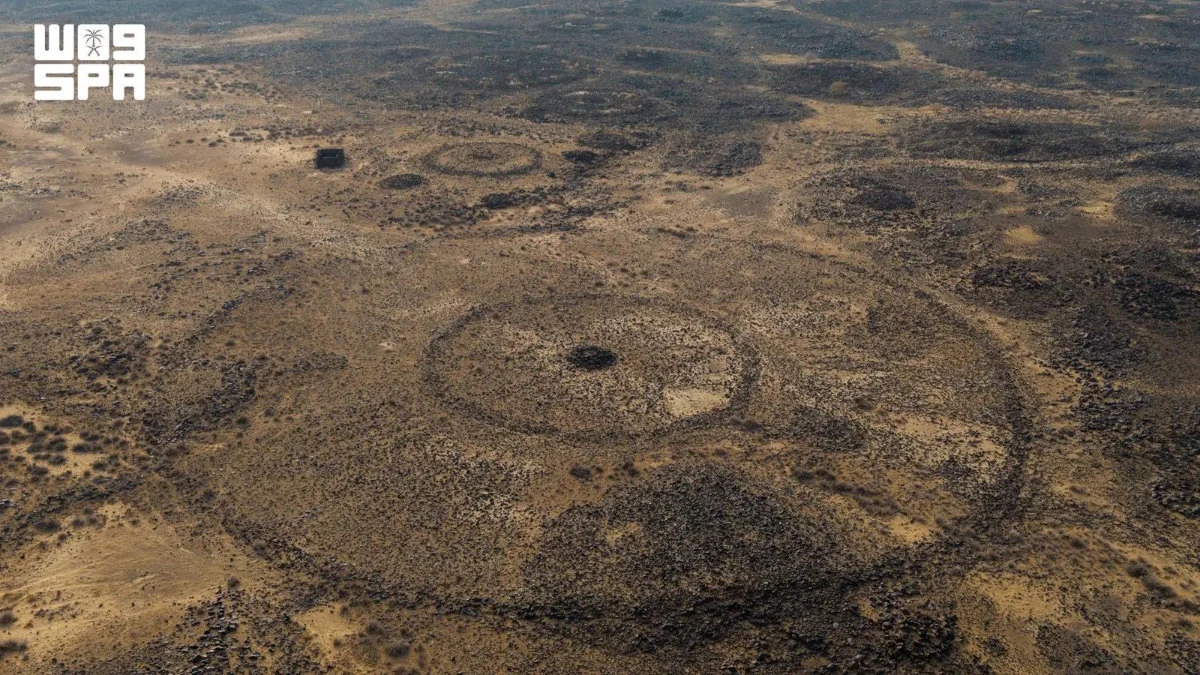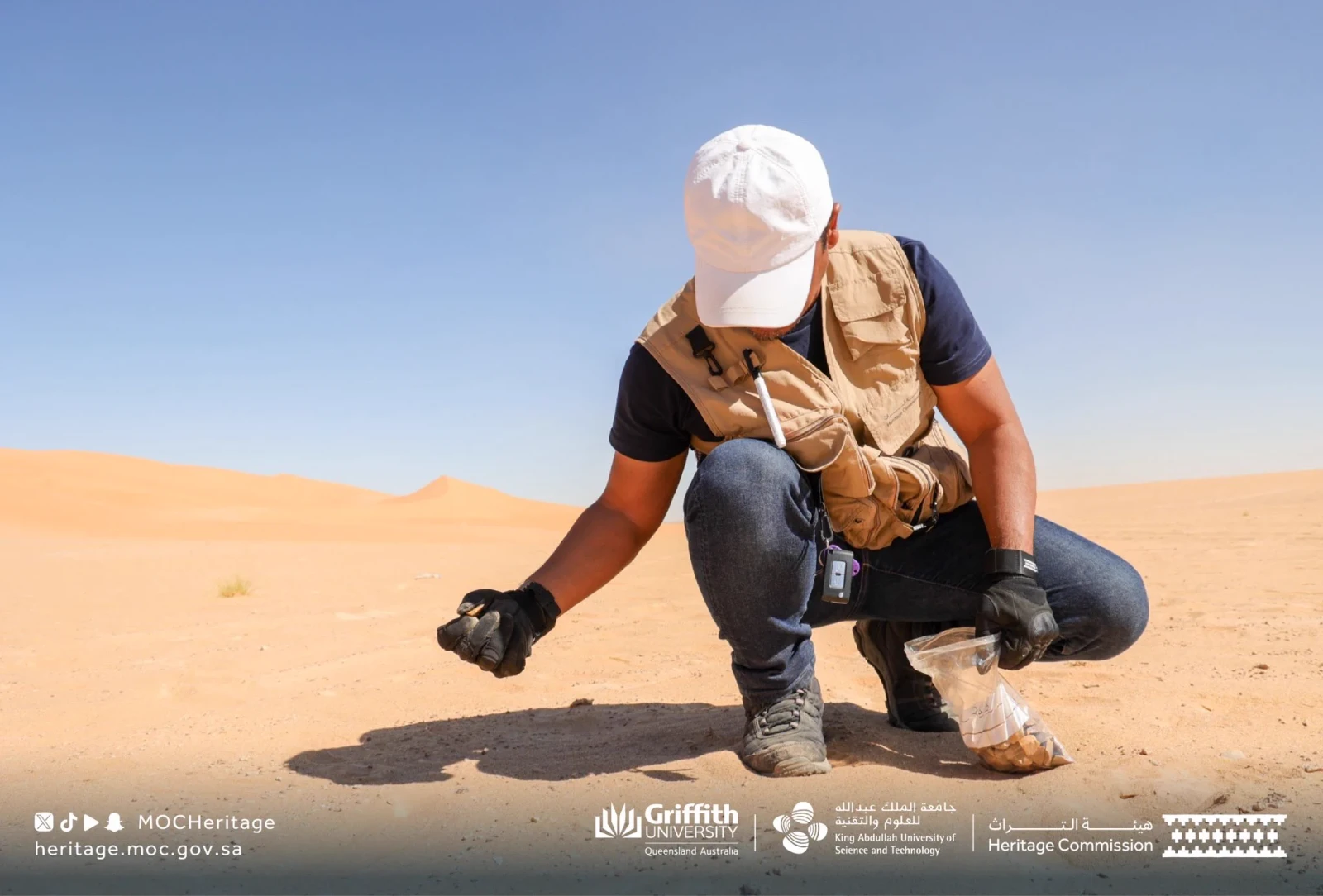
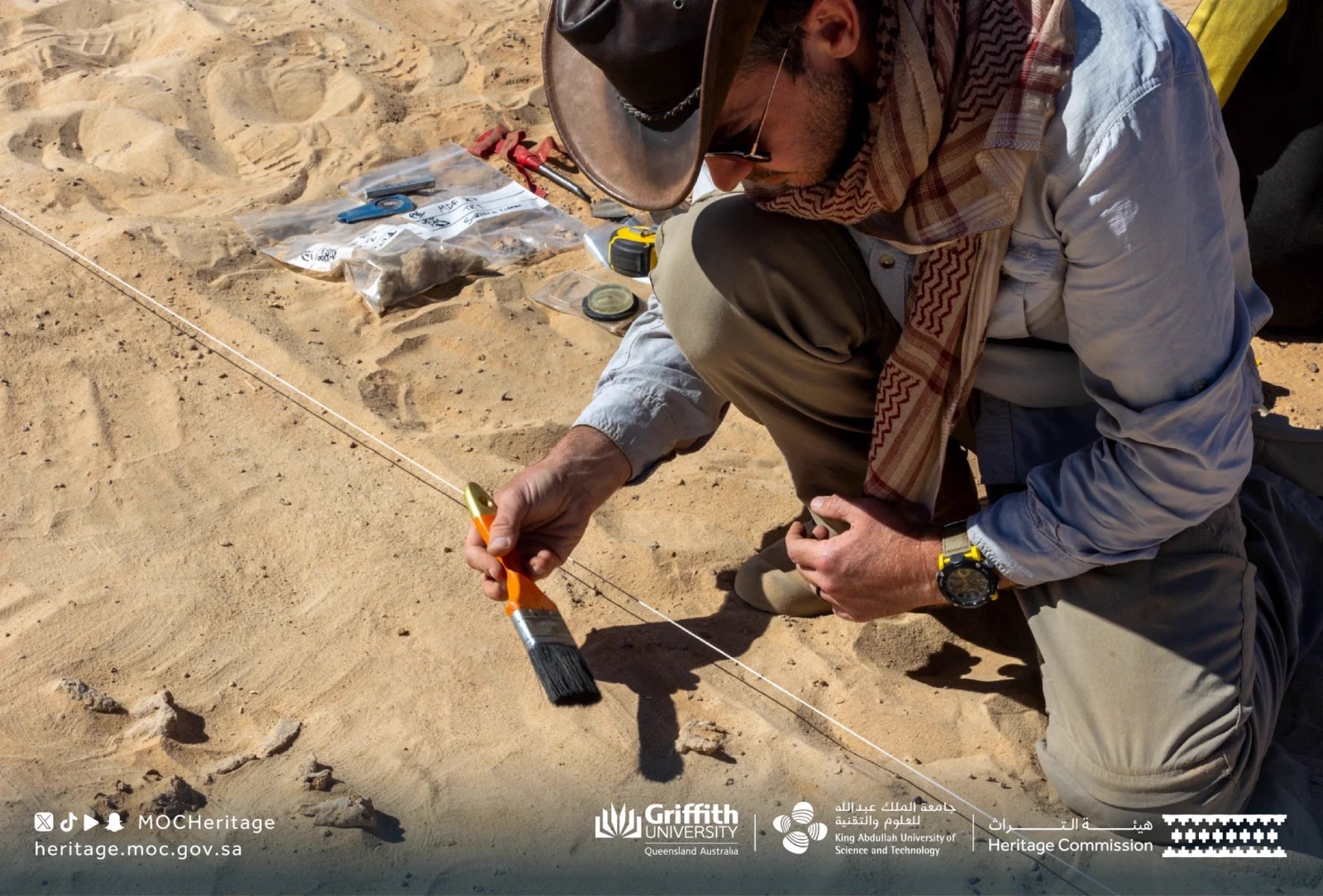
MAKKAH: Newly revealed archaeological discoveries in Saudi Arabia are offering a rare glimpse into a time when parts of the Empty Quarter were home to freshwater lakes, grasslands and abundant wildlife, providing favorable conditions for early human settlement.
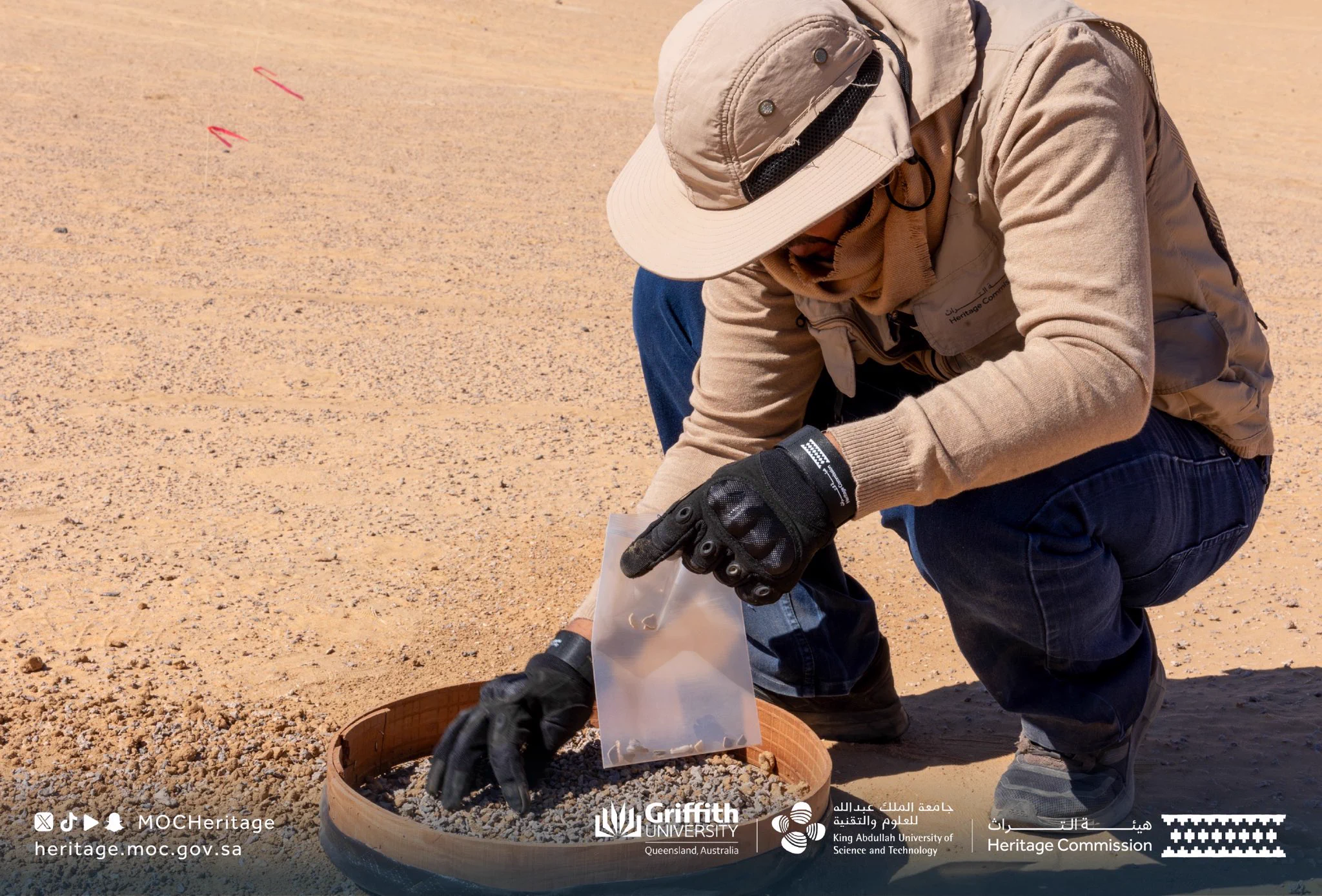
A study published in the academic journal Science and carried out by the Kingdom’s Heritage Commission in collaboration with Australia’s Griffith University, King Abdullah University of Science and Technology, and several other Saudi and international research institutions, revealed evidence of human activity dating back around 125,000 years at the Uruq Al-Julaybah site on the shores of the Mundafan paleolake in Najran.
The findings suggest that Mundafan once covered roughly 340 square kilometers and reached depths of nearly 29 meters, creating a stable freshwater environment surrounded by open grasslands and vegetation during one of the Arabian Peninsula’s humid periods.
Researchers documented more than 130 archaeological locations and recorded more than 500 fossils of plants, vertebrates and invertebrates, including hippopotamuses, extinct long-horned buffalo, camels, Arabian oryx, gazelles, ostriches, mollusks and freshwater crustaceans.
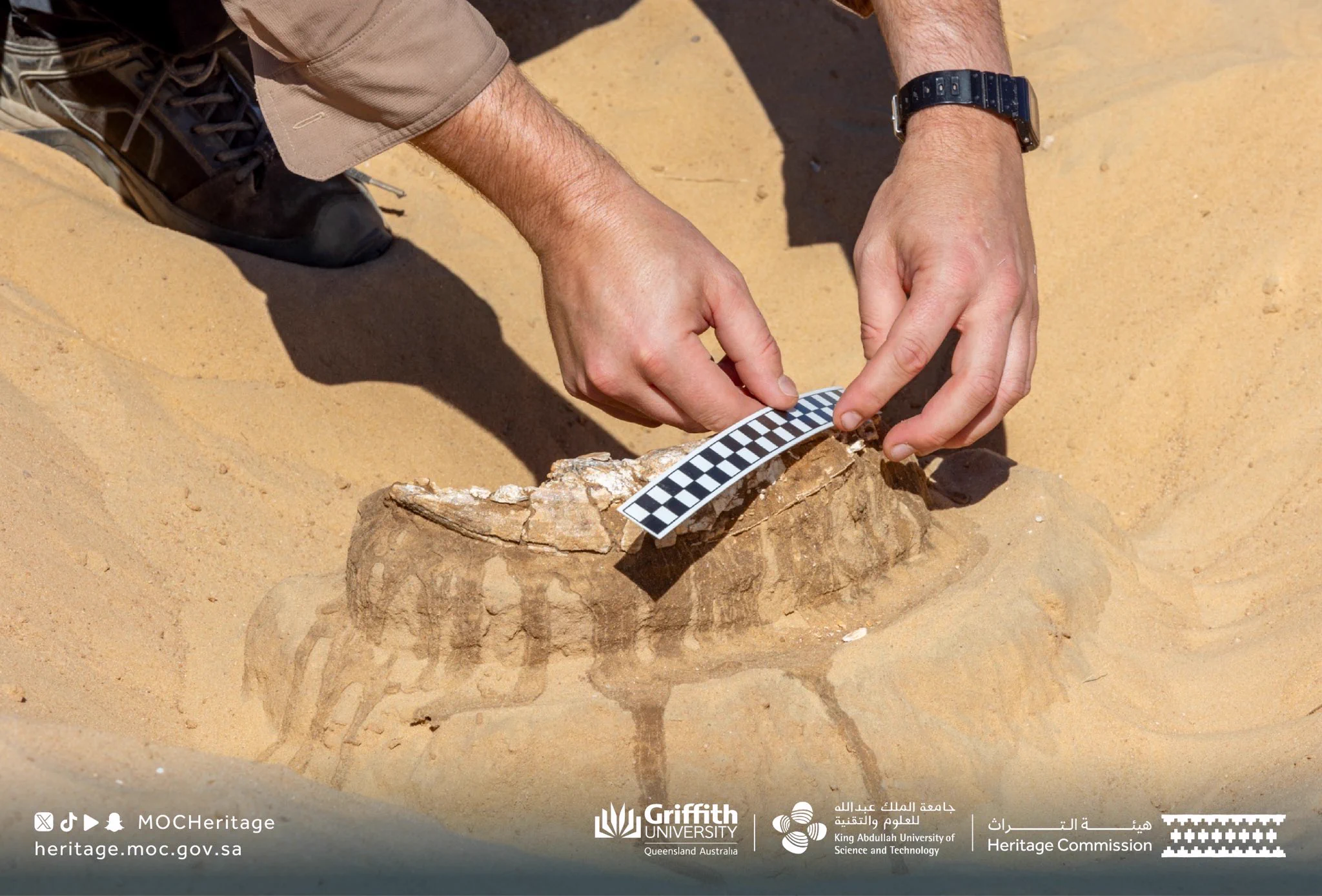
The team also recovered 5,511 stone artifacts, more than 98 percent of them made from flint. Analysis showed the artifacts were created using the Levallois technique — an advanced stone-tool manufacturing method that required planning and precision to control the shape and size of flakes and points.
Microscopic and chemical examinations also identified preserved traces of plant fibers, wood, resins, fats and collagen, indicating a range of daily activities involving both plant and animal resources.
Some stone points bore impact fractures and evidence of hafting, suggesting they were attached to handles. Researchers also detected compounds associated with Acokanthera schimperi, a plant historically linked to hunting practices, although the study noted there was insufficient evidence to determine precisely how the material may have been used.
Dr. Abdullah Alsharekh of King Saud University, who participated in the study, said the shores of Mundafan would have provided an “ideal habitat” for human communities, bringing together freshwater, wildlife, vegetation and the raw materials needed for toolmaking and survival.
Professor Michael Petraglia, director of Griffith University’s ARC Centre of Excellence for Transforming Human Origins Research, said the discovery “significantly advances” understanding of early human settlement across the Arabian Peninsula, while KAUST geology professor Dr. Frans van Buchem said the multidisciplinary effort helped create “a more complete picture of ancient environments and human behavior.”
Speaking to Arab News, Dr. Salma Hosawi, professor of ancient history at King Saud University, said the discoveries are helping researchers “to reassess the history of the Arabian Peninsula and correct some prevailing perceptions of its contributions to civilization and its place in early human history.”
Hosawi noted that archaeological sites across Saudi Arabia continue to provide evidence of how ancient communities lived, adapted to their environments and interacted with natural resources over thousands of years.
“Saudi Arabia has a diverse archaeological record encompassing ancient inscriptions and writings, rock art, stone tools, and the remains of historical settlements, providing tangible evidence of the development of human societies,” she said.
She cited discoveries at Shuwayhitiyah in Al-Jouf, where evidence suggests human activity dating back around 1.3 million years, as well as ancient footprints found in Tabuk that are more than 120,000 years old and preserve traces of humans and animals gathering around long-vanished lakes.
According to Hosawi, the Uruq Al-Julaybah site is especially significant because it lies within the Empty Quarter, one of the driest regions on Earth today.
The remains of a vast freshwater lake, together with fossils of hippopotamuses, buffalo, gazelles and ostriches, indicate that the landscape once offered abundant water and natural resources capable of sustaining both wildlife and human populations.
She said the stone tools found at the site demonstrate “sophisticated planning and technical skill,” while traces of plant and animal residues have expanded researchers’ understanding of early human activities, including the processing of wood, palm fibers and hunting equipment.
“The significance of this evidence extends beyond simply confirming human activity at the site. It suggests that human activities occurred repeatedly and accumulated over successive periods, while environmental changes played a pivotal role in shaping settlement patterns and human movement across the Arabian Peninsula,” she said.
Hosawi also urged caution when interpreting evidence related to possible hunting poisons, noting that existing findings cannot conclusively determine how certain substances may have been prepared or used.
For researchers, the study and others like it offer a broader lesson about the region’s past.
“Areas now covered by desert were once environments conducive to life,” Hosawi said, adding that such findings challenge long-held assumptions about the Arabian Peninsula’s prehistoric environment.
The findings add to a growing body of evidence that is reshaping scholars’ understanding of the Arabian Peninsula not as a marginal corridor between continents, but as a landscape where early humans repeatedly lived, adapted and thrived. As archaeological work continues across the Kingdom, researchers say discoveries such as Uruq Al-Julaybah are helping place the region at the center of discussions about human origins, migration and environmental change.