BANGLAORE: The quality of the football on display may have been poor, but the drama on the final day of the I-League season could have been scripted by O. Henry, the master of the surprise ending.
Going into the 18th and last round of games, Minerva Punjab led the way with 32 points, despite their form having fallen off a cliff in the second half of the season. NEROCA, based in the tiny eastern Indian state of Manipur, trailed them by a point. And one further back came the two most storied clubs in Indian football — Mohun Bagan and East Bengal.
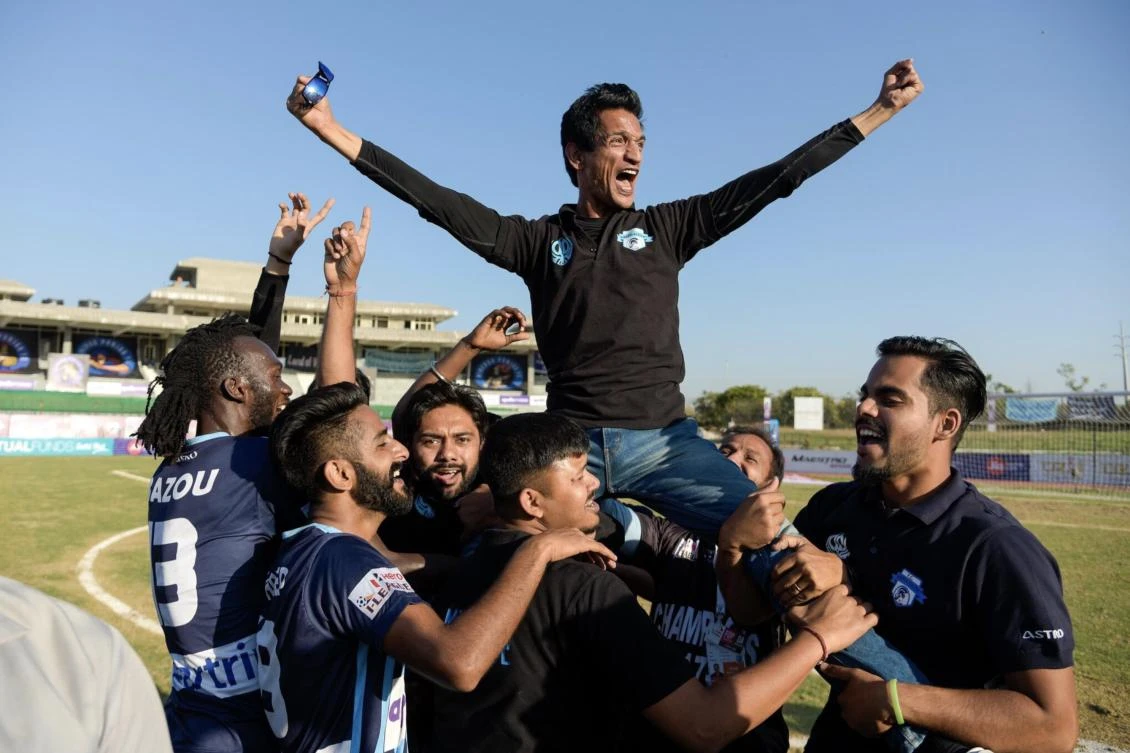
To add to the sense of spectacle, Minerva were up against the Goa-based Churchill Brothers, who had won the second of their national titles as recently as 2012-13. Churchill, who started the season with five straight defeats, needed nothing less than three points to avoid relegation. Given what was at stake, the game resembled a relegation six-pointer, and Ghana’s William Opoku’s 15th-minute strike was enough for Minerva to become the first north Indian winners of the title since Jagatjit Cotton & Textile Football Club were the inaugural champions of the National Football League in 1996-97.
Minerva’s triumph also gave the I-League, now seen as the impoverished sibling of the cash-rich and heavily promoted Indian Super League (ISL), a third first-time winner in the past five seasons. Bengaluru FC, who won it in 2013-14 and 2015-16, comfortably topped the ISL log, having migrated to the “bigger” league in the off-season. And last season, FC Aizawl — from the eastern state of Mizoram that most Indians would struggle to locate on a map — did a Leicester City by beating Bagan and East Bengal to the title.
NEROCA, who took second place by holding East Bengal to a 1-1 draw on their turf, have as remarkable a story. The North Eastern Re-Organizing Cultural Association Football Club was established in 1965, but it was not until 2015-16 that they first played at the national level, in the I-League’s second division.
That was the year that Minerva, formed in 2005, also took their first steps on a bigger stage. And having escaped relegation only on the basis of a head-to-head record last season, Minerva now find themselves top of the tree, just ahead of a NEROCA side that were champions of the second-tier last season.
If anything, that is a damning indictment of Bagan, East Bengal and the toxic Kolkata football culture that held the Indian game back for so many decades. A frog-in-the-well mindset meant that both clubs cared about little more than dominating the Kolkata league. There was no thought to building a team, let alone a dynasty, with players swapping clubs almost every season.
Baichung Bhutia, India’s most feted footballer of the modern era, had multiple stints with both East Bengal and Mohun Bagan. IM Vijayan, his fellow striker in so many games for India, also yo-yoed between the two clubs after first making waves with Kerala Police. Imagine Steven Gerrard or Ryan Giggs flip-flopping between Liverpool and Manchester United, and you begin to get a sense of how absolutely farcical the system was.
Now, though miles remain to be traversed, there is a semblance of sanity. A Super Cup, to be played in March and April, will feature the top teams from both the ISL and the I-League, and be a successor to the Federation Cup, which was India’s answer to the FA Cup for 40 years.
Khogen Singh — NEROCA fans would have winced at the irony of a Manipuri coaching Minerva to the title — sounded quite bullish about his team’s prospects, though a tally of just 24 goals in 18 games suggests they will struggle against free-scoring ISL sides like Bengaluru and FC Goa. Much will depend on the slight Bhutanese No.10, who was the find of the I-League season. Chencho Gyeltshen scored seven and had seven assists, and his winner away to NEROCA was one of the key moments in the title race.
“I think the I-League is more competitive,” said Khogen, whose side lost four of their last eight games after taking 25 points from the first 30 available. “There is not much difference in the standard of games in these leagues. In the Super Cup, we will have to prove that I-League teams are at par even though they are built on low budgets.”
The Kolkata giants — Bagan finished third after drawing 1-1 in Kerala with Gokulam FC — could certainly learn a thing or two from how the new boys have gone about their business. With just one title between them in the last 14 seasons, the time for change is nigh.
Going into the 18th and last round of games, Minerva Punjab led the way with 32 points, despite their form having fallen off a cliff in the second half of the season. NEROCA, based in the tiny eastern Indian state of Manipur, trailed them by a point. And one further back came the two most storied clubs in Indian football — Mohun Bagan and East Bengal.
To add to the sense of spectacle, Minerva were up against the Goa-based Churchill Brothers, who had won the second of their national titles as recently as 2012-13. Churchill, who started the season with five straight defeats, needed nothing less than three points to avoid relegation. Given what was at stake, the game resembled a relegation six-pointer, and Ghana’s William Opoku’s 15th-minute strike was enough for Minerva to become the first north Indian winners of the title since Jagatjit Cotton & Textile Football Club were the inaugural champions of the National Football League in 1996-97.
Minerva’s triumph also gave the I-League, now seen as the impoverished sibling of the cash-rich and heavily promoted Indian Super League (ISL), a third first-time winner in the past five seasons. Bengaluru FC, who won it in 2013-14 and 2015-16, comfortably topped the ISL log, having migrated to the “bigger” league in the off-season. And last season, FC Aizawl — from the eastern state of Mizoram that most Indians would struggle to locate on a map — did a Leicester City by beating Bagan and East Bengal to the title.
NEROCA, who took second place by holding East Bengal to a 1-1 draw on their turf, have as remarkable a story. The North Eastern Re-Organizing Cultural Association Football Club was established in 1965, but it was not until 2015-16 that they first played at the national level, in the I-League’s second division.
That was the year that Minerva, formed in 2005, also took their first steps on a bigger stage. And having escaped relegation only on the basis of a head-to-head record last season, Minerva now find themselves top of the tree, just ahead of a NEROCA side that were champions of the second-tier last season.
If anything, that is a damning indictment of Bagan, East Bengal and the toxic Kolkata football culture that held the Indian game back for so many decades. A frog-in-the-well mindset meant that both clubs cared about little more than dominating the Kolkata league. There was no thought to building a team, let alone a dynasty, with players swapping clubs almost every season.
Baichung Bhutia, India’s most feted footballer of the modern era, had multiple stints with both East Bengal and Mohun Bagan. IM Vijayan, his fellow striker in so many games for India, also yo-yoed between the two clubs after first making waves with Kerala Police. Imagine Steven Gerrard or Ryan Giggs flip-flopping between Liverpool and Manchester United, and you begin to get a sense of how absolutely farcical the system was.
Now, though miles remain to be traversed, there is a semblance of sanity. A Super Cup, to be played in March and April, will feature the top teams from both the ISL and the I-League, and be a successor to the Federation Cup, which was India’s answer to the FA Cup for 40 years.
Khogen Singh — NEROCA fans would have winced at the irony of a Manipuri coaching Minerva to the title — sounded quite bullish about his team’s prospects, though a tally of just 24 goals in 18 games suggests they will struggle against free-scoring ISL sides like Bengaluru and FC Goa. Much will depend on the slight Bhutanese No.10, who was the find of the I-League season. Chencho Gyeltshen scored seven and had seven assists, and his winner away to NEROCA was one of the key moments in the title race.
“I think the I-League is more competitive,” said Khogen, whose side lost four of their last eight games after taking 25 points from the first 30 available. “There is not much difference in the standard of games in these leagues. In the Super Cup, we will have to prove that I-League teams are at par even though they are built on low budgets.”
The Kolkata giants — Bagan finished third after drawing 1-1 in Kerala with Gokulam FC — could certainly learn a thing or two from how the new boys have gone about their business. With just one title between them in the last 14 seasons, the time for change is nigh.