LJUBLJANA: The main migrant trail from Greece to northern Europe was blocked on Wednesday after western Balkan nations slammed shut their borders, hiking pressure for an EU-Turkey deal and exacerbating a dire situation on the Macedonian border.
Slovenia and Croatia, two of the countries along the route used by hundreds of thousands of people in recent months, barred entry to transiting migrants from midnight. Serbia indicated it would follow suit.
EU member Slovenia said that the only exceptions were for people wishing to claim asylum in the country or for migrants “on humanitarian grounds and in accordance with the rules of the Schengen zone.”
Prime Minister Miro Cerar said the move meant that “the (Balkan) route for illegal migrations no longer exists.” Croatia’s Interior Minister Vlaho Orepic called it a “new phase in resolving the migrant crisis.”
The measures follow Austria’s decision in February to cap the number of migrants passing through its territory, which has led to a gradual tightening of borders through the western Balkans.
“This is putting into effect what is correct, and that is the end of the ‘waving through’ (of migrants) which attracted so many migrants last year and was the wrong approach,” Austrian Foreign Minister Sebastian Kurz said.
Even before the border closures, the tightening of restrictions through the Balkans had created a bottleneck in Greece, the main entry point for migrants into the EU across the sea from Turkey.
The Greek government says there are nearly 36,000 migrants and refugees stranded in the country, but police in the north said there were another 4,000 people unaccounted for.
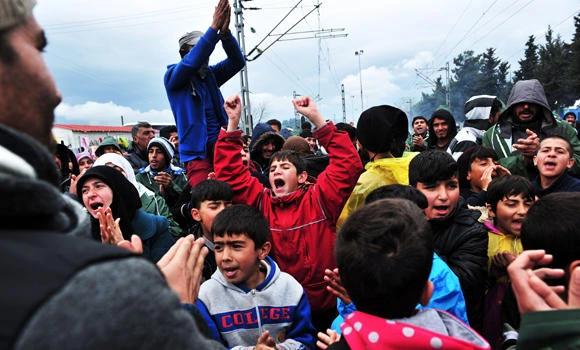
This includes more than 14,000 mainly Syrian and Iraqi refugees camped out by the northern Idomeni border crossing with Macedonia, many of them for weeks, at a muddy, unhygienic camp operated by beleaguered aid groups.
Macedonian police said on Wednesday that no single migrant had entered the country from Greece since Monday because of the restrictions further along the route.
Greek officials on Wednesday were trying to coax refugees to leave Idomeni for migrant centers elsewhere in the country.
Many are reluctant to do so, however, fearing this would mean the end of their journey north, many of them to join family members who made it through last year.
“We were (at Idomeni) for two weeks, it was raining and very cold,” said Oussama, a 45-year-old Syrian from Aleppo, one of the few who agreed to return to the port of Piraeus in Athens.
More than a million people have crossed the Aegean Sea into Greece since the start of 2015, many from Syria, Afghanistan and Iraq and most aiming to reach wealthy Germany, Austria and Scandinavia.
This has caused deep divisions among EU members about how to deal with Europe’s worst migration crisis since World War II, and put German Chancellor Angela Merkel under severe pressure domestically for her open-door asylum policy.
Merkel, heading for a bruising in regional German elections on Sunday, hopes that a controversial deal discussed with Turkey at an EU summit on Monday, and due to be finalized on March 17-18, will be the answer.
The accord would see Turkey, currently hosting 2.7 million refugees from the five-year-old Syrian civil war and the main springboard for migrants heading to the EU, take back all illegal migrants landing in Greece.
Balkan states block migrant route