- Bangladesh garment labor unions call for calm after wage board decision
- Minimum wage agreed to be raised post-violent worker protests
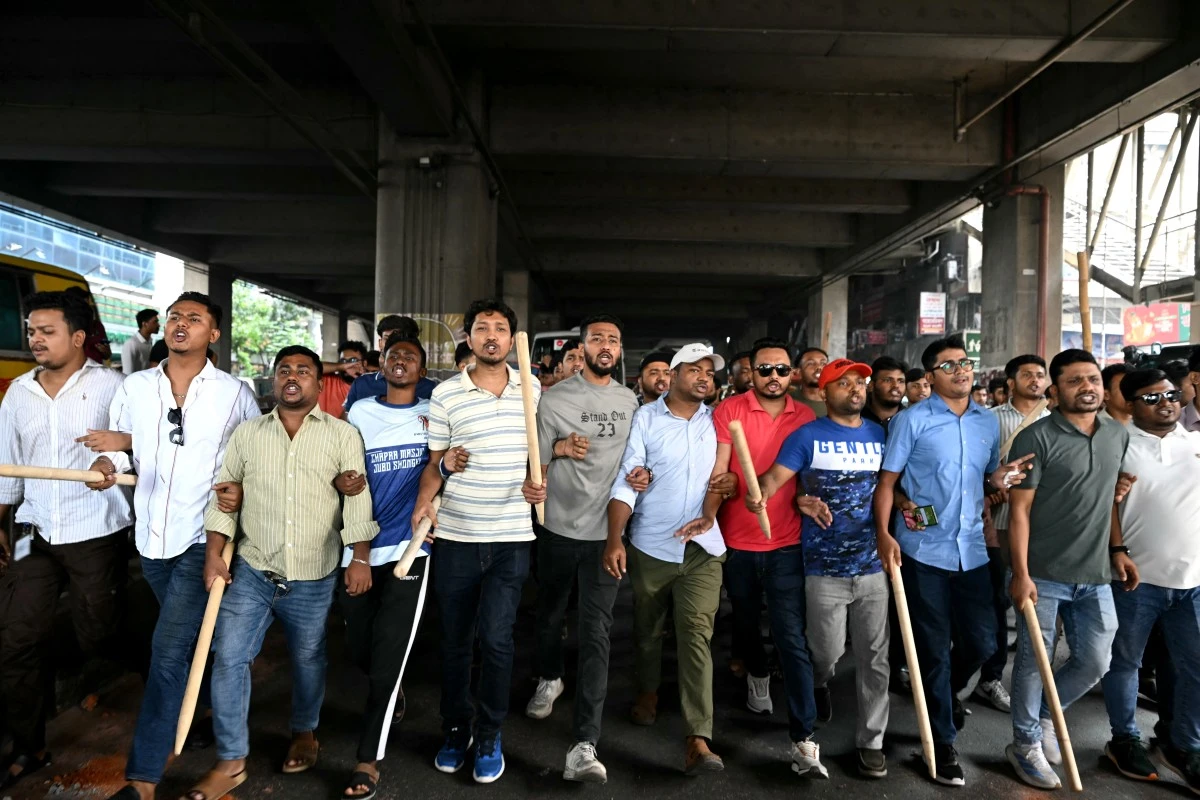
DHAKA: Bangladesh’s key garment labor unions called for restraint on Friday after the industry’s wage board agreed to raise the minimum wage following weeks of violent worker protests.
The South Asian nation of 170 million people is the world’s second-largest garment exporter after China, producing clothes for major international brands including Fruit of the Loom, Levi Strauss and VF Corp., whose labels include Vans, Timberland and The North Face.
“Do not get involved in any subversive activities that could jeopardize the ongoing work of the wage board,” union leader Meer Abul Kalam Azad told fellow workers.
Workers say rising food, housing, transport and health care costs have eroded their purchasing power in a country where inflation is running at around eight percent.
They are demanding a minimum monthly wage of 30,000 taka ($240) — a 140 percent increase on the current 12,500 taka.
Unrest over the wages began in October and threatened to disrupt an industry that earns around $38 billion annually, accounting for four-fifths of the country’s export earnings and employing more than four million workers.
Nazma Akhter, a veteran labor leader, called for workers to be “responsible.”
“A minimum wage board has been formed, and the board is moving quickly,” Akhter told reporters. “If they cannot secure the support of the workers, the wage board may not be able to move forward.”
The government-appointed board, comprising representatives of employers and workers, is expected to announce the new minimum wage by December.
Separately, the Bangladesh Garment Manufacturers and Exporters Association (BGMEA) is scheduled to hold an emergency views-exchange meeting on Saturday, with wages and labor unrest expected to dominate discussions.
More than 200 garment factories remained closed on Thursday as workers stayed away.
The BGMEA said it has more than 4,500 member factories in Bangladesh.