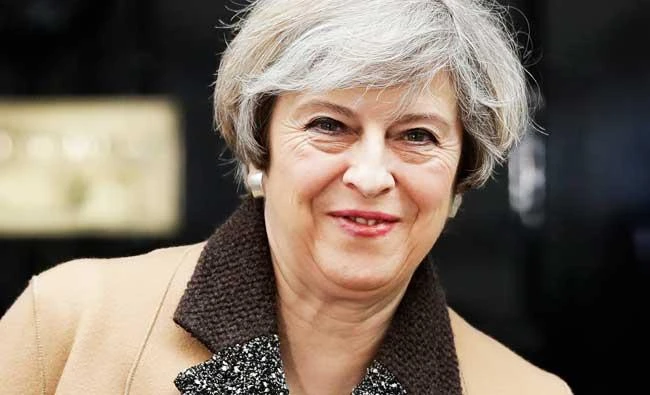
LONDON: Prime Minister Theresa May said Tuesday she would be given the power to start Brexit talks within days but declined to name a date for a process already disrupted by Scotland’s independence bid.
After speculation in Brussels and at home that she would start the withdrawal process this week, May told the House of Commons that she would fulfil her promise to do it by the end of March.
Parliament late Monday approved a bill empowering the government to trigger Article 50 of the EU’s Lisbon Treaty, starting a two-year countdown to Britain’s departure.
May said the bill would receive formal assent from Queen Elizabeth II “in the coming days” — leaving the prime minister free to start Brexit at any time.
“I will return to this House before the end of this month to notify when I have formally triggered Article 50 and begun the process through which the United Kingdom will leave the EU,” she said.
This would put Britain on course to become the first country to leave the 28-member bloc by March 2019.
“I do not know the date when the letter will arrive, but what I know is that we are ready,” European Commission spokesman Alexander Winterstein said.
May appeared to be caught off guard on Monday when Scotland’s nationalist government said it would next week seek authorization for a second referendum on leaving the United Kingdom.
The prospect had been mooted since the June referendum vote for Brexit, in which a majority of Scots had wanted to stay in the bloc, but the announcement had not been expected so soon.
May immediately condemned the plan, less than three years after Scots voted by 55 percent to reject independence, saying it would be “divisive.”
“This is not a moment to play politics or create uncertainty,” she repeated on Tuesday, saying it was time to “bring our country together.”
Facing nationalist movements across the continent, the EU is determined that no other countries follow Britain out the door, and big battles await over budget contributions, immigration and trade ties.
Manfred Weber, a German lawmaker who leads the European People’s Party, the biggest grouping in the European Parliament, said Scotland’s breakaway bid signalled “a deepening of the splits in British society.”
“People all over Europe can see how risky it is to take the EU into question,” he said.
Scottish concerns
There is speculation that May could wait to trigger Article 50 until after a March 25 summit in Rome to mark the EU’s 60th birthday, a moment it hopes will emphasize the bloc’s unity.
The prime minister will not be attending, her spokesman confirmed on Tuesday, adding that it was a decision agreed with EU leaders and “she wishes them well.”
The Scottish National Party (SNP) government in Edinburgh is hoping that with independence, Scotland could maintain its close ties with the EU.
First Minister Nicola Sturgeon said her concerns about May’s plan to pull Britain out of Europe’s single market, in order to cut immigration, had been met with a “brick wall of intransigence.”
But the European Commission was quick to warn that Scotland would have to reapply as a new nation.
May has the power to block a second independence vote, but this would risk energizing the Scottish nationalist cause at a time when polls indicate a narrow majority in favor of staying in Britain.
The approval of the Brexit bill was a victory for the prime minister, and she said Tuesday it gave “a very clear message to everybody in Europe that we mean business.”
But further battles await in Parliament, where a majority of lawmakers did not want to leave the EU — and certainly not Europe’s single market, which they fear could hit economic growth.
Sterling fell to an eight-week low against the dollar and the basket of currencies measuring its broader strength on Tuesday, hit by fears of a prolonged bout of political jousting over the terms of Britain’s exit from the European Union.
Banks reported selling of the pound from the moment traders arrived at their desks in Europe on Tuesday, driving sterling almost a full cent lower by 8 a.m. (0800 GMT).
“The triggering of Article 50 has been well telegraphed and is unlikely to cause a major stir for sterling in itself,” UBS head of UK rates strategy and economics, John Wraith, said.
“It does however increase headline risk, particularly as the opening negotiating positions of the two sides are far apart. This may shift attention back to the UK’s large current account deficit ... (and) does not bode well for sterling.”
Having ridden out the latest political headlines on Monday while the dollar was weak, sterling traded as low as $1.2110 before recovering to $1.2145 by 1330 GMT.
It fell as much as 0.7 percent against the euro to 87.85 pence.
British premier keeps suspense over Brexit trigger