BANGUI: For more than two years, even going to the cemetery to bury a loved one could get a mourner killed too. The threat of attack from Christian militia fighters was once so high that Muslims here began burying their dead at home.
Now the capital’s largest Muslim cemetery has reopened just ahead of the country’s landmark presidential runoff vote, with imams, the archbishop and ambassadors all gathering together to watch as the reddish earth was broken to once again receive the dead with palm fronds.
It’s one tangible sign that intercommunal relations here are improving after the cycles of violence that have left nearly 1 million people displaced and an untold thousands dead. Central African Republic’s future remains highly precarious and yet the barricade that once blocked Bangui’s remaining Muslims from leaving their enclave no longer exists. Muslims who only several months earlier were afraid to walk on the streets, even in their own PK5 neighborhood, are now praying in public.
Many credit the November visit of Pope Francis, who met with Christian leaders and ventured in his open-air vehicle to the mosque where many have sought refuge since tensions exploded in late 2013. Whether these advances hold largely depends on the success of Sunday’s historic vote that pits two Christians — both former prime ministers — against each other after a crowded first round of balloting.
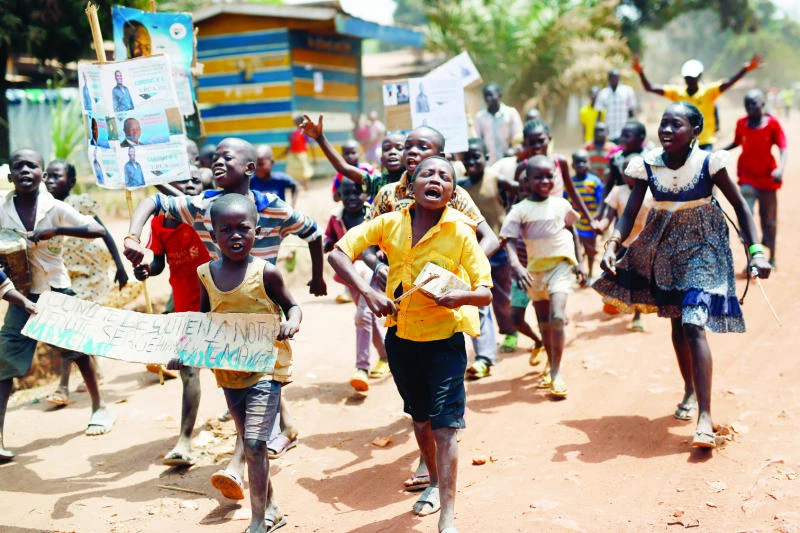
“We want these elections to take place as quickly as possible — we have waited long enough,” says Polycarpe Bebongo-Congo, 40, who is supporting Faustin Archange Touadera, the second-place finisher in the first round. The election is meant to end a two-year political transition that began when a Muslim rebel leader stepped aside under mounting international pressure less than a year after he deposed the Christian president of a decade.
Candidates promise unity in CAR vote