- Carney argues that restoring free trade would lower costs for American families
- Relations between the US and Canada have improved recently
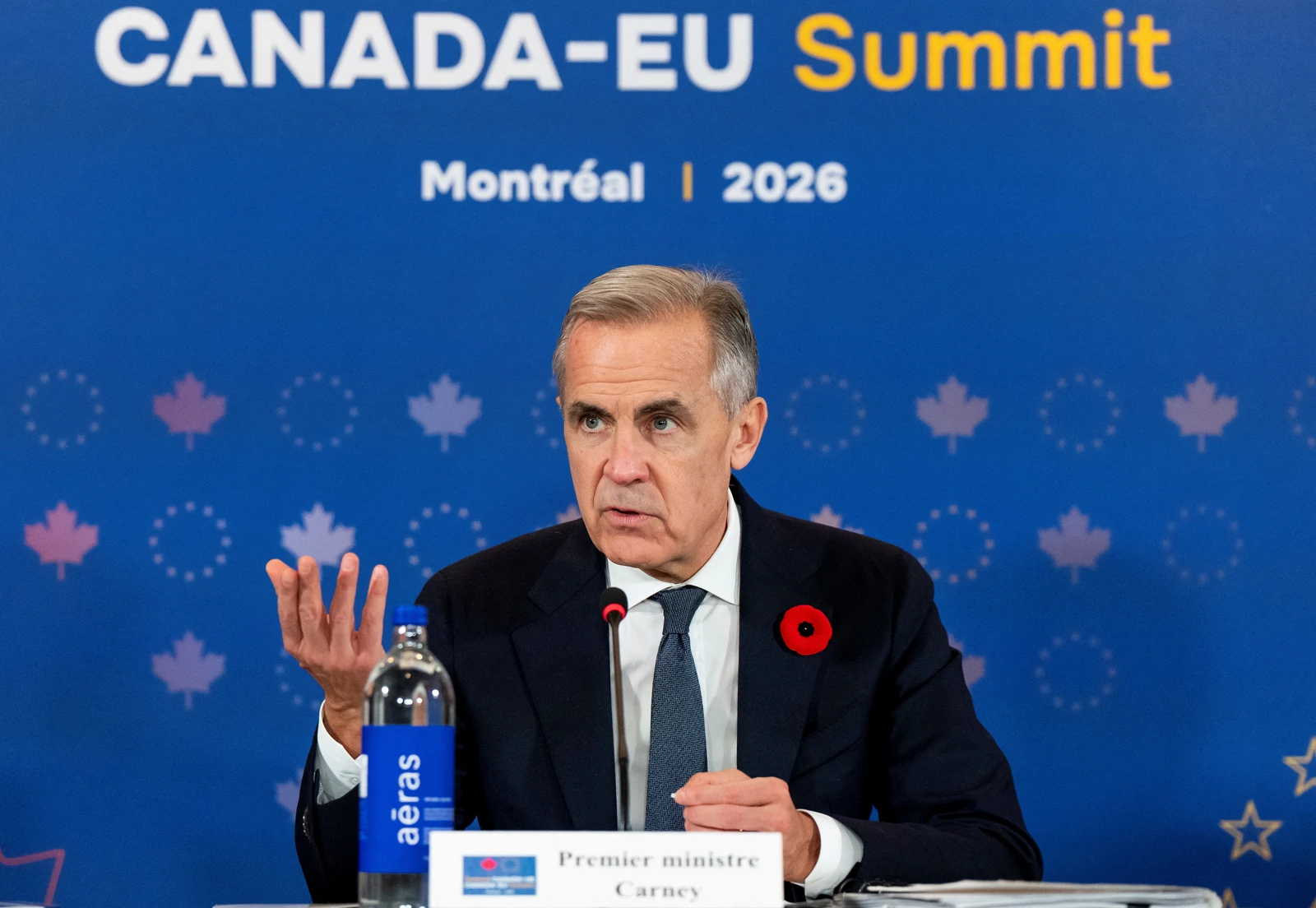
TORONTO: Canadian Prime Minister Mark Carney welcomed a Democratic push to repeal US President Donald Trump’s tariffs on Canada after their sweeping midterm victory, saying Friday that restoring free trade would lower costs for American families and benefit US workers, even as Ottawa continues negotiating with Washington.
“We welcome any moves to restore a free trading arrangement between Canada and the United States, which is in the interests of American families struggling with affordability,” Carney told reporters in Winnipeg.
He said free trade would also benefit American workers seeking well-paying jobs and stability.
“We will continue to work with the Americans to get a deal that works for Canada,” Carney said.
The Democratic victory raises a dilemma for Canada: Accept a deal that reduces Trump’s tariffs but leaves some in place, or hold out for the restoration of free trade as the incoming Congress prepares to challenge them. Carney has not said whether the election has changed his negotiating position.
Democratic Sen. Ron Wyden, who is poised to chair the Senate Finance Committee when Democrats take control of Congress in January, has identified Trump’s tariffs on Canada as an early target for repeal.
Michigan Sen.-elect Abdul El-Sayed, a Democrat, said Thursday he was willing to work with Trump on “stopping these stupid tariffs with Canada.”
Senate Democratic leader Chuck Schumer introduced legislation in September aimed at repealing Trump’s tariffs, including duties imposed on Canadian goods.
Carney said he had not spoken with Wyden or other Democrats about potential legislation to eliminate the tariffs.
Trump retains broad authority over trade policy and could veto legislation repealing the tariffs. Democrats would need substantial Republican support to override a veto.
Canada suspended trade talks in August over US demands that Carney said threatened Canadian sovereignty and French-language protections. Trump’s trade war has included 50 percent tariffs on billions of dollars in Canadian goods, prompting Canadian retaliation.
Trump has repeatedly suggested Canada should become the 51st US state and has pushed to move Canadian automobile production to the United States.
Trump has also threatened new tariffs on Canadian automobiles beginning in January, adding pressure on Canada’s auto industry as Ottawa weighs whether to strike a deal now or hold out for the elimination of US tariffs.
Relations have improved in recent weeks. Trump said Sunday the countries were “very close” to an agreement, while Carney said Tuesday that Washington had backed away from demands involving Canada’s French-language protections, culture and ability to negotiate trade agreements with other countries.