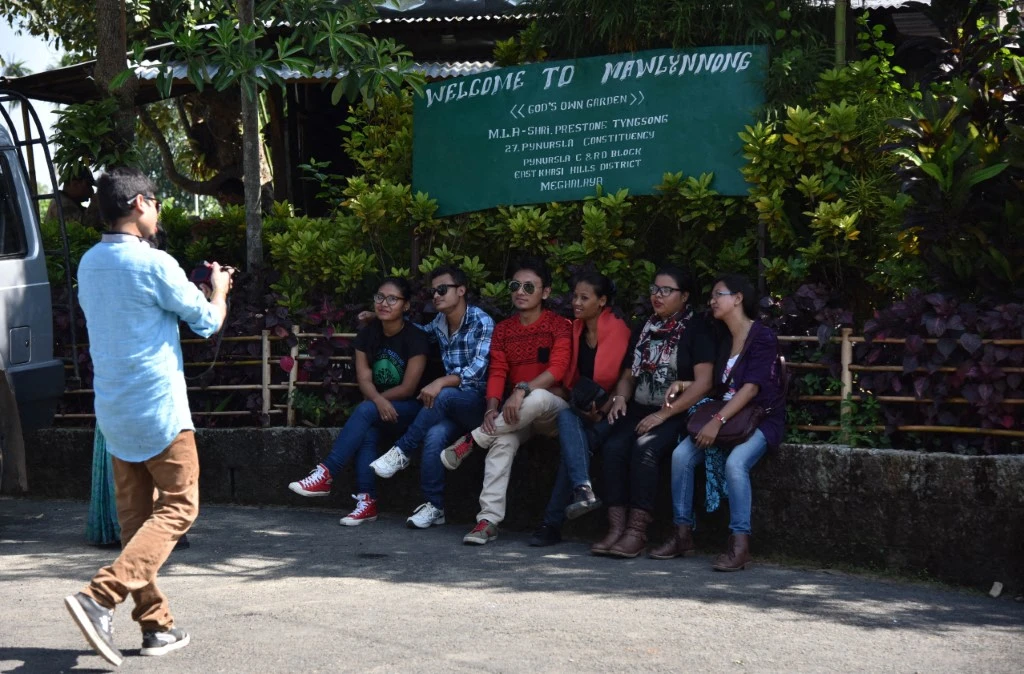
- Home to 500 people, Mawlynnong gained popularity after Discover India coverage in 2003
- Its residents are the Khasi people, an Indigenous matrilineal community in Meghalaya
NEW DELHI: When they lock their gates to the outside world every Sunday, residents of Mawlynnong get to enjoy a mandatory day of rest from overwhelming crowds, remembering how life used to be before they shot to fame as India’s cleanest village.
Located in India’s mountainous state of Meghalaya, near the border with Bangladesh, Mawlynnong boasts lush green trees, flower-decked streets, and neatly maintained houses. In every corner, there is a cone-shaped bamboo dustbin, and no trace of litter anywhere in the area. The air is clean, free from construction dust and vehicle exhaust.
Visitors need to park their cars or buses in a designated area outside and walk down to the village gate, where they are charged about one dollar to enter.
Home to 500 people, Mawlynnong has been seeing around twice as many tourists every day.
The popularity started in the early 2000s, after local media showed how clean the remote village was — a feat in a country where sanitation remains a challenge in rural areas. Soon, the Discover India magazine arrived too, and made a documentary in which it named Mawlynnong “the cleanest village in Asia” — a declaration that brought sudden welfare to the region and transformed its economy.
“Until 2003, it was a nondescript village growing betel nuts, betel leaves,” Philemon Khondlanoh, head of the village council, told Arab News.
“Now, only 30 percent of the villagers do farming, and 70 percent are engaged in business activities related to tourism.”
But what does not change is the traditional approach to cleanliness. Every day, people tend to their houses and gardens, and every week, on Saturday, the whole village gathers to tidy up all the common areas.
“The villagers have the habit of keeping their compounds very clean … It’s not that we started maintaining sanitation after we became popular. I remember, when I was in my village school, our teacher used to engage us in social work,” said Miranda Khongthohrem, a resident whose family — like many in Mawlynnong — runs a homestay.
“We carried the habit of cleaning — both within and outside the house. Even a small kid knows how to maintain cleanliness. This is all because of our school and parents.”
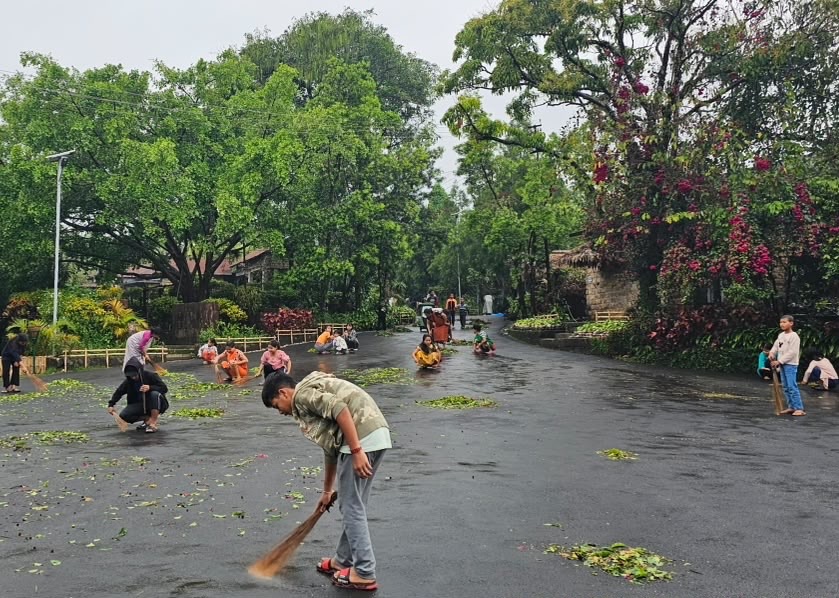
The residents of Mawlynnong belong to the Khasi people, an Indigenous matrilineal community where women inherit property and are responsible for the household. It is also a Christian village, where Welsh missionaries introduced the religion in the 19th century. One of the oldest sites and main community centers is the Church of the Epiphany, built by the missionaries in 1902.
To have peace in adhering to their religion, participating in mass at the church, and spending time with family, the village’s residents have been barring tourists from entering on Sundays since January this year.
Not all tourists are aware of the ban and every week groups will still gather at the gates and leave disappointed — it takes about three hours by car to reach Mawlynnong from the state capital, Shillong.
Khongthohrem feels sorry for them as she knows tourist presence is what has uplifted the village: “Almost every household in the village is engaging in touristic activities. It has contributed a lot to our livelihood and economic well-being. The village has changed and people are richer,” she said.
“During the peak season, like October, November, December, per week we have five or six days of bookings. On average, three to four days a week our homestay is booked. I charge 1,500 rupees ($15) per day … My family’s economic situation has improved since we came into the business.”
Yet the one day of rest is what the whole community needs. One day without crowds, trade and noise.
“We have an exit and entry point and reception, and whenever I reach there, I see tourists. Most of the tourists don’t know. They have not seen the notification yet ... most of the tourists feel angry,” Khongthohrem said.
“I saw many of the tourists, sometimes two-three buses, and sometimes so many vehicles. I do feel pain for them … But as a resident, I feel good at least once a week. We can experience the silence, the peacefulness and we can relax. It’s like in the old days.”