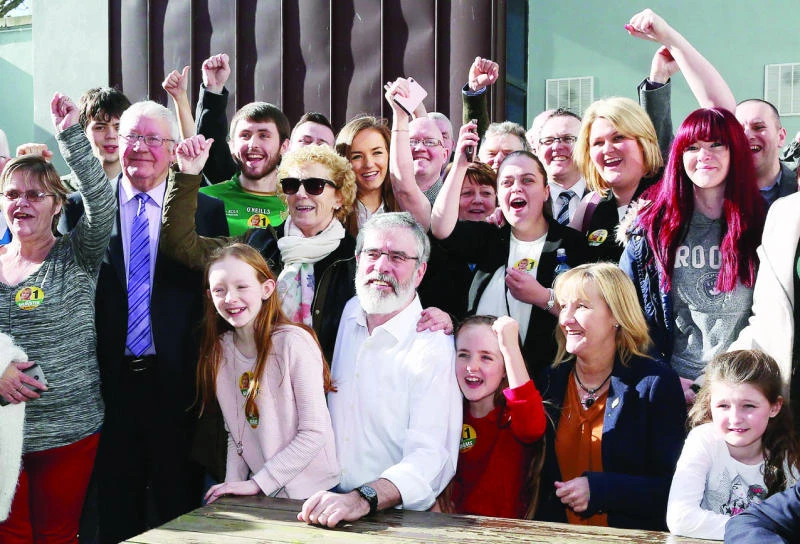
DUBLIN: Lawmakers in Ireland expressed a sense of shellshock and division Sunday over whether the country’s next government should be a historic alliance of age-old foes — or whether there should be a second election.
With two-thirds of winners declared in the race to fill a 158-member parliament, the new political landscape looked like the most fractured in Irish history. The two perennial centrist heavyweights — governing Fine Gael and opposition Fianna Fail — remained virtually neck and neck, with Fine Gael winners of 31 parliamentary seats, Fianna Fail 30.
Analysts forecast that Fine Gael would finish a few lawmakers stronger than the party’s political nemesis Fianna Fail. But neither would be able to form a parliamentary majority with any other single party, only each other.
Voters disgusted by Ireland’s 2008 economic collapse, 2010 international bailout and years of austerity deemed necessary to repair the damage threw their support in Friday’s election to a dizzying array of anti-government voices. For the first time in Irish electoral history, the combined popular vote for Fianna Fail and Fine Gael slid below 50 percent.
The two parties evolved from opposite sides of the cut-throat civil war that followed Ireland’s 1922 independence from Britain. Between them, they have led every Irish government — and have never shared power with each other.
’Irish may face 2nd election’