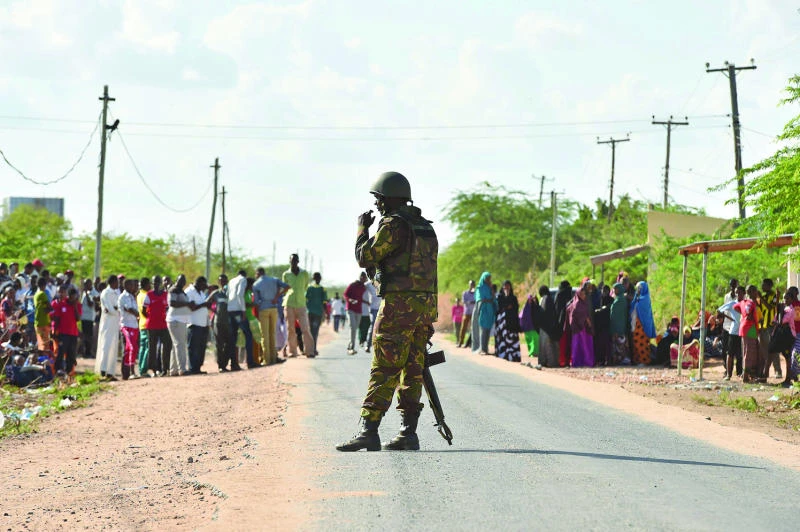
GARISSA: The death toll in an assault by Somali militants on a Kenyan university is likely to climb above 147, a government source and media said on Friday, with local residents furious over the government’s failure to prevent the bloodshed.
Grieving relatives were meanwhile searching for news or the remains of their loved ones after the attack.
Strapped with explosives, masked gunmen stormed the Garissa University College campus, some 200 km from the Somali border, in a pre-dawn rampage on Thursday.
Tossing grenades and spraying bullets at cowering students, the attackers initially killed indiscriminately. The day-long siege of Garissa University was Kenya’s deadliest attack since the 1998 bombing of the US Embassy in Nairobi, and the bloodiest ever by the militants. The Kenyan government, however, vowed it would not be “intimidated.”
Anger over the massacre was compounded by the fact there were warnings last week that an attack on a university was imminent. Local residents accused the authorities of doing little to boost security in this little developed region.
“It’s because of laxity by the government that these things are happening. For something like this to happen when there are those rumours is unacceptable,” said Mohamed Salat, 47, a Somali Kenyan businessman.
Officials said almost 150 people died, with at least 79 wounded, many critically. But with an uncertain number of students and staff still missing, the casualties may yet mount.
“Yes, there is a likelihood of numbers going up,” said one government source dealing with the Garissa attack.
Kenya’s biggest-selling Daily Nation newspaper, citing sources, said the death toll would be significantly higher.
Outside the university gates, a throng of veiled women clang to the hope that missing people would still turn up alive.
“We are here waiting for news if we can find him, dead or alive,” said Barey Bare, 36, referring to her cousin who worked as a clerk at the university and has been missing since Thursday. The violence will heap further pressure on President Uhuru Kenyatta, who has struggled to stop frequent militant gun and grenade attacks that have dented Kenya’s image abroad and brought the country’s vital tourism industry to its knees.
More than 400 people have been killed by the Shabab in the east African nation since Kenyatta took office in April 2013, including some 67 people who died in a blitz on a shopping mall in the capital Nairobi in September of that year.
Al-Qaeda itself killed some 207 people when it blew up the US Embassy in Nairobi in 1998.
Shabab says its recent wave of attacks are retribution for Kenya sending troops into Somalia to fight the group.
Within hours of the attack, Kenya put up a 20 million shillings ($215,000) reward for the arrest of Mohamed Mohamud, a former Garissa teacher labelled “Most Wanted” in a government poster and linked by Kenyan media to two separate Shabab attacks in the neighboring Mandera region last year.
The government also slapped a dusk to dawn (6.30 a.m.-6.30 p.m.) curfew on Garissa, Mandera and two other crime-ridden regions near the porous 700-km border with Somalia.
However, diplomats and analysts say the move effectively concedes the government is not in control of these areas, which are widely seen to be Kenya’s soft underbelly.
Kenya death toll seen rising; anger over security failures