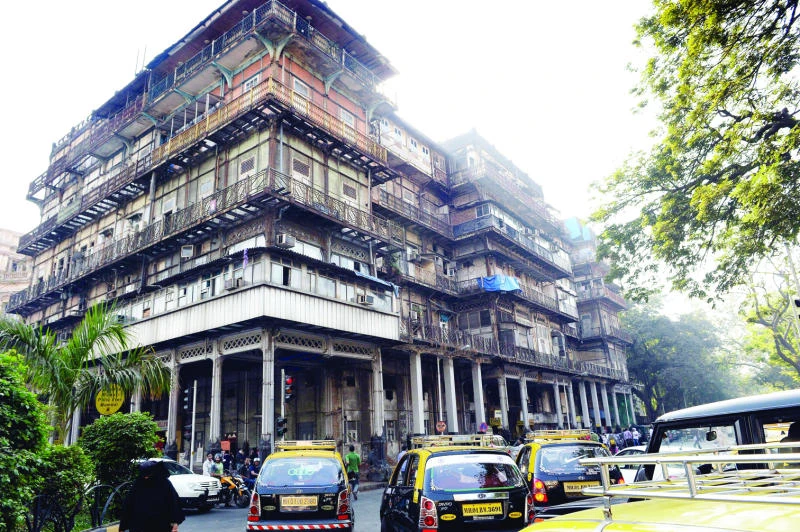
MUMBAI: Hidden behind a blanket of trees at the back of a university in Mumbai lies the dilapidated, but once grand, former home of writer Rudyard Kipling.
Fallen branches, discarded chairs and even empty whisky bottles surround the 19th-century building, while bird droppings mar a bust of Kipling, author of such beloved novels as “The Jungle Book” and “Kim.”
“The bungalow is in very bad condition and needs desperate help,” the college’s principal, Rajiv Mishra, tells AFP.
“We feel cheated that such a beautiful monument has been neglected,” he adds, pointing to a rotting wooden post, precariously supporting the historic property in south Mumbai.
The “Kipling Bungalow,” as locals affectionately call it, is one of several mansions in the teeming Indian city, once associated with famous residents but now in ruin.
Nearby stands the former colonial home of Lord Harris, an ex-governor of then-named Bombay, widely credited with making cricket the most popular sport in India. The gothic building housed school classrooms until four years ago, when pupils were moved out because the crumbling structure had become too weak and hazardous.
A few kilometers away in plush Malabar Hill sits the previously imposing residence of Mohammad Ali Jinnah, the founder of Pakistan and its first governor-general.
The stately home hosted critical talks between Jinnah and India’s first prime minister Jawaharlal Nehru on partition of the subcontinent, but today its downtrodden appearance belies its historical significance.
Heritage campaigners lament the demise of such buildings, blaming red tape and claiming politicians and developers are more concerned with constructing sparkly new luxury towers than preserving Mumbai’s architectural history.
“The Kipling Bungalow is just a very sad reflection of bureaucratic hurdles... creating the death of a historic building,” renowned architect Abha Narain Lambah, who specializes in conservation, told AFP.
Kipling to Jinnah: Mumbai’s crumbling homes