ISLAMABAD: Different officials in Pakistan’s government have taken seemingly contradictory stands on Daesh’s influence in the country, after a rare warning by an intelligence chief that the Middle East-based militant group posed a domestic threat.
Reports of stepped-up recruitment by Daesh and a bloody attack linked to the group last year have stoked fears the movement is gaining momentum in Pakistan, despite the government rejecting its formal presence.
The government reasserted its view on Thursday, a day after Intelligence Bureau director general Aftab Sultan told a parliamentary panel that Daesh was coordinating with militant groups and that hundreds of people had left Pakistan to join its fight in Syria, media reports say.
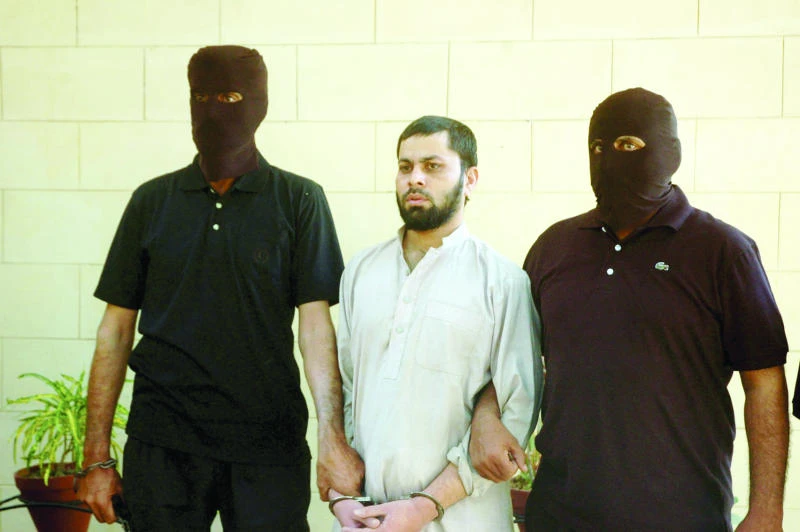
Meanwhile, Pakistan’s intelligence agencies arrested a collective of 97 “hardcore terrorists” from three banned groups involved in a string of major terrorist attacks and seized weapons, explosives and communications gear intended for future attacks, a Pakistani official said Friday.
Lt. Gen. Asim Saleem Bajwa told reporters at a press conference in Karachi that the militants belonged to different groups — Lashkar-e-Jhangvi, Tahrik-eTaliban Pakistan and the local Al-Qaeda affiliate.
“Among the arrested militants are three high-value targets and 94 hardcore terrorists,” including 26 with government bounties on their capture, said Bajwa.
The army spokesman said those arrested include explosives experts, financiers and militants preparing to become suicide bombers. The militants had been arrested in a series of raids and operations over the course of several months.
He said they had been coordinating on logistics and planning and were in the midst of planning a major attack on a jail in Hyderabad in order to free Ahmed Umar Saeed Shaikh, who was convicted of involvement in the killing of Wall Street Journal correspondent Daniel Pearl in 2002.
“Their plan for Hyderabad jail break was about to be executed for which they have prepared explosives-laden vehicles,” said Bajwa.
No ‘organized presence’ of Daesh in Pakistan