MUNICH: The world has plunged into a “new Cold War,” the Russian premier said Saturday, as East-West tensions over Syria and Ukraine dominated a gathering of world leaders in Germany.
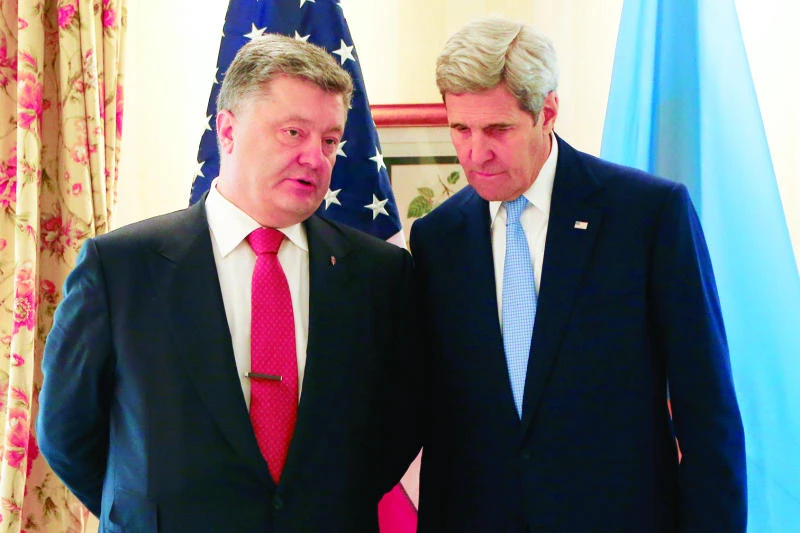
US Secretary of State John Kerry told the Munich Security Conference that Russia must stop targeting moderate fighters in Syria and pull its troops out of Ukraine.
“To date, the vast majority of Russia’s attacks (in Syria) have been against legitimate opposition groups,” Kerry told the audience.
“To adhere to the agreement it made, Russia’s targeting must change,” he said, referring to the international deal forged on Friday, in which foreign ministers agreed to seek a “cessation of hostilities” in Syria within a week.
“This is the moment. This is a hinge point. Decisions made in the coming days and weeks, and a few months could end the war in Syria — or could define a very difficult set of choices for the future.”
He spoke shortly after Russian Prime Minister Dmitry Medvedev said the world had “slid into a new period of Cold War.”
“Almost every day we are accused of making new horrible threats either against NATO as a whole, against Europe or against the US or other countries,” Medvedev said. A panel of eastern European leaders were eager to add to the criticism of Russia’s assertive foreign policy.
“Every single day, Russian troops, Russian weapons, Russian ammunition penetrate into my country,” said Ukraine President Petro Poroshenko.
He addressed Russia’s president, who was not present, saying: “Mr. (Vladimir) Putin, this is not a civil war in Ukraine, this is your aggression. This is not a civil war in Crimea, this is your soldiers who occupied my country.”
Kerry emphasised that sanctions on Russia would remain in place until it implements all aspects of the Ukraine peace agreement reached in Belarus’ capital Minsk last year.
“Russia has a simple choice: Fully implement Minsk or continue to face economically damaging sanctions,” he said.
By contrast, Medvedev had earlier criticized the expansion of NATO and EU influence deep into formerly Soviet-ruled eastern Europe, which Russia still sees as its sphere of influence.
NATO secretary general Jens Stoltenberg also addressed the forum, vowing to combine a firm stance against Russia with more dialogue.
Russia ‘must stop targeting moderate fighters in Syria’