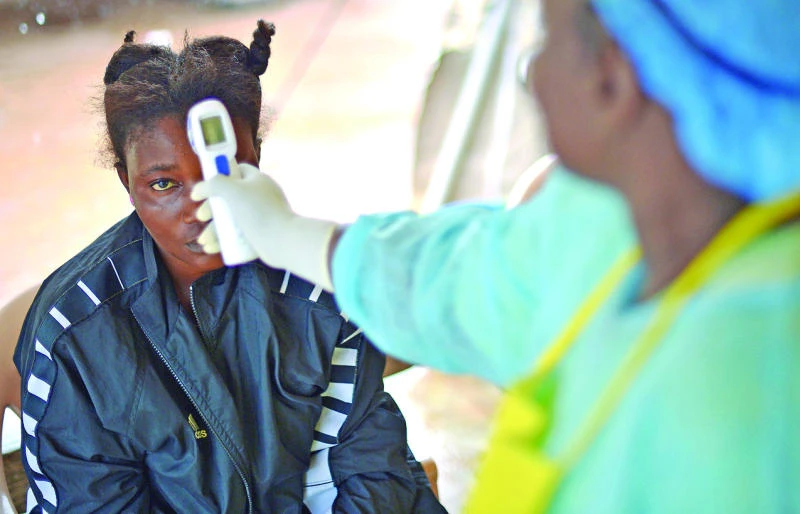
FREETOWN: The latest flare-up of Ebola in Sierra Leone has ended, leaving no confirmed cases of the virus in West Africa, the UN said Thursday, hailing it as a “milestone.”
“The World Health Organization joins the government of Sierra Leone in marking the end of the recent flare-up of Ebola virus disease in the country,” a statement said. The global health body made the announcement after 42 days — or two Ebola incubation cycles — since Sierra Leone’s last Ebola patient tested negative for the second time.
Sierra Leone recorded half of the cases in an Ebola epidemic that infected a reported 28,600 people across the three hardest-hit nations and claimed 11,300 lives since December 2013, although a significant number of deaths are believed to have gone unreported.
The WHO has recorded almost 4,000 deaths in Sierra Leone since the outbreak began.
On Thursday the world health body was also careful to warn that a recurrence of the deadly tropical disease remained a possibility.
“WHO continues to stress that Sierra Leone, as well as Liberia and Guinea, are still at risk of Ebola flare-ups, largely due to virus persistence in some survivors, and must remain on high alert and ready to respond,” the statement said.
The virus can stay in semen for at least nine months after a patient has recovered, six months longer than previously thought.
Scientists are working to establish how long it can persist in other bodily fluids and tissues such as the spinal column and the eye, and for how long it could remain infectious.
“Until the virus is completely cleared from the survivor population, and that may take the remainder of the year or more, we have to anticipate and be prepared for additional small outbreaks,” a WHO representative told AFP.
Sierra Leone was declared free of Ebola transmission on Nov. 7 last year, but two cases have emerged since then: in early January a 22-year-old woman was taken ill near the Guinean border and died days later, and her aunt was infected soon afterwards.
The WHO refers to these isolated cases as “flare-ups” but maintains the original “chains of transmission” have been stopped in Guinea, Liberia and Sierra Leone.
The rapid containment of the January cases was down to “investments made in rapid response teams, surveillance (and) lab diagnostics,” the WHO said, as well as greater prevention and control measures developed in the last 18 months.
S. Leone Ebola flare-up ‘is over’