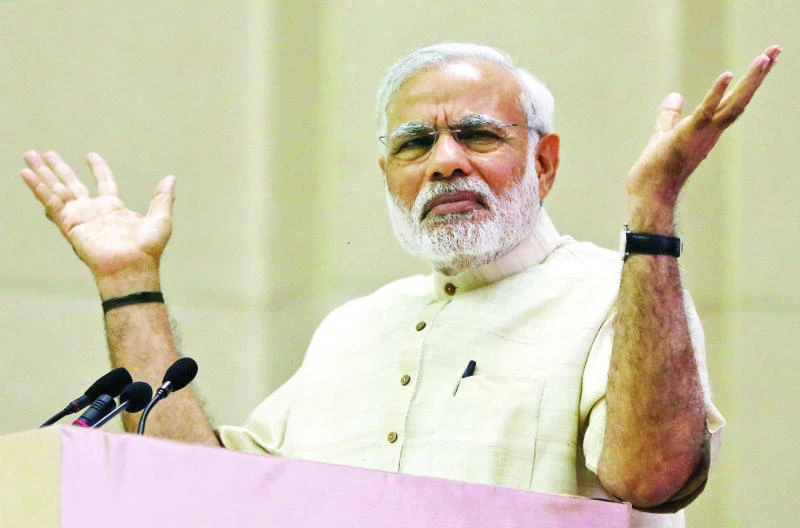
NEW DELHI: India’s Prime Minister Narendra Modi began work with unions and employers on Monday to build support for the biggest shake-up of labor laws in decades, in an attempt to revive a reform agenda that has suffered setbacks ahead of a key parliamentary session.
It is a change of tack for Modi, who is smarting from widespread opposition to business-friendly land purchase rules he has tried, and so far failed, to push through parliament following an executive decree.
“I am confident that we will be able to address the challenges ahead and proceed with reforms with everyone’s consensus,” Modi said at the start of a two-day labor conference on Monday.
Modi has had to scale-back his ambitions for the short session of parliament that starts on Tuesday, with government officials privately saying the main focus will be on passing a law to enable a goods and services tax (GST).
The GST law got the backing of a parliamentary panel on Monday. Passing it would in itself be a victory and go someway to reassuring investors who are growing jittery that economic modernization is happening more slowly than they hoped under Modi.
“Unless there is clarity on reform proposals investors are not keen to pump in new money,” said Deven Choksey, managing director at KR Choksey Securities.
The proposed changes making it easier for government and businesses to buy farm land are now likely to be implemented by states, not by the central government.
Draft changes to India’s archaic labor codes include pro-business measures giving factories more leeway to lay off workers and will simplify thickets of rules, but also include measures to expand the social security net to the huge unorganized sector.
The overhaul will probably not reach parliament until later in the year, despite an earlier goal of tabling the amendments in the upcoming monsoon session.
Stung by opposition, Modi seeks consensus on reform