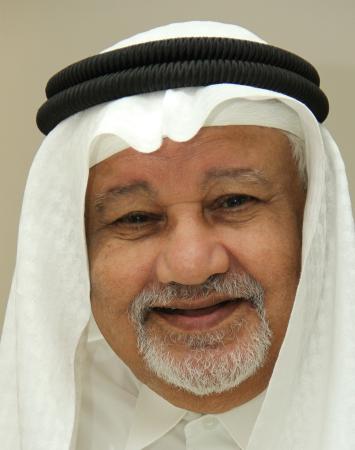
Eahamed is the Indian minister of foreign affairs. He travels frequently in the service of his country and visits the Kingdom in that capacity as well as to perform Umrah.
When we met in Jeddah more than once including in my office in Malayalam News, an Indian-language daily I was in charge of, he invited me to visit him at his house in the Indian capital, New Delhi, and gave me his telephone number.
Subsequently, when I was in India I called him and he kindly sent me his car to take me to his house. I liked the house that was near Teen Murti Bhavan where the prime minister and the other ministers resided. It was spacious although modestly furnished like many such houses in the Third World countries unlike houses in the Gulf, which are superbly decorated given the lavish incomes available to the elite in the region.
It was Iftar time in Delhi and we were practically alone but for the household staff. It was a pleasant evening until Isha prayer. Again he offered me his car to drop me at my hotel — the Sheraton in New Delhi. There is another Sheraton in the capital, which is slightly older.
Since my meeting with him was reported soon thereafter, I am going here to concentrate on the man’s impressive career. Ahamed was educated in Government Brennen College, Tellichery, Kerala — a state with the highest literacy in India and it has sent a large number of expatriates to the Gulf states including Saudi Arabia.
He was a member of the Kerala Legislative Assembly five times consecutively from l967 to l991. During that time he became a Cabinet minister for industry in Kerala. He was elected to the Lok Sabha, lower house of the Parliament, in l991 and many times thereafter from the Ponnani constituency. He was a member of several committees and a member of the Indian delegation to the United Nations for six years. He later bcame minister of state for foreign affairs after serving as minister of railways.
One of his all-time passions is the Indian Union Muslim League, which is the only Muslim organization that has maintained its consistent presence in the Indian Parliament all along its history. “Since Independence many organizations have come with tall claims to represent the Indian Muslim politics but most of them vanished, failing to withstand the test of time,” he claims. We have struggled a lot to make a righter past and present. Taking a cue from the past and present, there is a need to attune to a stunning future. But the political strategies of the old mould, for sure, would not serve this purpose, “ says the minister.
In one of his presidential addresses to the party he said: “It goes to the credit of our party that we have had representation in the Parliament since inception. In l952 to l957 we had only one member in the Lok Sabha, the late Janab B. Pocker. The soft but stern voice of that barrister from Malabar had a telling influence on law making of the nation on every important occasion. Since then we have had leaders in the Lok Sabha, the late Quaid-e-Millat Mohammed Ismail, Ebrahim Sulaiman Seth, C.H. Mohammed Koya, S.M. Shareef, A.K.A. Abdussamad and others. At present we have three members in the Lok Sabha.”
The three represent Ponani, Vellore and Malapuram. The party has also members in the upper house called the Rajya Sabha.
Ahamed says that in the history of the League there are two watersheds. One in l979 when C.H. Mohammed Koya became the chief minister of Kerala for a short spell but it was a morale booster for the party. In 2004 the party was inducted in the central Cabinet.
According to him that was recognition of the party’s consistent stand on secular, democratic and undiluted commitment in the service of communal amity and religious harmony.
He has committed himself with other members to the democratic structure of the country. With others, he says, he has been striving to organize the party and safeguard its unity.
One of his best speeches I think he made during a conference on drug routes from Afghanistan, which has menaced the neighboring countries including India and Pakistan. The cultivation and trade through smuggling have proliferated with heroin which is made from opium widely cultivated in Afghanistan has become big and international business. While complimenting the governments of Russia and Afghanistan for their efforts — although they are not enough in themselves — he called for an international effort to combat the dangers. I quote: “As has been brought out in the working group discussions, this issue is also inextricably linked to the security and stability of Afghanistan and of the region, which in turn is crucial for the economic reconstruction of Afghanistan. There will also be long-term social and economic effects, if the Afghan economy is not shielded from the influence of drug money.”
The destructive nexus between narcotics cultivation and terrorism confronts the international community once again. One of the most destructive legacies of war-lordism in Afghanistan was the spread of poppy cultivation. The deadly crop is available again to finance terrorism in Afghanistan, with ominous consequences for the country and the whole world.
In view of the magnitude and complexity of this problem, no country can fight it on its own. The problem has to be tackled at the supply end, as well as on the demand side. Further, drug routes traverse different countries from sources to destinations. Accordingly, bilateral, regional and multi-lateral cooperation has to be recognized as a key element of any strategy in combating the menace of drug trafficking effectively.”
— Farouk Luqman is an eminent journalist based in Jeddah