RIYADH/JEDDAH: Security forces have busted a 62-member Al-Qaeda terrorist cell that was planning to assassinate leaders and attack government targets in the Kingdom with other organizations.
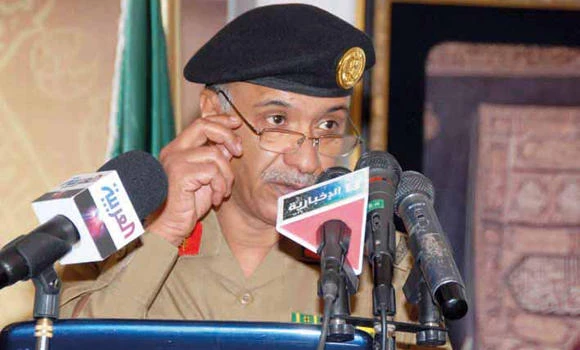
Maj. Gen. Mansour Al-Turki, spokesman of the Ministry of Interior, said on Tuesday that the cell comprised 62 members — 59 Saudis, a Yemeni, Pakistani and Palestinian. Some of them are on the run or in hiding, he said.
“This terror cell, with links to extremist elements in Syria and Yemen, had been plotting to assassinate officials and attack government targets in the Kingdom and the region,” said Al-Turki at a press conference. The ministry was working closely with Interpol to gather more information about the group and its members.
He said an investigation into social media postings led security forces “after months of hard work” to pinpoint the suspicious activities of certain individuals. The investigators finally discovered the terrorist organization, which had been communicating with Al-Qaeda members in Yemen and Syria. Members of the cell had also communicated with deviant groups in the Kingdom, he said.
Al-Turki said the cell had links with the hard-line Islamic State of Iraq and the Levant (ISIL), a powerful force in Syria’s war and an anti-government combat group in turbulent Iraq. The Kingdom recently banned the ISIL.
He said the group had about SR900,000 in cash that was to be used for smuggling weapons across the Yemeni border.
“A facility to make bombs, produce improvised explosive devices, jammers for electronic equipment and modulating mobile phones belonging to this cell was also uncovered,” he said.
Al-Turki said the suspects had admitted to “plotting attacks and smuggling huge amounts of arms and explosives.” They had also collected donations from sympathizers to finance their activities.
He expressed concern about the trafficking of women across the border, and admitted that terrorist groups had succeeded in smuggling two women — Arwa Baghdadi and Rima Aljerish — to Yemen. However, security officers had foiled an attempt to smuggle two other women, Mai Al-Talaq and Amina Al-Rashid, across the border, he said.
He said several foreigners are still in detention in the Kingdom on various terror-related charges. Al-Turki could not provide the exact number of expatriates detained. According to the latest figures up to the end of last year, an estimated 551 expatriates are currently in jail.
The Saudi government has bolstered security across the Kingdom, especially along its 1,600-km border with Yemen.
The Kingdom arrests many intruders from Yemen on a daily basis.