
Between May 23 and 26, voters across the EU will get the chance to elect 705 members of the European Parliament. For the first time since these elections started in 1979, British voters will not be electing their representatives, hence the reduction from 751.
But how significant will these elections be? Will they start to engage European voters — a vital issue given that not once this century has voter turnout exceeded 50 percent? It was only 43 percent five years ago. This will not be helped by the ever-growing fear among Europeans about fake news and manipulation of data, something the European Commission says it is working hard to resolve with the major social media companies.
This vast electoral exercise comes at a time of acute crisis and soul-searching across the continent of Europe. Brexit is far from the only challenge, albeit losing the world’s fifth-largest economy together with its significant military, intelligence and diplomatic assets is a blow. The euro marks its 20th anniversary, but the eurozone is still frail with too many countries saddled with gigantic debt.
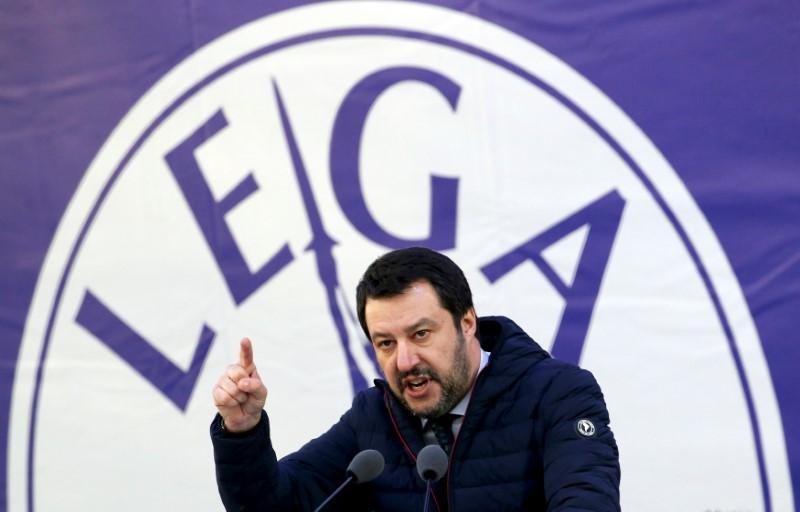
One of the great challenges is the insurgent so-called populist movements that are shaping national politics alongside nationalist and euroskeptic parties. Many of them would like to smash the EU. Will these parties, such as the National Rally led by Marine Le Pen in France and the Austrian far-right Freedom Party, fare well in May and form one of the largest blocs? Le Pen has lost momentum in France, not least due to funding scandals, and badly needs her National Rally to poll well, especially in light of President Emmanuel Macron’s recent difficulties and low approval rating. An attractive new prize for any of the existing political blocs will be the Italian right in the shape of the Northern League of Matteo Salvini, whose party could get around 25 MEPs.
The euro marks its 20th anniversary, but the eurozone is still frail with too many countries saddled with gigantic debt.
Chris Doyle
Immigration will be the “populist” trump card, with an opinion poll in October carried out in 10 EU states indicating that only 10 percent would support increased immigration into Europe. But not all the far-right parties agree here, as Italy’s demand for refugee quotas is steadfastly opposed, including by Hungary under Viktor Orban.
But far-right nationalist success is not guaranteed. Even if they do win a large share of the seats, their nationalist politics and ideology means they do not have a history of working constructively with counterparts in other countries. For example, not all the far-right parties share the warm relations the Northern League and Freedom Party has with Vladimir Putin’s United Russia party.
The European People’s Party (EPP) — essentially a rightist Christian Democrat bloc that includes Chancellor Angela Merkel of Germany — looks set to remain the largest bloc. The Christian Democratic Union in Germany has concocted the slogan “Europe must be done right.” This is hardly a marketing man’s dream, but highlights the increasing frustration with the EU, and not just in Britain. Whilst at its core the EPP is pro-European, it also includes many euroskeptics within its ranks and, controversially, Orban’s Fidesz party.
European socialists are in the doldrums. Only Malta has an outright socialist government, with some others a part of coalitions. Their status as the second-largest bloc in the Parliament is under serious threat, given they can muster no more than around 20 percent support. Back in the 1990s, the socialists were the largest Parliamentary grouping and dominated much of EU politics. French and German socialists are dropping out of sight. The Green parties also look as if they might lose seats, not least as they fail to win support in Southern Europe despite their recent strong showing in Germany.
Another challenge is that Macron’s new party, En Marche, does not belong to one of the main blocs. He wants to create a new bloc but needs allies when he has plenty of opponents.
The elections will also influence who will succeed Jean-Claude Juncker as EU Commission president, as he will not seek a second term. It is not clear if he will endorse Manfred Weber, the prime candidate from the dominant center-right EPP, and waiting in the wings is Michel Barnier, who is fresh from his much-admired handling of the Brexit negotiations and might fancy his chances, if not for president then perhaps for high representative, which is effectively the EU foreign minister. But Barnier would need the support of Macron, which, given they are from differing parties, is far from certain.
European politics remains all at sea, with discordant voters remaining disillusioned. Millions remain skeptical of the union and what it has achieved for them, but do not wish to join Britain at the exit door. Dissatisfaction is widespread and the EU and immigrants are easy, lazy targets. One wonders whether any of the candidates standing have the policies to address this; to initiate the sort of reforms that might make the EU more relevant and more accountable to its voters and citizens. A failure to do so could see more gains for the far right and risk yet more of the sort of authoritarianism witnessed in Orban’s Hungary. Ultimately a failure to change could lead to the EU tearing itself apart.
- Chris Doyle is director of the London-based Council for Arab-British Understanding (CAABU). Twitter: @Doylech