


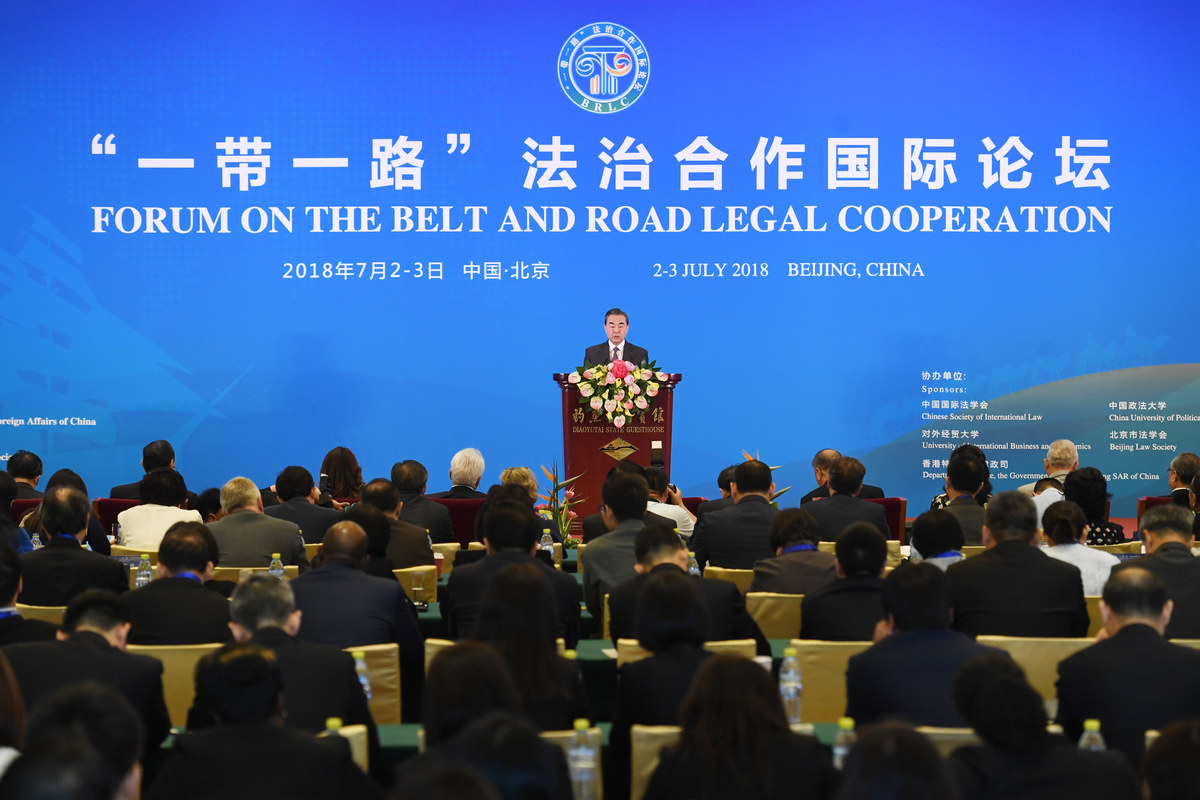
In late April, China hosted its second Belt and Road Forum for International Cooperation — a major showcase for its evolving and expanding Belt and Road Initiative (BRI). The forum highlighted the increasingly global nature of the BRI, including its implications for the Middle East.
This forum demonstrated broader global interest in the BRI compared to the first in 2017. Around 5,000 delegates from more than 150 countries attended, including more than 30 world leaders. In March, Italy became the first major European economy to formally join the BRI. The BRI no longer simply follows the old Silk Road land and maritime routes, but now includes connections well beyond, such as with Latin America.
The BRI has emphasized Chinese funding of and participation in infrastructure projects and other forms of strengthening global connectivity. Its focus is on building trade, transportation and communication networks between countries. The initiative promotes China’s global influence at a time when some of the world’s traditional Western leaders are scaling back their global involvement. While China emphasizes the BRI’s economic impacts, it clearly supports Beijing’s geopolitical interests as well.
Parts of the Middle East — especially Turkey and Iran — are well situated to participate in and benefit from China’s efforts. Much of the Middle East falls too far south or west to be directly involved in the original concept of the land-based routes but, as the BRI has evolved into a more expansive concept, it has drawn in more of the region. Also, much of the Middle East falls along the maritime routes as conceived in BRI plans.
As the BRI takes on a more global perspective, it becomes clearer that the Middle East is geographically located to provide key hubs for trade, travel and finance. There are already multiple BRI projects in the region, including in the UAE, Oman, Turkey, Iran and Egypt. Some of these relationships are driven by China’s BRI momentum, but trade and investment relationships between the Middle East and China pre-date the BRI, which in some cases offers new branding for older projects and relationships.
The GCC states are capable of balancing the BRI’s pros and cons, and balancing their relationships with China, the US and other world powers
Kerry Boyd Anderson
The Gulf Cooperation Council (GCC) states are well positioned to play an active role in China’s BRI plans, and to balance the pros and cons for working with China. Beijing is now the GCC’s biggest trade partner. The GCC exports oil to China, but the region is increasingly exporting a more diverse range of goods and services too. As GCC countries look to diversify their sovereign wealth funds’ investments, China is a potential investment destination. And, as GCC countries seek to diversify their economies, China is a potential source of investment and partnership. More broadly, the GCC region has established itself as offering important intersections for global trade, logistics, travel and finance. It is well positioned to benefit as China works to expand global connectivity.
While the BRI offers many benefits, there are downsides or reasons for caution. Extensive concerns have been raised about the risks of “debt traps,” in which China offers unsustainably large loans to countries; there are several cases of negative outcomes for those countries when they fail to make loan repayments. Chinese companies and labor are involved in most BRI projects, and concerns have been raised about quality, environmental degradation, and a lack of investment in local jobs and communities. While part of the appeal of Chinese loans comes from the lack of conditions — in comparison to loans from the World Bank, International Monetary Fund or Western governments or businesses — China is not a disinterested economic partner. Beijing has geopolitical and economic goals behind the BRI.
Furthermore, while China can be a partner for Middle Eastern countries and companies, it also can be a competitor. This is seen in the dispute between DP World, the Djibouti government and a state-owned Chinese company regarding the Doraleh Container Terminal. This case appears to demonstrate some of the negative consequences that Chinese influence can have for other international firms.
The GCC states, however, are capable of balancing the BRI’s pros and cons, and balancing their relationships with China, the US and other world powers. GCC leaders are experienced at juggling such competing interests. Gulf states have leverage they can use to negotiate favorable terms with China, and significant mutual interests with Beijing.
Some other countries in the Middle East lack the economic power, influence and administrative sophistication of the GCC countries. These states are in greater need of Chinese investment and expanded and upgraded infrastructure, and therefore stand to greatly benefit from the BRI. However, they also are more vulnerable to the risks of the BRI, including the potential for unsustainable debt, unfavorable terms and a lack of accountability in BRI projects.
The latest Belt and Road Forum for International Cooperation emphasized that China has heard some of these criticisms from partners around the world and is responding by trying to improve loan sustainability and environmental conditions, while also addressing corruption concerns. The reality remains, however, that countries badly in need of investment will have limited negotiating power. One case to watch in particular may be Syria, where China is one of the most likely potential partners for reconstruction.
GCC leaders have been wise to maintain diversified economic and political relationships that include China and other countries. Some other Middle Eastern countries will struggle to do the same.
- Kerry Boyd Anderson is a writer and political risk consultant with more than 14 years’ experience as a professional analyst of international security issues and Middle East political and business risk. Twitter: @KBAresearch


