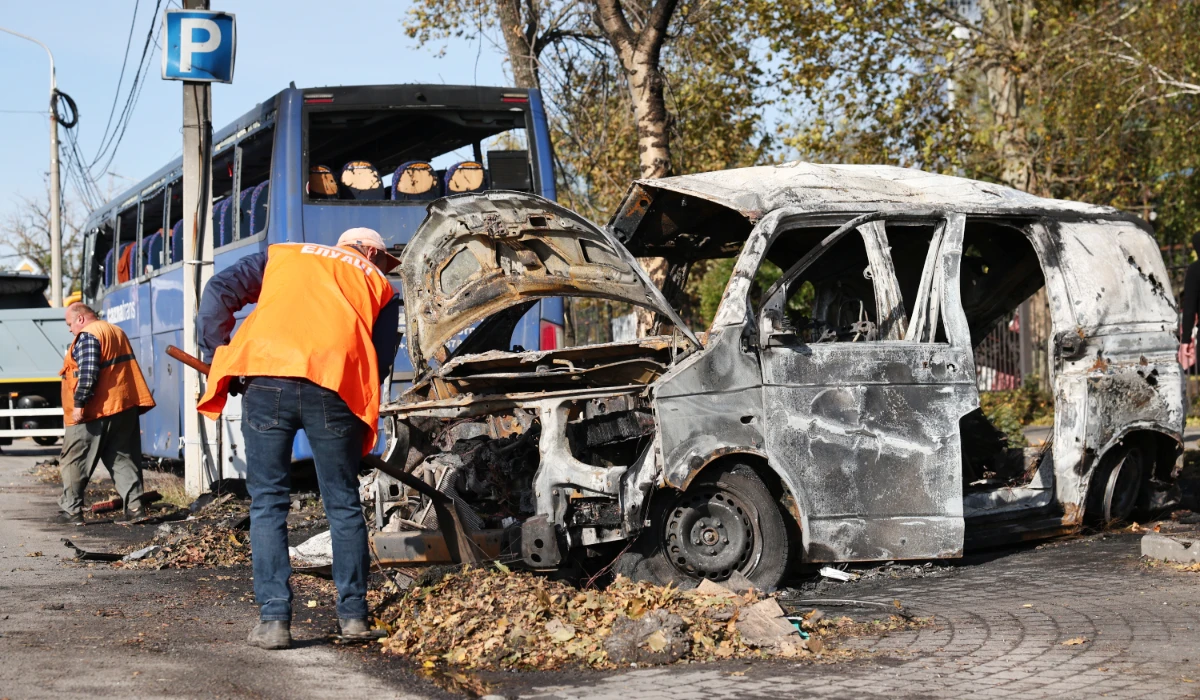
KARACHI, 19 April — A night of violence in the port city of Karachi was followed by two bomb blasts yesterday that killed one person and wounded two on a day of strike that paralyzed life in the city, police and witnesses said.
The blasts, in the up market Clifton and Defense areas, came amid tight security as a one-day strike gripped Karachi and major towns and cities throughout the southern province of Sindh, forcing an almost complete shutdown.
“We have confirmed reports there is a bomb blast in which a person died,” a police official said of the first explosion. Karachi bomb squad chief Moinuddin said a second “low-intensity device” exploded near a fast-food shop, wounding one person and smashing windows.
Police said the dead person, originally thought to be a bomber, was a drug addict who had an explosive device placed in his bag while he slept. Doctors said one of the wounded was in stable condition and the other suffered superficial injuries. It was unclear whether the blasts were related to the strike.
The Muttaheda Qaumi Movement (MQM), the biggest political party in Karachi, and the Jiye Sindh Qaumi Mahaz (JSQM) issued the strike call to protest government clamp downs on political activities and a failure to solve a chronic water shortage. The stoppage follows a night of violence in which 238 people were arrested and dozens of vehicles torched. Among those arrested was a former MQM member of the Sindh Assembly Noor Muhammad from Baldia colony, while raids were conducted on the houses of MPAs Saghir Ansari and Kamran Jafri but they remained untraced.
MQM officials said the strike was successful and blamed the violence on state agencies out to discredit strike supporters.
“We have called a peaceful strike and all business groups in the city have supported us. We have a mass support... so violence by our party is out of question,” senior MQM leader Nasreen Jalil, a senator in the upper house suspended following Pakistan’s 1999 military coup said
“Intelligence agencies and the establishment always play a dirty role in Pakistani politics and they are again doing that to malign the MQM,” she said. Police said the overnight violence had helped force people to observe the shutdown.
“We have arrested 238 people in different parts of the city on public order offenses,” said a senior police official, adding seven had been caught trying to burn public vehicles. He said security forces had raided houses belonging to known MQM and JSQM activists, and there had been shooting into the air to scare people. Yesterday, groups of armed paramilitary personnel patrolled Karachi streets and most shops, schools and businesses remained shuttered and few buses were running. Aside from the blasts the situation in the city remained mostly calm through Wednesday, although officials said a few more vehicles, including two ambulances, had been torched in the morning.
“Since the early morning violence we have not received any more reports of trouble,” said a fire brigade official. Other cities and towns throughout Sindh reported an almost complete shutdown. “It is in a real sense a (total strike) as neither shops were opened nor vehicular traffic was on the roads in the interior of Sindh,” said one resident in the city of Nawabshah, 320 km northeast of Karachi. Other reports said protesters had blocked sections of the national highway running between Karachi and the northwestern city of Peshawar.
Railway officials in Hyderabad said the trains were running normally. A Karachi official said extremists wanted to create havoc. “The extremists want to create havoc and if one compares with what happened yesterday the blasts were less damaging, we are trying to further tighten security,” he said.