OCCUPIED JERUSALEM, 9 August — Violence flared yesterday after the death of another member of Hamas, while Turkey, one of Israel’s closest regional allies, said it was “unrealistic” to expect an end to violence before peace talks can resume.
Israeli helicopter gunships blasted a post of the elite Palestinian security organization, Force 17, in the West Bank town of Nablus, hours after two explosions left a Palestinian dead and three Israeli soldiers slightly injured.
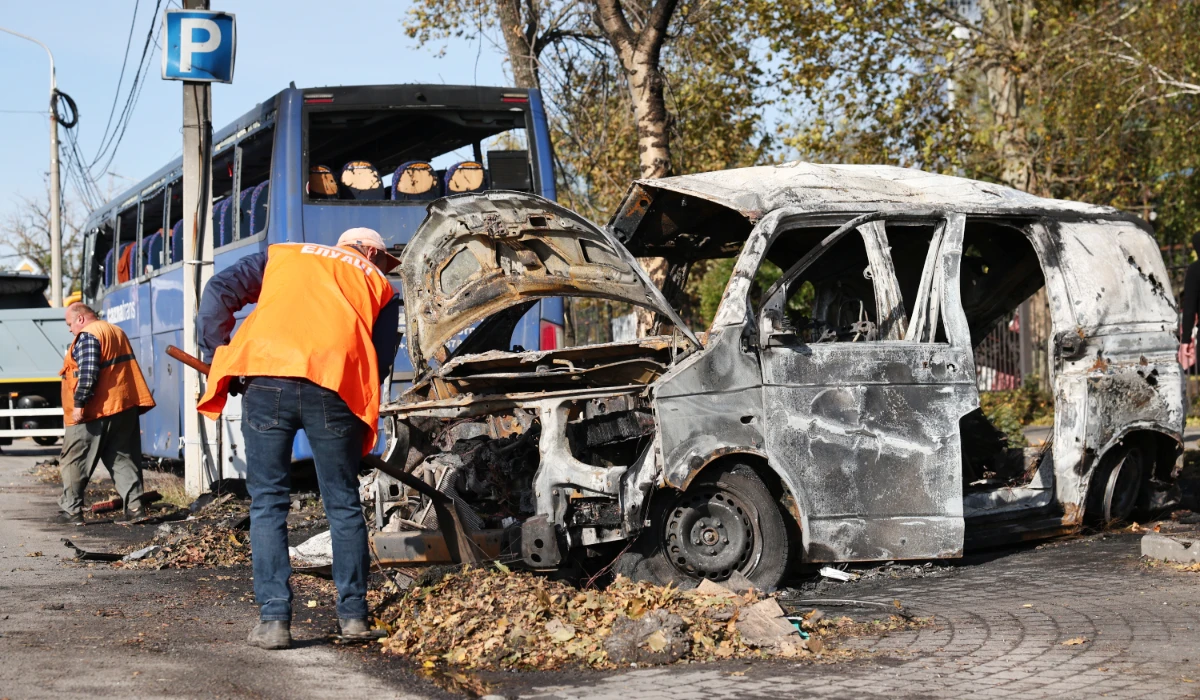
Palestinian Ashraf Muhammad Al-Sayed died when his car exploded in the Jordan Valley, also in the West Bank, a blast that also wounded an Israeli soldier who was trying to approach the vehicle.
Hamas, which has sworn to oppose the Jewish state, claimed him as its member. An Israeli Army spokesperson said the vehicle exploded after Al-Sayed detonated a car bomb near the Bekaot road block, which was checking traffic coming from Nablus.
However, an Israeli military source earlier said Israeli forces fired at Al-Sayed’s car, exploding it, when he refused to stop.
Shortly after that blast, a bomb planted by a roadside close to Nablus, also in the West Bank, was detonated as an Israeli Army convoy was passing by, inflicting slight injuries on two soldiers.
Israeli helicopters fired anti-tank rockets at a Force 17 checkpoint before turning their sights on a neighboring building, Palestinian security officials said. Nobody was injured in the attack, the Palestinians said. It was the second air raid on Palestinian security positions in the West Bank in 24 hours. On Tuesday, Israeli helicopters struck in Salfit, near Nablus.
The head of the Danish Red Cross, Freddy Karup Pedersen, publicly accused Jewish settlers in the Palestinian territories of living like white South Africans under the former racist apartheid regime. He told the Danish Parliamentary Foreign Affairs Committee following a visit to the region: “We think the conditions of life of the settlers resemble those of the apartheid period in South Africa.”
Pedersen also criticized Israel’s collective punishment of the Palestinian population. “Children are prevented from going to school, the sick from going to hospital and farmers have great difficulty tending their fields. Homes and agricultural areas are destroyed and water resources unequally distributed,” he reported. Pedersen described the conditions as “a complete lack of respect for international humanitarian rules.”
Center Democrat Party, Israel’s strongest supporter in the Danish parliament, accused the Danish Red Cross of a one-sided attack on the Israeli government. But Pedersen retorted that the situation in the region warranted criticism of conditions. “The Red Cross would be failing in its duty if it stayed silent,” he said. “The role of the Red Cross is among other things to defend the interests of victims,” he stressed.
Ten months of unrest have left 694 people dead, including 544 Palestinians and 131 Israelis.
In a high-profile visit to Turkey, Israeli Prime Minister Ariel Sharon ran into a snub when his Turkish counterpart Bulent Ecevit told him he was being “unrealistic” in demanding that all violence cease before talks resume with the Palestinian leadership. But Sharon remained adamant that he would not negotiate under fire.
Israeli radio reported Monday that a proposal by his foreign minister, Shimon Peres, to open talks to revive a ruined cease-fire met with short shrift from the former general.