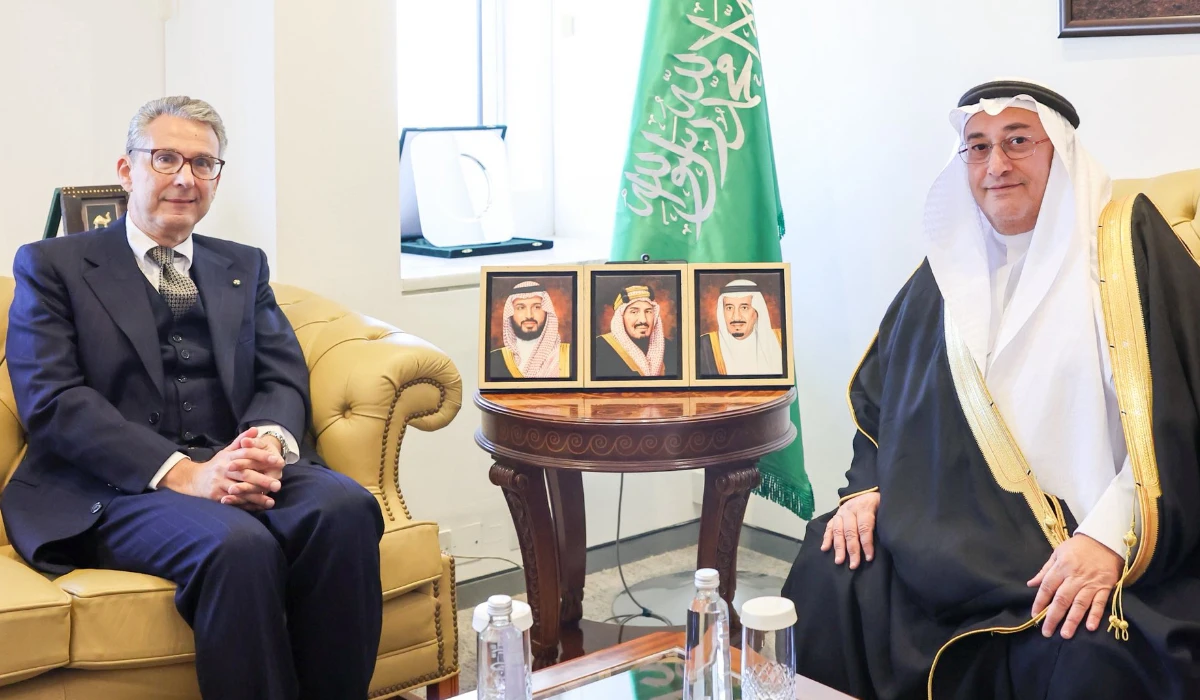
President Gloria Macapagal-Arroyo was beaming from ear to ear on Monday when kidnapped Italian priest Giuseppe Pierantoni was released by his captors and presented to her in Malacañang Palace. “Welcome back to freedom,” said the president, all the while grinning as if it were the military that had freed him. The truth was somewhat uglier and more sordid.
It has now come to light that a group of mayors in the provinces of Lanao del Norte and Lanao del Sur allegedly raised the ransom money of 12 million pesos because they felt obligated to do so after benefiting from projects in their jurisdictions funded by the Italian government. The Roman Catholic Church and the Philippine government, of course, deny any knowledge of a ransom payment. If they did admit to knowing about it, and perhaps even to being involved in ransom negotiations, it would invalidate their professed positions of “never” paying ransom.
The president perpetuated the myth that the military had single-handedly been responsible for the priest’s freedom in Zamboanga del Sur province, after six months of captivity, by saying, “After a fierce battle in the mountains of Mindanao, we have rescued Father Pierantoni.”
Seasoned observers knew better, and the freed priest was only briefly presented to the media and not allowed to be interviewed. After all, Malacañang did not want any contradictory statements to come out of the priest’s mouth and shatter the lie that he had been released solely through the efforts of the Philippine military.
The sad truth is that no one who is kidnapped in Mindanao nowadays is ever freed by the military alone. The payment of ransom is essential to secure the freedom of a kidnap victim. This is perhaps key to the ongoing military rescue operations in Basilan to free the American missionary couple Gracia and Martin Burnham and the Filipino nurse Deborah Yap. I don’t think they will be released until a ransom payment is made.
Which brings me to yet another example of GMA trying to put a positive spin on a bad situation by outright lying to the press. A few weeks ago I watched a whole episode of the CBS TV newsmagazine “48 Hours” devoted to kidnapping around the globe. Unsurprisingly, a major portion of the program, filmed before Christmas of 2001, focused on the attempts to rescue the Burnhams in Basilan.
The CBS reporter was shown meeting President Arroyo at Malacañang, and while the CBS cameras were rolling, the president, in the middle of her interview, pulled her now tired stunt of calling up an official to ask how much progress was being made. In this instance, it was Lt. Gen. Roy Cimatu, head of the military’s Southern Command, the man effectively in charge of hunting down the Abu Sayyaf kidnappers of the Burnhams.
“Oh really Roy? Are you sure? Great!” said the president, a cell phone pressed to her ear as she spoke to Cimatu. “You’re going to rescue the Burnhams today? Good!” With that the president smiled and told the CBS reporter: “You see, my military commander said they will be rescued today.”
Of course that was a total fantasy, to put it politely. The Burnhams were never rescued that day or the next. In fact, they are still being held in the jungles of Basilan as I write this. What was even more galling was the fact that the CBS reporter was flown to Basilan by the Philippine military to have a close-up look at the rescue operations. General Cimatu himself accompanied CBS to Basilan and he was shown on camera promising the reporter that the Burnhams would be rescued that very day.
CBS reporter: “So this is where the Abu Sayyaf are hiding?”
Cimatu: “Yes, they’re here in this 3-kilometer square area.”
CBS: “So, are we going to be able to rescue the Burnhams?”
Cimatu: “Yes. We should be able to rescue them today.”
This shameless mugging to US television cameras and the making of wild promises that could never be fulfilled was ridiculous and should have never been done. Someone in Malacañang must have thought this would be a public relations coup for the Philippines, in terms of showing the American public that indeed it was doing its best to hunt down the Abu Sayyaf.
Instead it just showed how much Filipinos were willing to cater to American fantasies of how supposedly easy a rescue operation would be.
****
Why I focused on Palestinian suffering
SEVERAL READERS wrote to me last week after reading my column “Helpless as Palestine burns,” wanting to know why I didn’t mention the Palestinian suicide bombers and the many civilian Israelis who are being killed by them.
One of those readers was Nancy. Here’s what I replied to her:
“Dear Nancy,
Thank you for your e-mail concerning my Manila Moods column on Palestinians. The reason why I didn’t mention the suicide bombers was because I wanted to focus on the Israeli repression and humiliation of Palestinians that has been going on for 54 years, ever since Israel’s independence in 1948.
“The younger generation of Palestinians have grown up knowing only the brutal occupation of the Israelis, their daily lives completely determined by the occupiers. They obviously feel they have no hope for the future and thus become suicide bombers.
“That doesn’t mean I condone these bombings. On the contrary, I have found them deeply disturbing and unfortunate. The only positive side-effect of them is that they have forced Israelis to take a look at what their government and military have been doing to the Palestinians.
“The Israelis like to say that they are the only democratic country in the region, but look how they treat Palestinians. Are they given the same rights as Israelis? Of course not, and this is very undemocratic.
“I personally don’t believe that Israel will last for very long because of the way it was conceived and set up. To be an exclusively Jewish state is undemocratic to begin with and will ultimately be Israel’s undoing.”
****
Comments or questions? E-mail the author at: [email protected].
****
Visit his website at http://www.manilamoods.com to read past columns and those of guest writers.