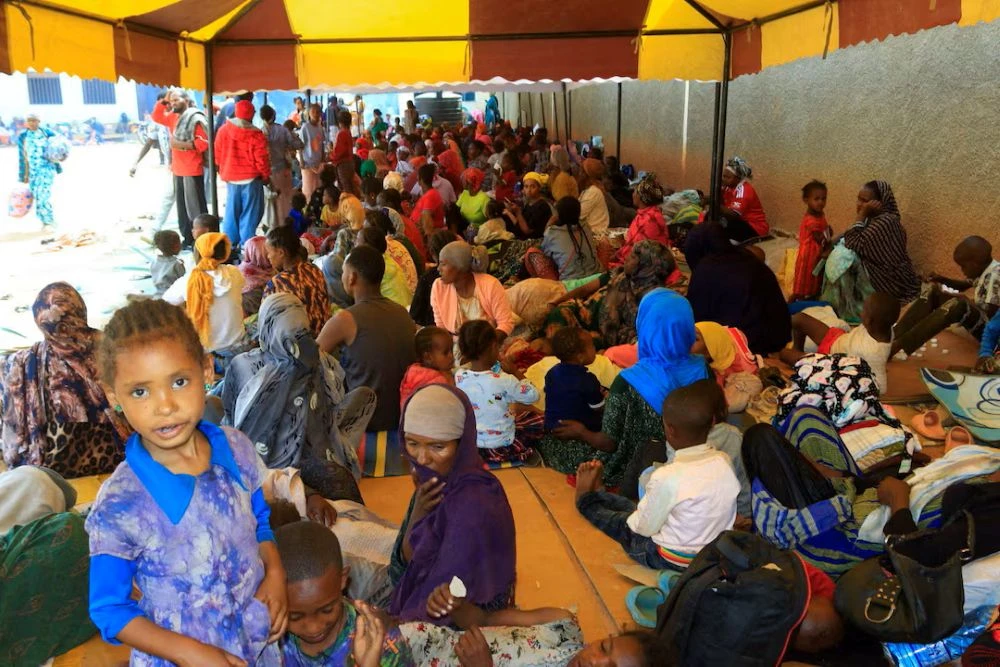
AHMEDABAD/NEW DELHI, 10 August — ‘Rehabilitation first, election next’, read a poster at the Shah-e-Alam relief camp, which houses some 5,000 survivors of the February-May communal violence, as Chief Election Commissioner J.M. Lyngdoh came calling.
"We have no homes and we are yet to be rehabilitated," a Muslim survivor of the sectarian violence told Lyngdoh yesterday. "How can we vote in elections?"
Dozens of Muslims crowded Lyngdoh, who was accompanied by fellow commissioners T.S. Krishnamurthy and B.V. Tandon, urging him to reject Gujarat Chief Minister Narendra Modi’s demand for early state elections in the state.
The three-member poll body is currently visiting Ahmedabad and Baroda, the two cities that were worst hit in the sectarian fury that killed over 1,000 people, mostly Muslims.
The visit is to assess whether the situation in the state is conducive to hold early elections — due only in February — as Modi has demanded.
While Modi and his Hindu extremist Bharatiya Janata Party (BJP) insist normalcy has returned to the state, opposition parties, rights groups and Muslims say the communal divide is still serious and elections should not be called now.
Most inmates said they did not even have voter identity cards or other identification documents they will need to cast their votes. Lyngdoh also visited the all-Muslim Gulberg residential complex where a mob of thousands torched dozens of Muslims, including former Congress party MP Ehsan Jafri, on Feb. 28.
The poll body also visited the Naroda-Patia areas where too irate Hindu mobs had burned several Muslims to death that day.
The commission arrived here Thursday and met officials of the state election panel before launching its assessment exercise.
Lyngdoh’s visit comes within a week of a nine-member Election Commission team touring Gujarat to assess the situation. That team had visited Ahmedabad, Baroda and Bhavnagar, as well as Godhra.
The nine-member team Thursday submitted its report to the commission. The team is understood to have stated in the report that the situation at present is "not conducive" for polls.
The team is believed to have said in the report that under the prevailing circumstances, minorities, which constitutes 12 percent of the total population, may not participate in the electoral process, as five percent people of the minority community still living in the relief camps.
Lyngdoh and the other two officials are expected to visit Baroda and Godhra today. They were expected to meet political leaders here late yesterday.
Muslims in the state say they are still too insecure to come out and vote. Thousands of violence-displaced Muslims are still cooped up in refugee camps.
A group of Muslims has sought president’s rule before elections are held in the state. The group, Relief Committee Godhra, has also asked for more police protection and equitable relief measures from the state government.
"Each citizen should get a feeling of lasting peace and live freely and fearlessly before elections. This is possible only if president’s rule is imposed," the group has said in a memorandum to political leaders here.