NEW DELHI, 20 August — Deputy Prime Minister L.K. Advani yesterday hit out at the Election Commission for not holding early elections in Gujarat, even as Prime Minister Atal Behari Vajpayee remained non-committal on the issue.
"The Election Commission’s job is to hold elections, not to stop them," Advani told television channels.
Advani, a Lok Sabha MP from Gujarat, did not hide his resentment over the commission’s order to put off assembly elections in Gujarat till after December on grounds that the situation was not yet normal in the state where sectarian violence claimed over 1,000 lives since February.
The government decided Sunday to refer the panel’s order to the Supreme Court through President A.P.J. Abdul Kalam.
The opposition parties yesterday attacked the government for seeking a presidential reference on the commission’s order on the Gujarat polls, saying the decision displayed its "contempt" for the autonomy and independence of the commission.
Describing the government’s decision as "an assault on the constitutional authority and dignity" of the commission, Congress party spokesman Anand Sharma said it "confirms that the BJP government does not respects the institutions empowered under the constitution for superintendence and conduct of elections".
But the BJP welcomed the government’s decision, saying it would clear the "constitutional confusion" created by the commission’s order.
According to the BJP-led central government, any election date after October, when the six-month gap from the last assembly session expires, would throw the state into a constitutional crisis. However, Communist Party of India-Marxist (CPM) leader Sitaram Yechury said: The government had "shown utter contempt for the independent status of the commission. It also displays their intention to actually use the communal polarization in Gujarat to their political advantage and against the country’s integrity."
Asserting that there was "no constitutional crisis" as was being portrayed by the government, Yechury said Article 324 of the constitution gives the commission the "sole right to determine whether they can hold free and fair elections" and Article 174 "applies only to a live assembly".
Thought the term of the 182-member Gujarat Assembly ends in February, Chief Minister Narendra Modi’s resignation in July forced early dissolution of the assembly.
Vajpayee refused to comment on the issue after the oath-taking ceremony of Bhairon Singh Shekhawat as vice president yesterday. But Advani was more vocal — and clearly bitter.
"The Election Commission has never in the past put off elections due to unfavorable conditions in a state," Advani said. Stating that the order had led to a constitutional crisis, he added: "The commission can ask for more forces or more arrangements to conduct elections.
"They cannot postpone elections and say there should be president’s rule. It is not their job to prevent elections." Advani maintained that the center’s decision to refer the poll panel order to the Supreme Court through the president did not amount to a confrontation.
However, Chief Election Commissioner J.M. Lyngdoh yesterday defended his decision not to hold early elections in Gujarat.
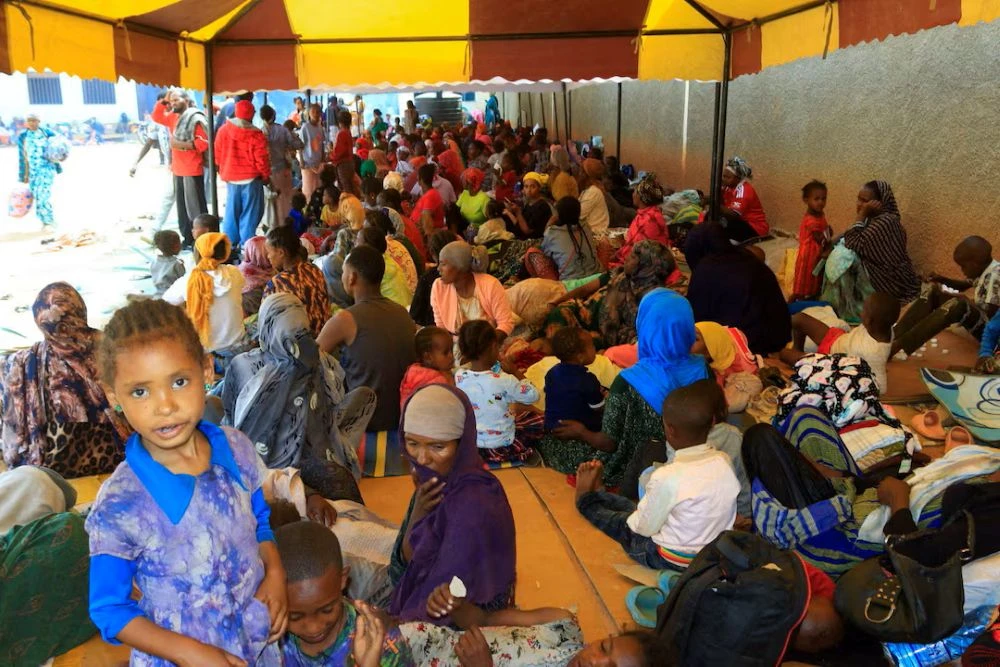
"I have done what I deemed to be fit," Lyngdoh told reporters in Srinagar. He said the situation in the state, which was rocked by communal violence February-May and where thousands of Muslim victims are still homeless, was not conducive for holding "free and fair" polls.
He also ordered that the voter list in the state of 51 million be revised by Oct. 15, indicating elections can be held only afterward.
Refusing to comment on the reference of the commission’s decision to the president, Lyngdoh said: "Every decision has people who agree with it and people who don’t."
Analysts say the BJP has been making intense efforts for early Gujarat elections, due only in February, in the hope of exploiting a communal divide.
The opposition, rights groups and Muslims have hailed the commission’s decision of postponing elections in the riot-shattered state.