JOHANNESBURG, 31 August — Talks at the Earth Summit on a blueprint to save the world’s natural resources and reduce poverty were snagged yesterday despite warnings that failure would be catastrophic, while thousands of activists geared for a mass protest to demand action.
The deadlock was over 14 key issues in a 71-page "Plan of Implementation" that pit the haves against have-nots and the United States against the European Union, delegates said. Holding their first meeting since the 10-day summit began, ministers decided to hand the thorniest issues to mediators, a scenario for intense, late-night haggling among the world’s power blocs.
Early drumbeats in a looming trans-Atlantic trade war did nothing to help any mood for a compromise. The World Trade Organization (WTO) gave the EU the go-ahead to slap the US with a record $4 billion in sanctions for the tax breaks that Washington gives to major exporters. The United States has been cast as the "bad boy" of the summit due to its refusal to back a series of time bound proposals to clean up the Earth.
US President George W. Bush is snubbing the summit but 109 other heads of state and government will start arriving tomorrow for a three-day meeting that will climax the marathon gathering. Indonesia’s chief negotiator Emil Salim told reporters that the 14 contested points had become "political issues." "If this summit fails, then the United Nations fails," he said.
British Deputy Prime Minister John Prescott warned: "If we fail here, things would unravel on a scale that we have not seen before in international negotiations." "That would be tragic for the whole world and most of all for those who are in poverty and despair," he told the Independent newspaper of London.
Danish Environment Minister Hans Christian Schmidt, whose country currently chairs the EU, said: "We must be dedicated to results ... especially on time-bound targets like sanitation, renewable energy." The Europeans are pushing for a target of halving the number of people without access to decent sanitation by 2015 and to increase use of renewable energy sources such as windmills and solar power to 15 percent of the total by 2010.
The United States has been fiercely resisting these and other so-called "targeted commitments," but an EU source said there were tentative signs it was yielding on the sanitation issue. Worried greens activists fretted that this could indicate a quid pro quo on energy — that the EU would soften its line on the renewable sources target in exchange.
"The conference today has entered arm-twisting mode. Japan is doing some of the dirty work for the US. Bargaining water against energy is a total disregard for the needs to make this planet more sustainable," said Greenpeace’s political director, Remi Parmentier.
Protesters were, meanwhile, preparing for mass marches up to the posh, white-dominated Johannesburg quarter of Sandton, the hub of the "official summit," today. As many as 20,000 people including land right activists, debt-reduction campaigners, pro-Palestinian lobbyists, South African trade unionists and disgruntled members of South African President Thabo Mbeki’s African National Congress party are due to participate in the marches.
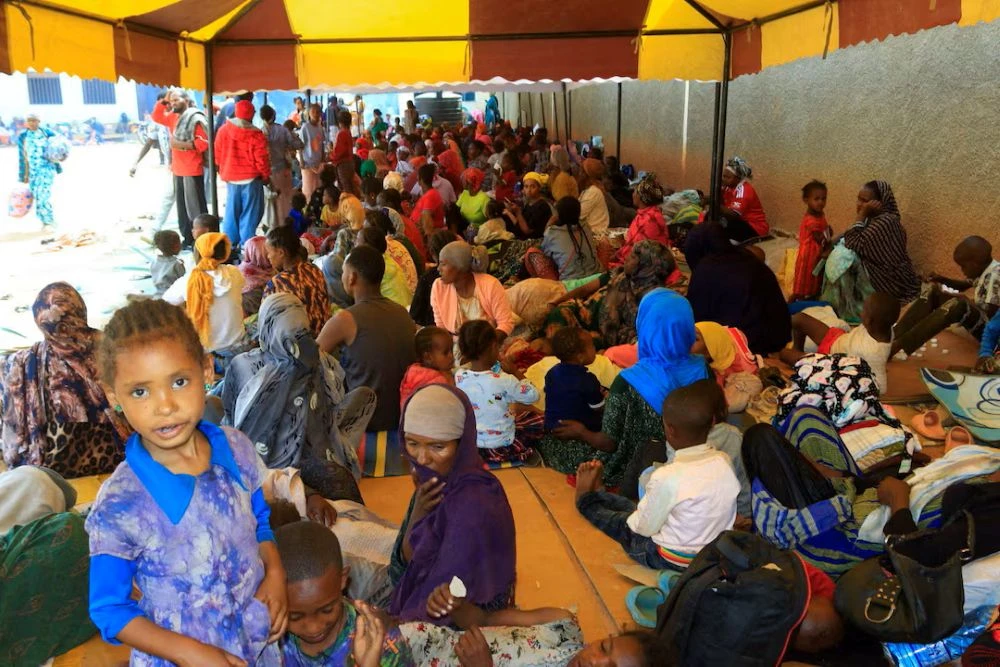
Thousands of landless South Africans have set up camp in an old cinema complex south of Johannesburg to prepare for a mass march to the UN Earth Summit today to demand a decent place to live. (The Independent)