RIYADH, 21 October — The government will open up the Kingdom’s banking sector to outsiders and soon form a new company for foreign exchange conversion and remittances through the amalgamation of existing establishments.
This was disclosed by Minister of Finance and National Economy Dr. Ibrahim Al-Assaf on the second day of the symposium on the "Future Vision for the Saudi Economy" at the King Faisal Hall here yesterday.
Chairing a session on the "Drivers for the new economy", Al-Assaf cited the Gulf International Bank of Bahrain, which has already set up a branch in Riyadh. More licenses for foreign banks would be issued after weighing the pros and cons of each move and its implications for the national economy.
He said the merger of smaller foreign exchange units into a single entity would put them on a stronger foundation to deal with the challenges thrown up by the globalization of the economy.
In response to a question on Saudi investments abroad and whether the national economy was not resilient enough to absorb such huge liquidity, Dr. Al-Assaf said there were historical reasons for the start of overseas investments. Now the circumstances have changed and the Saudi economy is capable of handling any major inflow of funds.
Pakistan’s Finance Minister Shaukat Aziz spoke on the "Future role of financial and investment services in the evolving global setting." He said the new global environment is an opportunity and not a threat to developing countries. "Those who would exploit the new opportunities, vast markets, greater trade opportunities, increased access to capital and easy availability of new technology would prosper. We either swim with the tide or will be swept away by the rising waves," he observed.
In the session on human development , Dr. Khaled Al-Awwad, deputy minister for educational affairs, gave a presentation on "Future education policies for general education." He said future educational policies would be geared to market needs in the interest of making education job-oriented. There would be closer coordination between the chambers of commerce and educational planners to tailor the school curriculum to market needs. He said it would be a good idea to benefit from Japan’s experience in the field of job-oriented education.
Khaled Al-Dehaish, consultant for girls education in the Ministry of Education, stressed the need for private sector participation in the construction of girls schools. He said an online link would be established between the chambers of commerce and the Education Ministry to keep the private sector updated on new educational projects for girls.
This will provide new investment opportunities for the private sector while at the same time ease the government’s financial burden, he said.
In response to queries from women participants, Al-Dehaish agreed to hold a symposium on women’s education in the near future. A committee, headed by Mouzi Al-Naim from the girls education directorate, would be set up to formulate an agenda for the symposium.
Chairing a session on "Tourism and Environment" and subsequent talks with newsmen, Prince Sultan ibn Salman, secretary-general of the Supreme Commission on Tourism, spelled out his vision of the future of tourism over the next five years.
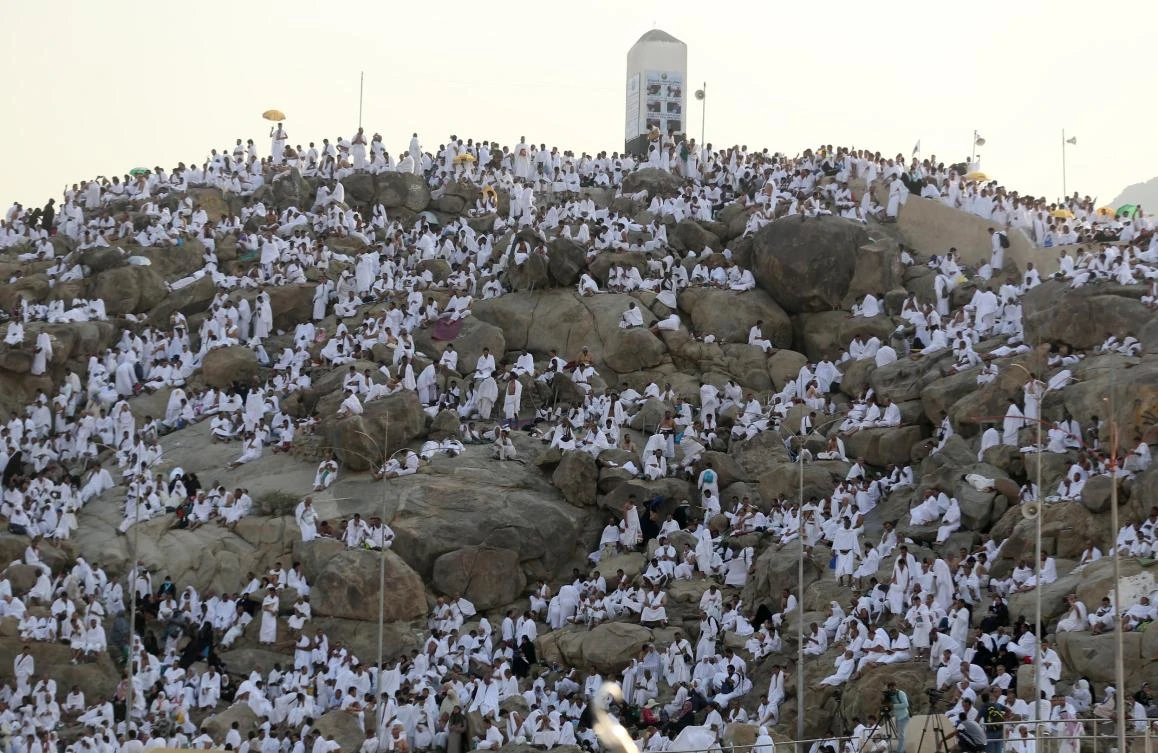
He said SCT’s long-term plan seeks to develop potential market opportunities by building upon the Haj and Umrah visitors base and the traditional hospitality of the Saudi society. In 2000 alone, there were 14.5 million trips involving a total expenditure of SR22.4 billion. As many as 44 percent of the trips were undertaken for holidays, 37.5 percent for Umrah and 19 percent for visits to relatives and friends. The plan also seek to diversify tourism products in the Kingdom through the provision of various tourism facilities and support for transportation as well as infrastructure required for each area.
Other priorities will seek to encourage the growth of small and medium enterprises, particularly the arts, crafts and cottage industry. Another major thrust would be promotion of tourism for family, youth and people with special needs.
The Saudi Tourism Plan envisages investment in 10,000 tourism sites and 100,000 hotel rooms. As many as 45 million tourists are anticipated in Saudi Arabia by 2020, entailing a projected spending of SR 35 billion. When completed, these projects would provide 638,000 job opportunities.