BEIRUT: Thursday marks three years since the first war between Hezbollah and Israel sent shockwaves through southern Lebanon, after the group opened what it called a support front for Gaza.
A second war followed in March, when Hezbollah again entered the conflict under the banner of supporting Iran. The result has been an expansion of Israel’s occupation in southern Lebanon, where the latest development has been the construction of a military road stretching from the Safita Castle area on the southern outskirts of Yahmar Al-Shaqif to the Zawtar Al-Sharqiyah riverbed along the Litani River.
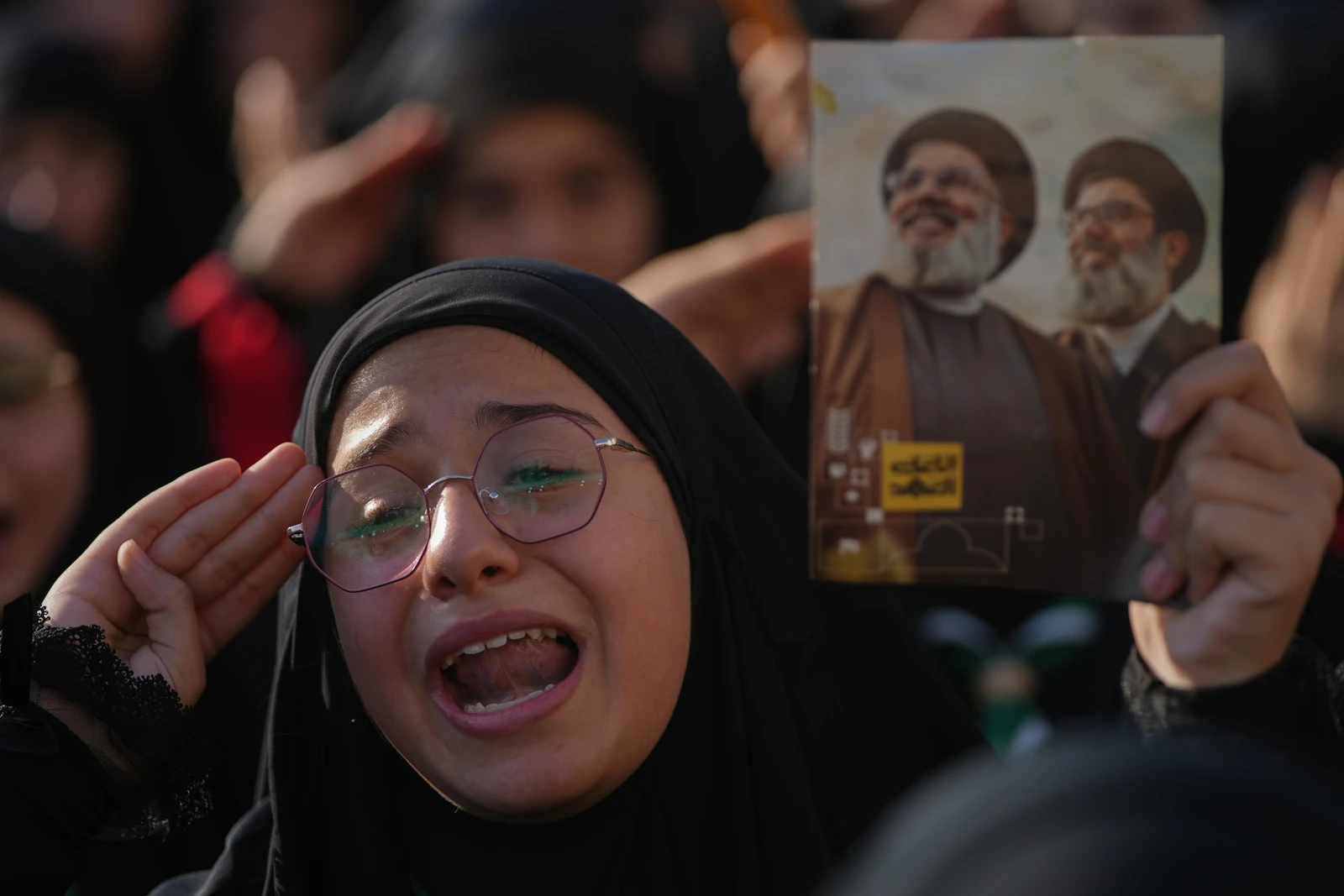
Yet Hezbollah Secretary-General Sheikh Naim Qassem, addressing supporters on Tuesday night, appeared determined to maintain the group’s existing rhetoric despite the scale of destruction that has struck Lebanon — and Hezbollah’s own support base in particular.
“The liberation of the south is before our eyes,” Qassem said, insisting that Israel would not be able to remain in southern Lebanon and that “the solution begins with the enemy leaving humiliated, along with the American who supports it.”
He also praised what he described as the “legendary steadfastness” of the resistance, Hezbollah’s military wing, which is now prohibited under decisions taken by the Lebanese government.
Qassem made little reference to the fate of dozens of southern towns reduced to rubble or the residents who remain displaced from their land.
Instead, responding to critics, he said: “Do not ask us what you are going to do. We can only remain a resistance as long as this aggression continues. Do not ask us for other solutions. We have nothing else to offer. War comes in rounds.”
Qassem also placed the issue of restricting weapons to the state alongside questions including the economy, employment, coexistence and depositors’ money, saying all should be discussed “within constitutional frameworks.”
His framing appeared to treat Hezbollah’s weapons as another domestic political issue rather than one directly connected to state sovereignty, the monopoly over arms and the authority to decide questions of war and peace.
The question is whether Hezbollah still has the ability to recover and confront Israel — or whether it is refusing to acknowledge that the balance of power has fundamentally changed.
And, more broadly, how does Lebanon escape the cycle in which it now finds itself?
Bilal Abdullah, an MP from the Progressive Socialist Party’s parliamentary bloc, said Hezbollah had a responsibility to conduct a serious reassessment.
“The evaluation must take into account regional and international developments and carefully examine everything that has happened over the past three years,” Abdullah told Arab News.
He said Hezbollah should facilitate the rebuilding of the state, the extension of its authority throughout Lebanese territory and efforts to strengthen Beirut’s negotiating position in order to recover occupied land, return displaced residents to their villages and begin reconstruction.
“The country needs political stability,” Abdullah said.
“Everyone understands Israel’s aggressive and expansionist plans, but the time has come to return to the state and address the crises facing the country, particularly the social and economic ones.”
Former MP Fadi Karam described Qassem’s latest speech as “detached from rationality.”
“I agree with Sheikh Naim Qassem that war comes in rounds,” Karam told Arab News. “But he should recognize the danger and avoid the final round. Previous rounds destroyed Hezbollah’s foundations, and the final round could destroy Hezbollah itself.”
Karam said he wished the group would instead focus on easing the suffering of its own supporters.
“Unfortunately, closed ideologies can live only in denial and at some point lose the ability to act rationally,” he said.
Karam also argued that Hezbollah’s attempt to treat its weapons as simply one domestic issue among many was intended to distract from the central question of bringing all arms under state authority.
“Creating secondary issues will not produce solutions as long as state sovereignty has not been achieved,” he said.
“The fundamental issue is weapons and their exclusive control by the state. Until that is resolved, the other problems cannot be properly addressed.”
Karam said Hezbollah was attempting to exploit the political breathing space created by the Israeli and US election cycles.
Legal and political researcher Dr. Ali Murad told Arab News that Hezbollah understood a political era had ended and that regional power balances had changed.
“It is impossible to assume that these balances can be altered in Hezbollah’s favor in the foreseeable future — and perhaps for a long time,” he said.
“If Hezbollah insists on maintaining its military option, then it is choosing a suicidal course. Israel wants it to make that choice and has the ability to achieve military results.”
Murad said Hezbollah should now be carrying out a critical reassessment of its choices, not in terms of how to continue fighting but of how it views the conflict itself.
Its priorities, he said, should be southern Lebanon, the return of its residents and reconstruction.
“Otherwise, one can say that Hezbollah’s secretary-general is detached from reality,” he added.
Murad said he believed Hezbollah understood that its current options were limited and that Qassem’s rhetoric was primarily intended to mobilize the group’s supporters while buying time in the hope of regional changes.
“Hezbollah’s rhetoric is an attempt to satisfy its supporters,” he said. “But believing that it still convinces the broader public is mistaken. People are no longer persuaded by everything it says.”
A Lebanese official source told Arab News that Lebanon was now “outside the radar” of major regional and international priorities.
The relevant Lebanese authorities, the source said, had received no indication of when a new round of direct Lebanese-Israeli negotiations might take place, either at the political or military level.
“There are military developments in the region, and there are Israeli and American elections,” the source said.
“Inside Lebanon, meanwhile, there are no channels of communication between the state and Hezbollah.”