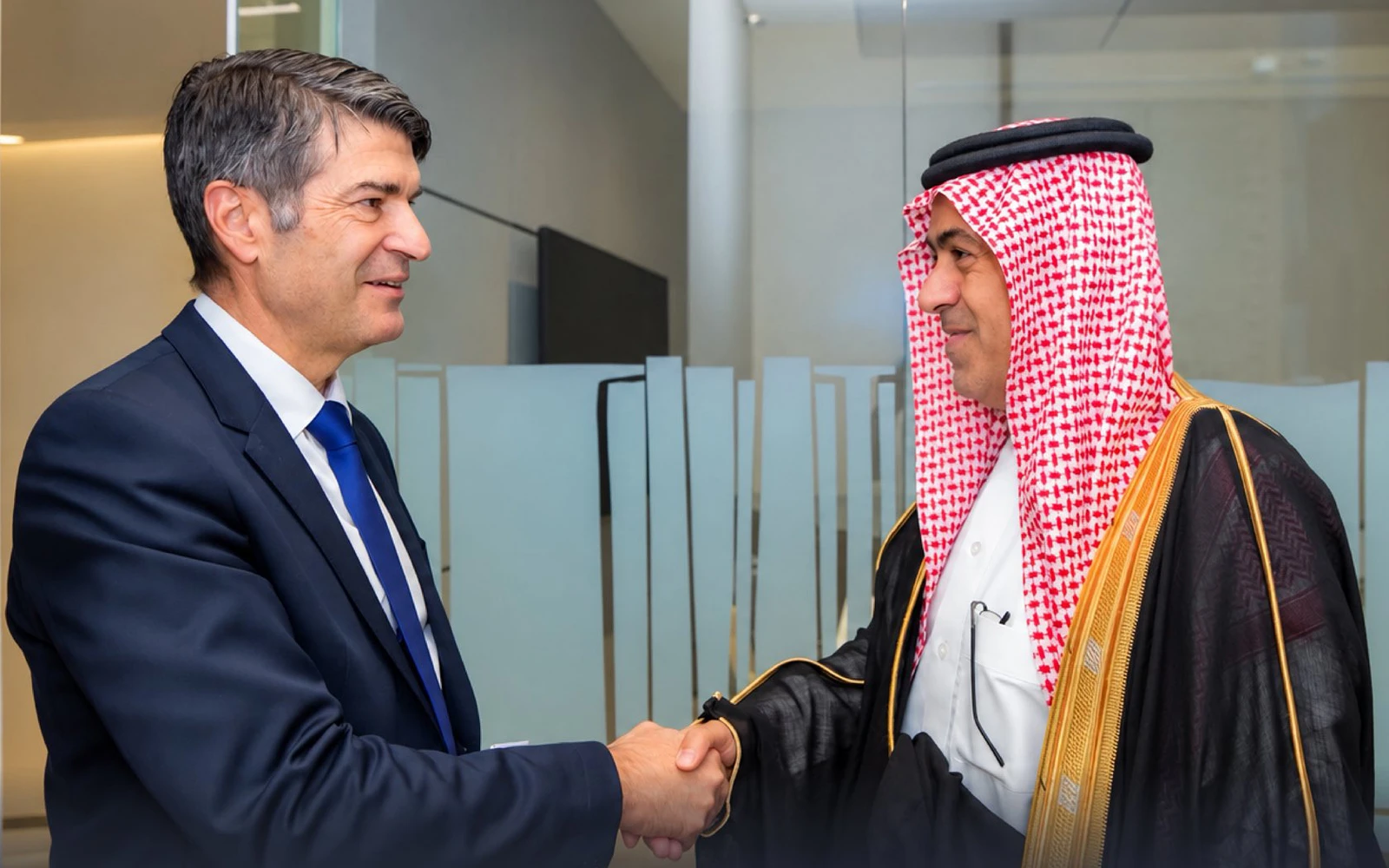
RIYADH, 5 November — A Saudi trade delegation’s recent landmark visit to Iraq was described as a “grand success” by the leader of the team that comprised 80 businessmen and scores of administrative staff.
“The visit has been a grand success. The Iraqi reception was overwhelming and several contracts were signed between Saudi suppliers and Iraqi ministries,” said Abdul Rahman Al-Zamil, leader of the team and head of the Saudi Export Development Center.
The team returned here yesterday after a five-day trip to Baghdad, the first in 12 years, through Arar, a key border and customs post between Iraq and the Kingdom, which was reopened Thursday following a 12-year closure.
The Iraqi authorities have agreed to register 95 Saudi industrial and trade firms, qualifying them to send their exports to Iraq under the UN oil-for-food program, said Zamil, who is also a member of the Shoura Council.
Zamil expected the Arar post to start functioning within “the next few days after UN observers have started to arrive at the Iraqi side of the post,” a precondition for allowing Saudi exports to pass through the post.
The Saudi delegation also took part in the Baghdad international fair. Iraqi No.2 Ezzat Ibrahim visited the Saudi pavilion, expressing his joy at the improvement in ties between Iraq and Saudi Arabia. Ibrahim said there had been an “evolution in inter-Arab relations, notably Iraqi-Saudi ones.”
Iraq and Saudi Arabia, whose diplomatic relations have been cut since the 1991 Gulf war over Kuwait, initiated a rapprochement during an Arab summit in Beirut last March.
Zamil offered Ibrahim a photograph showing him about to embrace Crown Prince Abdullah, deputy premier and commander of the national Guard at the Beirut summit. “Prince Abdullah is a brother and a friend,” Ibrahim said.
Thirty-four Saudi companies are taking part in the Baghdad fair, which opened on Friday. Arar, 340 km southwest of Baghdad, had been closed since Iraq's 1990 invasion of Kuwait.
The opening of the Arar crossing will bring to five the number of entry points for imports under the "oil-for-food" program, introduced in 1996 to allow Baghdad to sell oil in exchange for humanitarian goods.
The others are on the borders with Jordan, Syria and Turkey and the port of Umm Qasr on the Gulf coast.
During the past 12 years, the Arar crossing has been opened only occasionally to allow Iraqi pilgrims into Saudi Arabia. Saudi exports to Iraq under the oil-for-food program have been sent through Jordan.
According to official figures, Baghdad has imported nearly $1 billion worth of goods from Saudi Arabia under the program. (AFP)