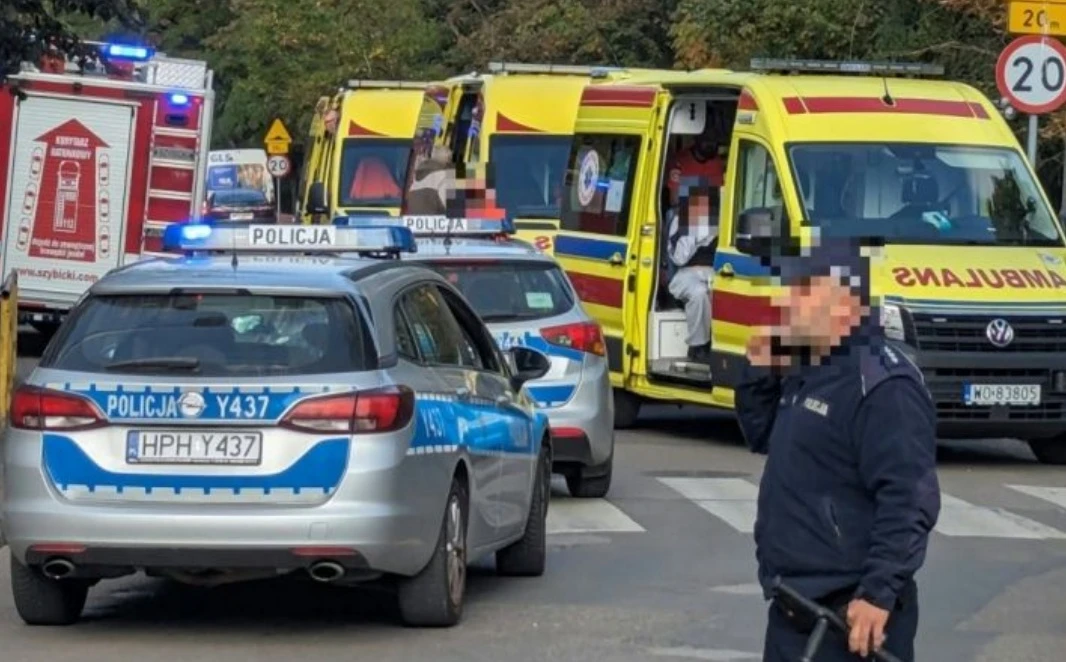
OCCUPIED JERUSALEM, 22 November 2002 — A Palestinian bomber killed 11 people and injured 49 when he blew himself up on a crowded bus in Jerusalem yesterday in the first bombing in Israel since the start of a general election campaign. Hospital officials said half the 49 wounded were under the age of 18.
The explosion ripped through a bus packed with commuters during the morning rush hour.
Palestinian security forces evacuated their positions in Bethlehem later yesterday anticipating a possible Israeli strike.
The Israeli government decided late yesterday on a “comprehensive army operation” in reprisal for the bombing and gave a go-ahead to the army far an attack on Bethlehem. Troops subsequently occupied over 25 Palestinian homes in Bethlehem.
Media reports said the action was decided after several hours of emergency Cabinet talks chaired by Prime Minister Ariel Sharon, and there was speculation that the West Bank town of Bethlehem would be reoccupied.
The new leader of Israel’s center-left Labour Party, Amram Mitzna, said he would fight Palestinian militants and relaunch peace talks at the same time if he was chosen as the country’s next prime minister.
An Israeli Foreign Ministry spokesman said the bus attack precludes any discussion of the peace plan drawn up by the international community to resolve the Israel-Palestinian conflict.
Another spokesman for Prime Minister Sharon vowed Israel will continue dismantling the Palestinian Authority, which finances attacks on Israelis. “We will ensure that we can continue the process of dismantling this terrorist entity and replacing it with something or someone that will be willing to be real partners for peace and not partners for continuing terrorist activities,” spokesman Raanan Gissin said on BBC radio.
A man driving past when the bus exploded told Israel radio: “I saw people draped out of windows. Two or three children were screaming inside the bus and then they climbed out.”
Passers-by raced to help the victims, many of them burned, bloodied and sobbing. Residents of the Kiryat Menahem neighborhood where the bombing occurred rushed from their houses desperate to learn the fate of their children. The charred torso of one of the victims hung out of a bus window. Hamas claimed responsibility for the bombing and vowed more attacks. It said it was avenging Israel’s assassination of its military leader in an air strike in Gaza in July that also killed one of his aides and 14 civilians.
Police said the bomber, identified by Hamas as Nael Abu Hlayel, 26, who moved to Bethlehem five months ago, was sitting at the front of the Number 20 bus when he detonated his explosive belt.
The Israeli Army, meanwhile, destroyed three houses belonging to Palestinians in the West Bank and Gaza Strip. The army razed the Nablus house of Osama Bushkar, a Popular Front for the Liberation of Palestine activist responsible for a February 2002 blast that killed three Israelis.
His house was in the refugee camp of Askar in the reoccupied city of Nablus in the northern West Bank, Palestinian and Israeli sources said.
Another army statement reported that Israeli forces had also destroyed the house of Talal Abu Zarifa of the Democratic Front for the Liberation of Palestine (DFLP) in the southern Gaza Strip town of Khan Younis.
Meeting on the sidelines of a NATO summit in the Czech Republic, US President George W. Bush and British Prime Minister Tony Blair condemned the bombing.
Israel blamed the latest attack on Yasser Arafat’s Palestinian Authority for failing to rein in militants.
The Palestinian Authority condemned the bombing as “terrorism” and said such attacks had nothing to do with “resistance to occupation”, but that Israel was responsible for continued violence with its army crackdown on Palestinian areas.