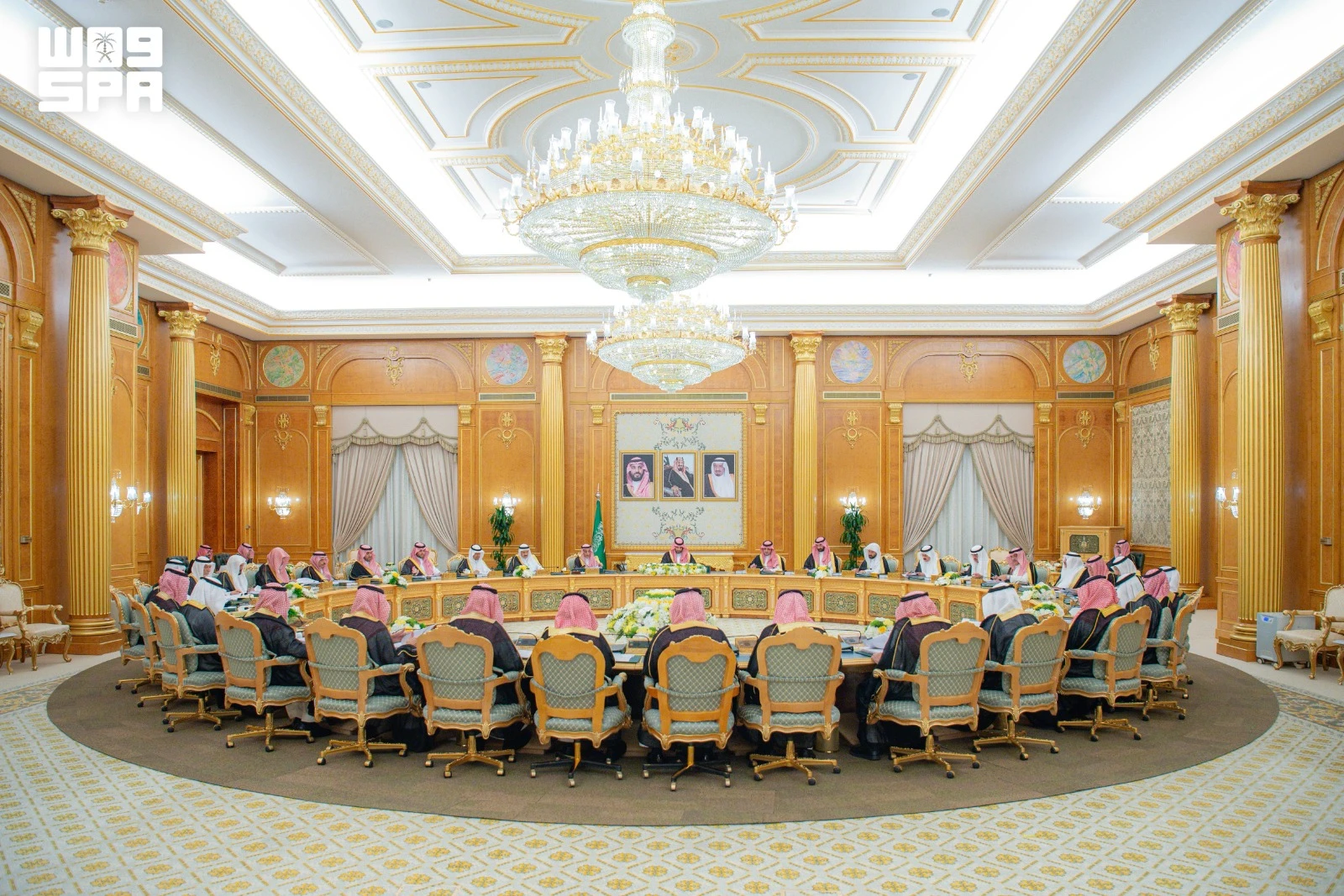
RIYADH, 1 January 2003 — Gulf Cooperation Council member states are confident the launch of their customs union today will be smooth despite the fact that a number of technical issues remain outstanding, a top Gulf official said here yesterday.
“We are confident and determined and have the political will to implement the customs union,” said Mohammed Al-Mazruwi, assistant undersecretary for economic affairs of the GCC.
“I don’t believe that problems will hinder the progress of the union ... It is a great challenge and we must overcome any obstacles,” Mazruwi told AFP in an interview.
GCC leaders ended a two-day annual summit in Doha on Dec. 22 by announcing that the long-awaited customs union would be launched as scheduled on Jan. 1.
“Under the union, the member states will become a single customs zone in which customs duties, charges and measures hindering inter-trade will be removed,” stated a special declaration. Saudi Arabia, Bahrain, Kuwait, Oman, Qatar and the United Arab Emirates will implement a five-percent duty on foreign imports, and movement of goods between them should be free.
But the six member states have agreed to delay the implementation of certain parts of the union for up to three years, Mazruwi said. In the initial stages, the union will not apply to scores of national products enjoying customs protection. Each member state has submitted a list of products to be excluded from the union, he said.
The GCC states have agreed to share customs revenues temporarily on the basis of the final destination of imports, but are engaged in further discussions to reach a permanent formula, Mazruwi pointed out.
The Gulf states have also reached a temporary solution for anti-dumping measures and are looking to resolve conflicting interests among agents of similar products in various member states. This issue in addition to difficulty in tracing the final destination of imports may become a real obstacle to the free movement of goods between the GCC partners.
Mazruwi, however, insisted that the launch of the union means the Gulf states will become a single and free customs region. “The GCC finance ministers who met in Doha in mid-December set a maximum of three years to resolve all outstanding issues. So by the start of 2005, we must have a full-fledged customs union,” he said.
According to official 2000 figures, the total value of trade of the six states with the world reached $150 billion, of which Saudi Arabia alone accounted for $102.5 billion. The value of trade between the GCC states reached only $11 billion the same year, of which Saudi Arabia accounted for $5.2 billion.
The declaration stipulates that products manufactured in a member state will be treated like national products in other states and will not be subjected to customs measures. According to the declaration, the launch of the union will improve the quality of products, cut production costs and prices and promote trade and investments between GCC states.
The GCC states have also agreed to establish a computer link-up between their customs posts and approved the duties of joint customs centers. The customs union is seen as an essential step on the way to forming a Gulf common market.
Foreign economic blocs, especially the European Union, have urged the GCC states to establish a customs union before any free trade deals can be signed. The GCC has also approved a timetable for monetary union planned for 2005 and a single currency in 2010. The alliance has a combined oil output of around 13 million barrels daily, and more than half the world’s proven crude reserves. (AFP)