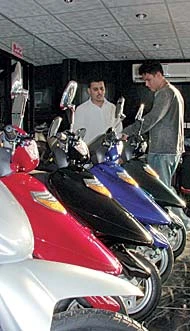
JEDDAH, 5 August 2003 — Cheap, cheerful and increasingly popular, Chinese-made scooters are increasingly appearing on the streets of Jeddah.
As an inexpensive fuel-sipping form of transport, they allow easy access to convenient transport for low-wage expatriate workers.
The main customer base, however, is Saudi.
One new dealership in Tahlia Street offers scooters from as little as SR2,000. The more sophisticated models retail at around SR6,000.
“The vast majority of our sales are to young Saudis — perhaps 90 percent,” said Hassan Ahmed, salesman in the agency. “Most are between 14 and 17 years old,” he said.
Some of the younger ones attempt to fake identities and pretend that they are over the legal age for driving a motorcycle.
As the law stands, people cannot hold a full license under the age of 18, although a provisional license can be obtained at 16.
“If there’s any doubt, we don’t sell the machines to the youngsters, we sell them to the fathers and make them sign up to the responsibility.”
The agency Arab News visited doesn’t sell crash helmets to purchasers of scooters. It gives them away.
“At least we know then they have one,” said Hassan, “Whether they wear it or not is their business.”
Saudi law requires motorcycle riders to wear crash helmets.
Some of the scooters are never used on the road.
Many are, and the potential for accidents among young and untrained riders is enormous. They are beginning to appear on service roads and even highways, often with two young and very inexperienced riders on board, frequently without crash helmets.
An official source at the Dallah training school in Jeddah, where car and motorcycle training and tests take place, described the legalities and revealed a glaring inconsistency.
He estimated the number of motorcycle licenses issued each month as about 20 to 30.
Sales of motor-scooters from the agency run at about 15 per month. Given that there are several agencies in Jeddah, it would seem that unlicensed and untrained riders are driving scooters.
Training is non-existent. The official at Dallah confirmed that the only training or test was a circuit around the test track laid out in the car park and had no written element. “I think there is some sort of training that can be done at the traffic department.”
“I think there is some sort of book they can have,” he replied when asked if there was a Highway Code of any sort, “but I am not sure.”
The license, he said, is issued the same day. Asked if anyone failed, he looked surprised and said “No.”