“It’s nothing to be ashamed of if you are selective about the kind of tourist you want, especially in a country like Saudi Arabia. We are not the kind of country that has to have tourists at any cost or at any price.”
Prince Sultan ibn Salman, Chairman of the Higher Authority for Tourism, set the parameters for the development of tourism in Saudi Arabia. An area much debated and enthused over, tourism even now is the second biggest income generator in the Saudi economy. But defining the tourists Saudi Arabia wants to attract is a major challenge.
Saudi Arabia is in no rush to bring international tourists — that is, tourists from the West. The desire to preserve the Kingdom’s traditional culture sits uneasily with the sometimes culturally unacceptable demands of international tourism. Finding a form of tourism that accommodates the demands of both is a sensitive and difficult challenge.
“I think the rush is not economic. For me the rush is cultural. I would like people to come here and see more of the culture of the country and interact with it,” Prince Sultan said. “I am still surprised by people who come here and have completely the wrong idea about the Kingdom.”
The way forward as Prince Sultan sees it is to develop the internal, Haj and Umrah tourist trades here by developing an efficient infrastructure and involving Saudi citizens as partners and stakeholders in the industry. That will also help stem the hemorrhaging of $60 billion a year spent by Saudis on foreign tourism.
“We want to make Saudi tourism for Saudis fun, make it acceptable and make it something that they want to do so they spend a bit more time in their country,” he said. “If the Saudi tourist is happy, the international tourist will fit into the same scheme of things. We are not going to extend ourselves just to have specific things for Saudis and non-Saudis.”
Part of the attraction of tourism is that traveling to a different country and culture is a chance to “let your hair down.” But culture modifies the definition — and what may be perfectly acceptable on the beaches of southern Europe would not be acceptable in the Kingdom.
So how will the commission address the different interpretations of “relaxation” when there are other government bodies that impose gender segregation for example?
“You have to take that experience in perspective — in the sense of how much people have to swallow and how quickly,” said Prince Sultan, quoting Prince Abdullah Al-Faisal. “Tourism and family activities outside the house are new to our community. In Riyadh this is even more true, and in some parts of the country it’s ten times more true. We have gone through a period when a lot of the norms here changed — people are still in a period of adjustment in terms of their attitudes and family activities.”
In the 1970s and 80s, hospitality was offered from home. If a guest was invited out to a restaurant, the implication was either that he was not worthy of the host’s house or vice versa.
“Worse still,” he said, “people who tried to go out to restaurants with their wives — well, the whole community talked about that for a week. Today it’s normal.” In one generation, there has been a profound attitude change towards one of the most deeply felt aspects of Arab culture — hospitality.
This kind of change is supported and even encouraged by the commission, which has worked in partnership with other government organizations. “Everybody is with us on the same vehicle,” said Prince Sultan. “This is like an airplane, it’s just going to move and you are either on it or not on it.”
Each year, $17 billion a year is spent in Miami alone by Saudi tourists. Another $20 to $30 billion is spent by Saudis leaving the country to other destinations. This year, there has been a decline in travel to the US and Malaysia.
To the Saudi tourist, holidays abroad are very attractive. The commission has a real challenge in encouraging tourists used to international travel to stay at home. “There are two ways you can do that,” the prince said. “The first is by putting a fence around the country. The second is by doing your job right, finding out why people do that and discovering what the shortcomings are — and there are a lot.”
The Commission has carried out a critical in-depth study of the tourist industry as it stands and exploring its possibilities, he said.
“We did not go to try and find information that would make us feel good, or make the government look good. On the contrary: When we saw negative information, we wanted more. That’s the only way you can face the future. You can’t face it by hiding behind a glitzy picture.” In its study, the commission found regulatory, bureaucratic and social problems. They confirmed the underlying reasons people travel to particular destinations — a combination of facilities and price, with the emphasis on the latter. The major factor which influences price is seasonality — school holidays, for example, being a major influence providing a high season and therefore peak prices.
Prince Sultan does not think the commission should influence or regulate prices.
If that was the case, he said “people would just think of the government as intervening, slapping a price tag on each building and saying ‘you can’t charge more than that.’ What you end up getting is a highly regulated business environment which the rest of the world has already bypassed.”
The commission instead focuses on structural issues — bureaucratic and human. “You cannot regulate the price of services.
What you can do is open the market and fix the structural problems — seasonality or an over-complex investment environment which makes it more expensive for an investor to be involved.” The prince has set a five-year limit for the achievement of these goals.
Tourism is very much a service industry, heavily reliant on both the socio-economic environment and the human resources of the host country. It is therefore extremely sensitive to changes in either. Unlike a physical product that can be kept for sale at a future date, a hotel room if not sold today is a lost investment. Tourists can be deterred by small changes in the socio-economic environment “..and the industry cannot flourish in an uncertain environment, whether it’s a regulatory or a social environment,” Prince Sultan said.
To achieve the stability and human resources needed to develop the industry, the restructuring will involve development of small and medium local businesses and, in effect, decentralization.
“We believe that tourism will not grow and prosper if it stems only from Riyadh. But we will not have branches around the country. Instead we are creating strong partners around the country in the form of regional commissions. They will be relatively autonomous.” The commission will be represented on their board “but will not necessarily be the boss.”
They will involve public and private sector involvement in equal parts. The tourist business as it is structured today — with interference from seven different government entities — will disappear.
Prince Sultan believes that tourism will grow from the bottom up. He sees a future where towns and villages will be able to form a tourism council and develop a local tourist industry. By involving the local people in the commerce of tourism and letting them benefit from it financially, they will realize its benefits.
“They will also protect it. No one can protect the industry except people who feel that it is theirs,” he said. “It’s a new de-centralized approach for an industry in Saudi Arabia — the government within five years will literally be out of your hair. That’s what’s planned, it’s what we have announced and it’s what the Council of Ministers has agreed on.”
He feels that once a vibrant internal tourism industry is established free of government intervention, foreign investment will flow in.
“We believe that the different sectors will come together and that they will be strong enough — elect their board, standardize their operations etc — and will help the government and be our partner in quality control and quality assurance in regulating and controlling the industry, rather than government regulating each owner and each facility.”
The National Human Resource Program for Tourism — a major initiative towards implementing the new-look structure — has already been announced and is about to be put into operation.
“This will provide upwards of 2.3 million jobs over the next 20 years,” said Prince Sultan.
“In the next five years we want to transform this industry. Saudis will come in and take on the jobs — I am not just talking about service jobs, I am talking about trained families — men and women — to start up small and medium sized industries — we will give them the facility — train them in accounting, book keeping and marketing, and maintenance.” This he views as a radical departure from the current popular conception of starting a business. Up until now, “what they end up doing is that they hire people from all over the world and they become the guy that sits in the office.”
The commission wants to change that bias.
“The challenge is to change the mind-set to create the future Saudi tourist — I am not writing off the current generation, I am investing in the next generation of young people who will end up being the host, the tourist, the operators and the investors,” Prince Salman said.
He added: “It’s a big challenge; no one has done it yet in Saudi Arabia and it’s going to be done now.”
The influx of international tourists will inevitably present cultural challenges. For some they will be seen as a force be seen as a threat, by some a force for good and others a force for change. What will the attitude of Saudis to international tourists? Will there be a polarization of attitudes?
The commission foresaw this possibility and turned to the Irish tourist industry for help because it is one that was both concerned with the apparently contradictory ambitions of preserving and marketing of their culture.
“Whenever there is change, there is opposition from some quarters,” said Prince Sultan. “We have gone through the master planning process and part of the due diligence we have observed is a ‘best practice’ program. We have visited and researched more than 50 countries and through that we have learned a lot.”
Part of that knowledge is that introducing tourists to a country is more than simply having them turn up to use the facilities. There needs to be education, “a grass-roots effort, build a consensus and educate the public — not just to be good hosts but also to be good tourists.” The changes cannot be achieved in one leap. “We are going to compete for incremental increases where people will stay part of their time; we will be competing for part of the people.”
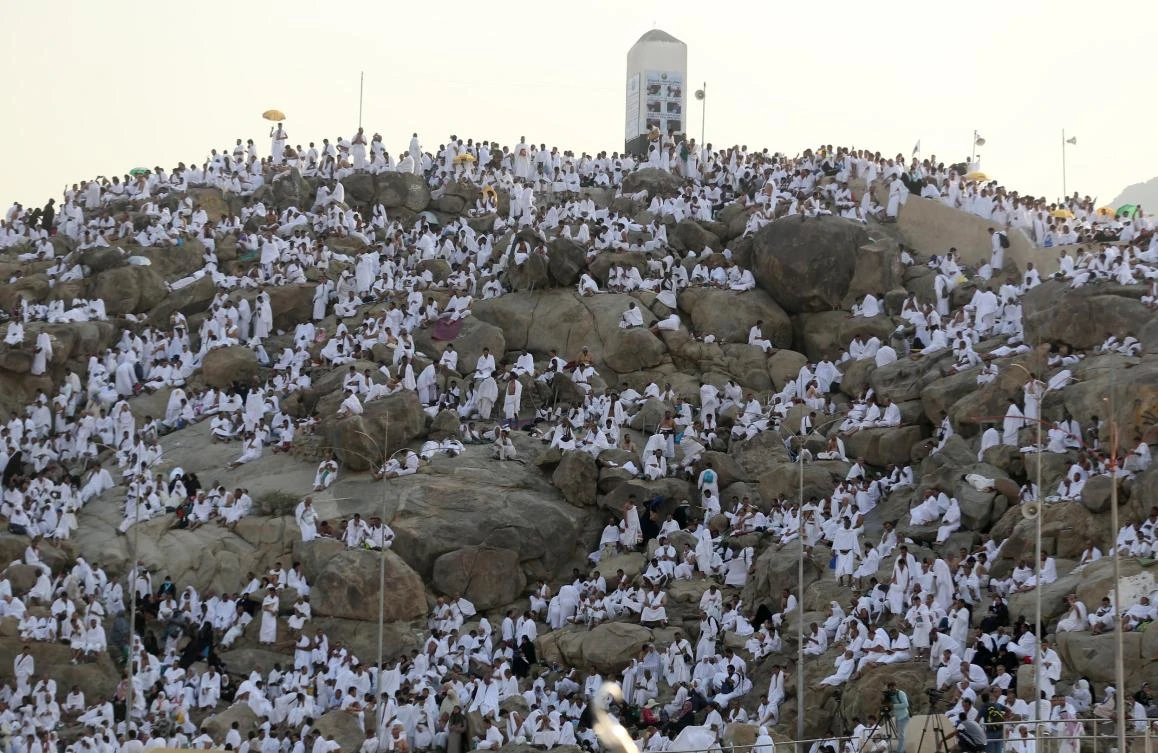
Tourism will have a new structure, but will not altogether address a new market. The traditional areas of Haj and Umrah extensions will still be major sources of tourism and the domestic market is targeted as a growth area. The restructuring of the industry is a mighty task with a single ethos.
“It should be that when you are the tourist, you are the VIP.”
_ Arab News Features 14 August 2003