MOSCOW, 14 September 2003 — In the latest twist to Chechnya’s tortured history, a group of deputies of the former independence-period parliament said on Friday they had sacked their fugitive leader, Aslan Maskhadov. The announcement, by moderates who deal with Moscow, was symbolic — their assembly is disbanded and a new constitution binding Chechnya to Russia was approved by referendum this year.
But it came a month before a Moscow-arranged presidential poll, which the Kremlin’s candidate, Akhmad Kadyrov, is expected to win with little opposition. Parliamentary polls are due later. The Kremlin’s chief spokesman for Chechnya welcomed the deputies’ move, saying no one could any longer call on Moscow to talk to the separatists.
“Maskhadov has been stripped of his powers by his own associates and comrades in arms,” Sergei Yastrzhembsky said. Maskhadov was elected president in 1997 during Chechnya’s three years of de facto independence. He has been on the run since Russian troops re-entered Chechnya in 2000, but separatist forces attack Moscow’s troops almost daily.
The deputies from the independence legislature, who have long cooperated with Moscow, said they passed the resolution removing Maskhadov under the constitution of “independent” Chechnya. “We came to the conclusion that stability was possible only by removing Maskhadov,” Isa Temirov told a news conference.
The Kremlin has been trying to establish a new legal basis for Chechnya, which adopted a new constitution in March. A website of the ousted rebel government denounced Maskhadov’s removal, saying the president could not be dismissed in wartime and that the deputies did not have a majority anyway.
Meanwhile, rebel attacks, armed clashes and mine blasts in Chechnya left six Russian servicemen and Chechen police dead and 13 others wounded in the previous 24 hours, an official in the region’s Moscow-backed administration said yesterday.
Russian forces continued to target suspected rebel positions in mountainous southern Chechnya with artillery and detained more than 150 people around the region in security sweeps searching for rebels, the official said condition of anonymity.
Five Russian servicemen were killed and seven others were wounded in rebel attacks on Russian positions in the region, the official said. The sixth death came when a Chechen riot police squad member stepped on a mine Friday in the capital, Grozny.
A clash between Russian riot police and rebels early yesterday left three wounded, while one rebel was killed and one detained, the official said. Three Russian servicemen were wounded when their vehicle came under fire late Friday.
Fighting persists in Chechnya four years after Russian forces entered the mostly Muslim region in southern Russia in 1999 in the second attempt in a decade to crush separatist rebels. Russian troops had withdrawn after a 1994-1996 war that killed tens of thousands of soldiers, rebels and civilians and ended with the separatists in control.
The Kremlin has ruled out negotiations with rebel leaders and is portraying a regional presidential election scheduled for Oct. 5 as part of a series of steps to restore peace and stability to Chechnya.
On Thursday, the two main challengers of Kadyrov were removed or dropped out of the presidential race. The Supreme Court of Chechnya annulled the registration of Malik Saidullayev days after he alleged that Kadyrov’s administration was using intimidation and violence against others on the ballot.
Aslanbek Aslakhanov, who represents Chechnya in the Russian parliament, announced that he was withdrawing from the race to become an adviser to Russian President Vladimir Putin.
Recent opinion polls had shown that both Saidullayev and Aslanbek Aslakhanov were far more popular than Kadyrov among voters in Chechnya.
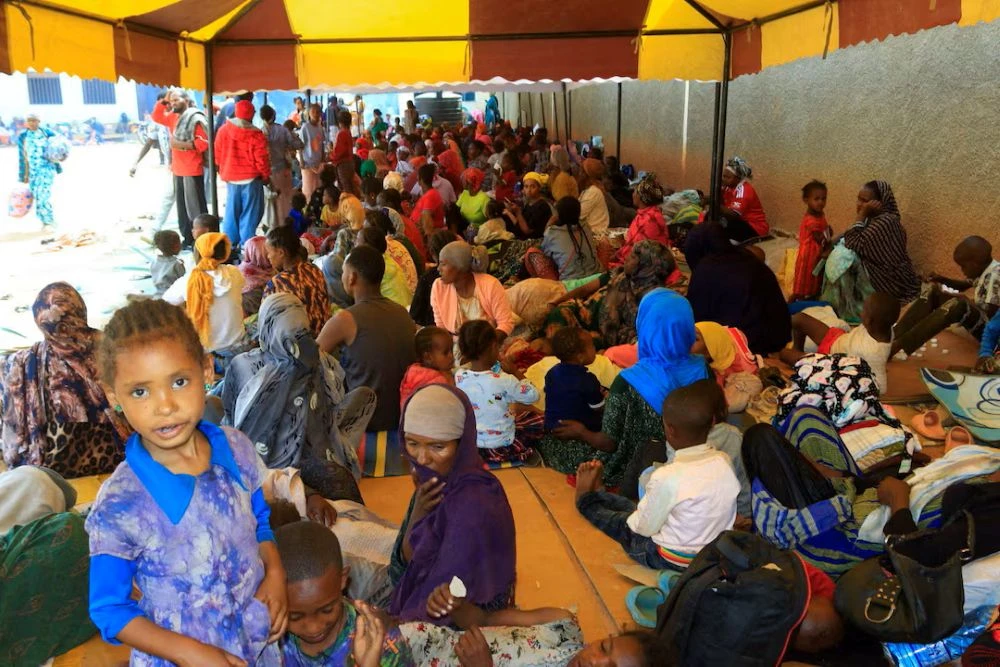
Thousands of people who fled the war in Chechnya have returned home before presidential elections next month but have not received security and material aid guaranteed by the Russian authorities, a senior UN official said in Moscow on Friday.
Compensation had yet to be paid and some people whose homes were destroyed complained of being struck off the list for new housing, Francis Deng, envoy for UN Secretary-General Kofi Annan on internally displaced persons, said after touring the region.
The material incentives had for many been “a very serious factor in returning” to the still highly unstable republic, Deng said. Of more than 200,000 people who poured mainly into the neighboring Russian republic of Ingushetia after the start of the war in autumn 1999, more than 80,000 remain, 9,000 of them in tent camps.
Despite continuing clashes between troops and separatist rebels, Russian authorities have tried to convince people it is safe to return before the Oct. 5 polls vote for a republican president. Humanitarian organizations working in the camps said authorities have in the past used crude tactics like cutting off gas and electricity to tent camps to get people to move.