NAIVASHA, Kenya, 26 September 2003 — The main rebel group in Sudan and the Khartoum government yesterday signed an agreement on security issues, seen as a key step in reaching a comprehensive accord to end Africa’s longest war. The deal on the position and strength of the armed forces belonging to the government and the rebel Sudan People’s Liberation Army was reached on Wednesday after three weeks of talks between Sudanese Vice President Ali Osman Taha and SPLA leader John Garang.
“This is a historic occasion... It has paved the way for a comprehensive peace agreement,” said Taha after exchanging the signed text of the agreement with Garang. Commented Garang: “We will go into this agreement with resolve, energy and focus so that we resolve the remaining issues.”
“With this agreement, the direction and orientation for peace in Sudan is irreversible,” the rebel leader added. Under the agreement, which applies to an already agreed six-year postwar interim period of self-rule for the south of the country, most government troops currently deployed in the south will be withdrawn under international monitoring.
Similarly, most SPLA forces currently deployed in Nuba Mountains and Southern Blue Nile will be redeployed south of a north-south border cutting through the country which was established at independence in 1956. Coordination between and command of the two forces will be assumed by a new Joint Defense Board made up of top officers from both sides.
During the interim period, both the government army and the SPLA will remain separate and “shall be considered and treated equally as Sudan’s National Armed Forces (SNAF)”, according to the text of the deal. “The SNAF shall have no internal law and order mandate, except in constitutionally specified emergencies,” the agreement said.
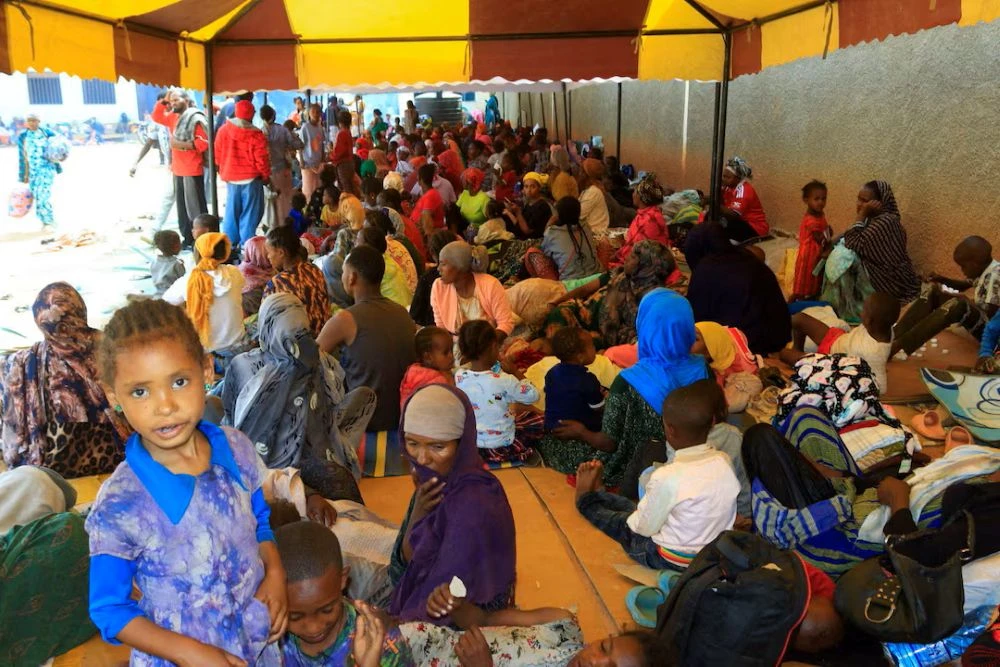
Sudan’s north-south civil war has roots dating back to the 19th century and beyond. Its latest phase began when the SPLA took up arms in 1983. Since then, more than 1.5 million people have been killed and four million others displaced.
The conflict takes place against a background of domination of the mainly black African, animist or Christian south by the Arab, Islamic north, but has become increasingly driven by a fight for control of natural resources, notably oil. The agreement also provides for the formation of new military units made up of forces from both sides of the conflict.
“The Joint Integrated Units shall constitute a nucleus of a post-referendum army of Sudan, should the result of the referendum (held after the six-year interim period) confirm unity, otherwise they would be dissolved and the component parts integrated into their respective forces,” the text read.
They will include 24,000 troops in the south, 6,000 in Nuba Mountains, 6,000 in Southern Blue Nile and 3,000 in Khartoum. The parties also agreed to an internationally monitored cease-fire, to come to effect from the date of signature of a Comprehensive Peace Agreement, details of which are to be worked out by the parties together with international experts and mediators from the regional Inter-Government Authority on Development.
The head of the government delegation to the peace talks, Idris Mohamed Abdelgadir, signed the document and deputy SPLA negotiating chief Pagan Amum signed for the rebel side, while IGAD chief Lazaro Sumbeiywo signed as a witness.
Negotiations on other contentious issues holding up a peace pact are expected to continue under the aegis of IGAD, which is mediating in the conflict.
Garang telephoned President Omar Bashir to celebrate the accord. Meanwhile, opposition parties in Khartoum which had complained about being excluded from the peace talks gave the deal a lukewarm welcome or predicted it would fail in the long-term because they allege it lacked widespread support.
In the phone call late Wednesday, Garang expressed his “extreme delight” with a deal he said had removed the most difficult obstacle to peace, state-run and other media reported.
Radio Omdurman, Sudan Television and newspapers respectfully called him “Col. Garang” in reporting the first telephone conversation between the two foes since they held their first face-to-face meeting in Kampala in July 2002.
Some opposition political parties here welcomed the deal, but others complained they were excluded from negotiations which are taking place only between the government and the main rebel force.
“We and the entire Sudanese people do not know what has been achieved and what is going on in the negotiations...,” Democratic Unionist Party (DUP) Politburo chairman Ali Mahmoud Hassanain said.