
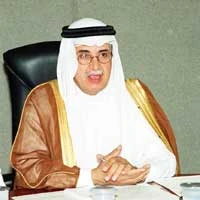
RIYADH, 6 October 2003 — Responding to complaints that mobile telephony in the Kingdom does not cover villages, small towns, and even some major highways, Minister of Telecommunications and Information Technology Muhammad ibn Jameel Mulla said shareholders of the Saudi Telecom Company (STC) cannot afford losses.
At a press conference yesterday Mulla said: “It has been like that since the days of the Ministry of Posts, Telegraphs and Telephones. However, since it turned into a company, the availability of services has improved dramatically due to the flexibility of procedures.”
“As a company, it now has shareholders, and profit is important to it. Therefore providing services in out-of-the-way rural areas with just a handful of inhabitants would be extremely costly and simply not practical. It is just like any other private company that will not carry out a project unless there is profit in it,” the minister said. The minister baulked at a question from Arab News why some major highways including the Riyadh-Dammam and Riyadh-Taif highways did not have uninterrupted coverage despite the fact that hundreds of thousands of motorists use them.
“Who said that the Riyadh-Dammam road is not covered by mobile (phone network)?” the minister asked. “The Riyadh-Dammam road is full of security checkpoints, so there must be regular checks (by the company) of areas that do not get a reception,” the minister said.
The minister did not say whether STC had any intention to lower the daily SR2 a day service fee charged by the company, or SR120 every two months on top of the call charges.
Mulla said by the last quarter of 2004, the door would be open for a few companies to enter the telecommunication field as competitors to STC under the royal decree. When asked why only one or two companies would be allowed to enter, the minister said: “This is the first time we are carrying out privatization, hence we want to make sure that the companies offer the best services to consumers.”
“We do not want to rush into things and want to take them at a conservative pace,” he added.
The minister announced at the Communications and Information Technology Commission yesterday the approval of the board of directors of four companies that provide small aperture terminal (VSAT) services in the Saudi telecommunication market.
Provision licenses to provide VSAT services were granted to the Saudi Telecommunications and Electronic Company, High Capabilities Technologies Co. Ltd., Nasser Al-Harbi for Trading and Detecon Al-Saudi Co. Ltd. The fifth company to provide VSAT service in the market will be STC. This is the first step by the commission, which works under the Ministry of Telecommunications, to implement full privatization of the telecom market in the Kingdom. The Commission previously invited Saudi companies interested in providing the service to submit their applications, and of the 30 companies that applied, 28 pre-qualified. Fifteen of the 28 companies submitted their final proposals within the prescribed time to attain the license application proposal.
After evaluating submitted technical and commercial proposals, four companies were then selected from the 28 after passing the evaluation methodology previously stipulated in the conditions and specifications documents.
The commission appointed a consortium of consultants to help it with the licensing of mobile GSM and data services in 2004.
The minister also said the panel approved private radio service regulations and invited all interested parties to submit their applications for licenses.