
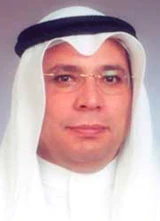
JEDDAH, 8 October 2003 — To get a better feel for the future of investment banking advisory services in the Kingdom, Arab News recently spoke to Faisal Al-Sayrafi, chief executive officer of Financial Transaction House (FTH). The planned liberalization of the Kingdom’s economy was discussed and specifically the development of financial markets and recent international events. FTH provides a wide range of investment banking advisory services including mergers and acquisitions (M&A) advisory, capital raising and strategic and financial consulting to a significant and diversified client base in the Middle East. It was formerly the corporate finance arm of Andersen in Saudi Arabia.
“We aim to add value to our clients’ businesses. However, such value is often difficult to measure in monetary terms. Thus, many local companies are unwilling to pay for financial advisory services since they are unable to quantify the benefit and value such services bring to their business. We believe that we need to create awareness among local and regional companies and help them understand the benefit of objective professional advice,” Al-Sayrafi said. He plans to accomplish this by organizing seminars and workshops for prospective clients.
Al-Sayrafi also commented on the effect of WTO membership on the domestic economy, “Joining the WTO is likely to have serious competitive implications for local companies since the government will be required to liberalize the economy as required by the rules and regulations governing members of the WTO,” he said. In particular, Al-Sayrafi is concerned about the implications for family-owned businesses and the small- and medium-size businesses in the Kingdom. “Most of the family-owned businesses that have traditionally thrived on exclusive agency agreements will need to develop other streams of revenue to be able to compete in a relatively free economy characterized by increasingly stiff competition,” he said. Al-Sayrafi also said that FTH was in the process of compiling a book on issues that family-owned businesses need to address in a changing environment.
When asked to comment on mergers and acquisitions activity in the Kingdom, Al-Sayrafi said, “The M&A activity in the KSA is fairly limited, both in terms of size and scope. However, with the advent of the WTO, the activity is expected to gain momentum.”
Over the past few years, Saudi Arabia has taken unprecedented steps to reform its economy. The government has established several economic committees, introduced new laws, and taken several bold initiatives such as reducing tariffs and privatizing state-owned enterprises. Al-Sayrafi is open about the need for economic reform. He insists that the momentum for economic growth can only be sustained through domestic reforms that develop an efficient environment. “We need to liberalize the economy in the Kingdom in order to stimulate growth. This would give an opportunity to companies outside the Kingdom to enter the market, and that would encourage competition.” He is also keen on a change in the economy’s regulatory framework. “We need to liberalize the regulatory framework in order to encourage greater foreign direct investments and private sector participation.” Al-Sayrafi talks about the domestic market as one that requires immediate attention in order to further economic development and increase liquidity in the economy. “The stock market in the Kingdom is relatively illiquid, particularly compared to others in more advanced economies. This is due to the restrictions on stock ownership that are currently in place,” he said. “Hopefully with the introduction of the capital markets law, we will see increased activity. More and more companies will also consider initial public offerings in order to access capital through the stock market.”
Al-Sayrafi went on to say, “Although there has been a cash surplus in the domestic economy due to the inflow of capital since 9/11, most of it has not been invested in the economy since investors are cautious.” He believes that we have yet to capitalize on this surplus cash which is estimated to be in the neighborhood of $400 billion. He feels that these funds can be invested in new projects to stimulate domestic demand and create employment opportunities. Al-Sayrafi feels that the events of Sept. 11 have had an adverse impact on the market for investment banking advisory services. “Post Sept. 11, investors became cautious largely due to the tremendous global and regional economic uncertainty. The situation has now considerably improved with local investors seeking investment opportunities, particularly in the region,” he said.
Al-Sayrafi also has strong views on consumer and corporate lending practices followed by financial institutions in the KSA. “We feel that it is fairly limited, compared to some other GCC countries, particularly the UAE. However, having said that, I believe the banks in Saudi Arabia are more prudent when it comes to lending, particularly to consumers, which implies that banks have strong balance sheets and can fuel future economic growth.”
Although Al-Sayrafi finds it difficult to estimate the total market size for investment banking advisory services in the Kingdom, he reiterated that one of the key target markets is family-owned businesses, which may represent up to 60 percent of companies in the region. According to him, the majority of these companies require the services to help them stay competitive in an increasingly challenging economic environment.