
Like the Cheshire cat, the abiding memory that Thailand leaves with you is the smile. But unlike the grimace of that feline fake, one can't help feel that they are sincere.
Flying out of the dry browns and huge horizons of the Kingdom and gliding gently into a landscape of vibrant greens and a scale defined by the farming activities of the people who work them rather than the cataclysmic forces of nature is a culture shock that instantly puts the first-time visitor into a receptive mood.
The flower motif threads through almost every aspect of Thai life. The national flower is a purple orchid, and no restaurant table, hotel bathroom or office is without a clutch of exotic flowers. It's a lovely touch and while initially it seems unusual to coarse Western eyes, it works a kind of magic.
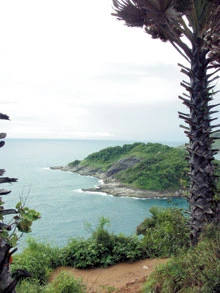
Phuket is an island located on the west coast of the Thai peninsula about an hour's flight south of Bangkok. At first glance, it seems hugely underdeveloped and mainly dense jungle and azure Andaman Sea - but this is deceptive.
The Thai government does not allow any development in most rural areas to rise "higher than the palm trees" and as a result, apart from the occasional development, hotels and whole villages are often almost concealed from the casual viewer. The fecundity of the land and climate means that natural greenery integrates itself with the architecture and the familiar sterile Western-style hotel blocks are rare outside the main cities.
Visitors to Phuket have a huge variety of accommodation to choose from. Simply built bungalows, rentable by the week, cater for the declining budget traveler trade while six-star hotels offer every service the top-end traveler demands - including a remarkable level of privacy.
Peaking in the mid 1980's, budget travel to Thailand is now less the focus of development than middle and top-end travel. Tourism accounts for only six percent of Thailand's GDP according to Pornsiri Manohan, the deputy director of travel and tourism. "We are looking to attract families and the kind of visitor who wants to experience the culture, beauty and unique hospitality that we have to offer," she said. "There is so much more to our country than beaches and bars. We have a rich culture, stretching back over thousands of years and blending many Asian influences into something really special."
Many of the resort hotels aiming at the new brand of tourist make use of the steep jungle-covered cliffs to build greenery-shrouded chalets on stilts or outcroppings of rock. A winding path links what is effectively a community of individual buildings within hotel grounds that look more like carefully tended jungle than a garden.
Even with 70 percent occupancy, few visitors were visible, dining rooms with just a few residents in evidence and an air of quiet efficiency pervading the whole place. Part of that comes from the bubble of calm the Thai people seem to live in and carry about with them; part probably comes form the fact that a good number of the large resort hotels are managed by Germans who have integrated efficient management with graciousness and produced something remarkably relaxing.
"I came for a couple of years," said Holger, the German manager of one of the grander resorts - declining to mention either his family name or, discreetly, the hotel. "The country got to me - I stayed for 16 years and brought my family up here. Something like forty percent of our clients are repeat visitors, and we have a very high retention rate for staff. A third of them have been here since the hotel opened 17 years ago. Most people seem to relax into the pace and style of life here."
Strung out along the main roads that follow the beaches, there is a glorious jumble of chaotic-looking shops. On Patong Beach or Karon Bay, two of the more popular white beaches in Phuket, everything you can imagine - and plenty you cannot - is on offer. Silk or linen suits for men and women, made to measure in one day; exotic local jewelry; useful curved items for doing unspecified things to people; the most vicious looking edged weapons straight out of a fantasy gamester's imagination. Or you might recoil from vile plastic trinkets that give you pause to reflect on the mental stability and planetary origin of the designer. It's a visual feast and kicks the imagination into overdrive.
And of course, the food. Often, formal meals in the multitude of restaurants and hotels look like national horticultural events, so laden with vegetative decoration are they; but they taste as exotic as they look.
Thailand, though, is a snacker's dream. The seafood is fresh and of apparently endless variety. Thai food, both cheap and plentiful, is simpler than in the West and often searingly hot. Beware the delicious "nam prik kung siap" - an innocent-looking dried shrimp paste native to south Thailand, made with fresh limes and chilies used for flavoring and probably burning off paint.
Littered in aromatic profusion along roadsides are tiny stalls, often built on a flimsy wire chassis supported by a bicycle wheel on one side and attached to a complaining motorcycle on the other. Fresh deep fried soft-shelled crabs, barbecued baby squid, fish of infinite variety and chicken recipes that would have provided Scheherazade with a different menu every night are cooked in smoking woks in seconds and served with small mountains of rice and vegetables for embarrassingly small sums of money.
Whole families are often involved in the enterprise, children wielding dangerous looking edged tools skin and fillet squid and other unidentifiable sea dwellers in seconds while the parents mix and cook with frenetic speed. Grandmother sits quietly wrapping up selected morsels in banana leaves, proffering samples to passers-by. Even the family cat, and several times a quick-eyed monkey, is a passenger somewhere in the sidecar, certain in the knowledge that it will be included in mealtime later.
Elephants are the national icon and much revered as symbols of strength, patience and loyalty, their images appearing on everything from silk underwear to entire buildings.
At intervals by the roadside, sculptures of these peaceful pachyderms are almost hidden under a small mountain of flowers and garlands and surrounded by dozens of smaller sculptures left by passing travelers. Less used now as beasts of burden, they are deeply ingrained in Thai culture.
In the early 1990's Robert Greifenberg, a German conservationist, became captivated with Thailand. He stayed, founded a now thriving eco-tourism company - Siam Safari - which uses elephants as transport and for trekking and provides a home and medical attention for retired ones. Older ones are used to train the younger and both contribute to maintaining their mountainside home just outside Phuket. Teenage elephants tidy their surroundings and eat the tasty bits.
While a business, the operation provides a refuge for older beasts and a comfortable environment for the growing ones - while continuing the tradition of integrating elephants with the national culture.
The relaxed and open nature of the people is little different in the urban sprawl of Bangkok, "The City of Angels." It is a city of 5.5 million official residents - nearly 10 percent of the total population - with the Chao Phraya River sidling muddily through its center, the skyline dotted with high-rise offices and residential towers.
The river is a well-used waterway, alive with high-prowed "han yao" (long-tail), fragile-looking banana-shaped boats pushed along by what looks like an oversized electric blender, as well as ferries and trains of lumbering barges. Sliding sideways across the river against the strong current and seeming to threaten collision, brick-shaped ferries swirl with an insouciant skill born of long practice between the barges and pleasure boats.
Apart from the obvious pastimes of luxury hotels, up-market restaurants and well-stuffed shopping malls - which sadly internationalizes the city because some travelers seem only to go abroad to live at home - the real fun is to be found in the side streets and byways of the city.
Seeking out low-life is easy, but very much confined to a few well-known streets that are frequently guarded by stern policemen in well-lit sentry posts.
People watching from a pavement restaurant or wandering through a heaving market in a cramped alleyway at night introduces you to every nationality and culture on the planet.
More formal and traditional culture abounds as well. Thailand is rightly proud of its traditions and spares no opportunity to share them. Spectacular shows incorporate everything from laser light shows and earth-moving noise to the most exotic and graceful of the traditional dance forms, the slow-motion "lakhon." It's a case of Las Vegas meets Eastern culture - and it's presented with an infectious exuberance that engages the visitor completely.
For families or singles, the sports-minded or honestly lazy who look only for a private place to unwind and switch off, Thailand is a place to visit and encounter a culture of genuine hospitality and grace.
The people and their graciousness count for a lot in the final impression a visitor carries away. You can't help but feel that when you are there, you matter.
— Arab News Review 23 October 2003