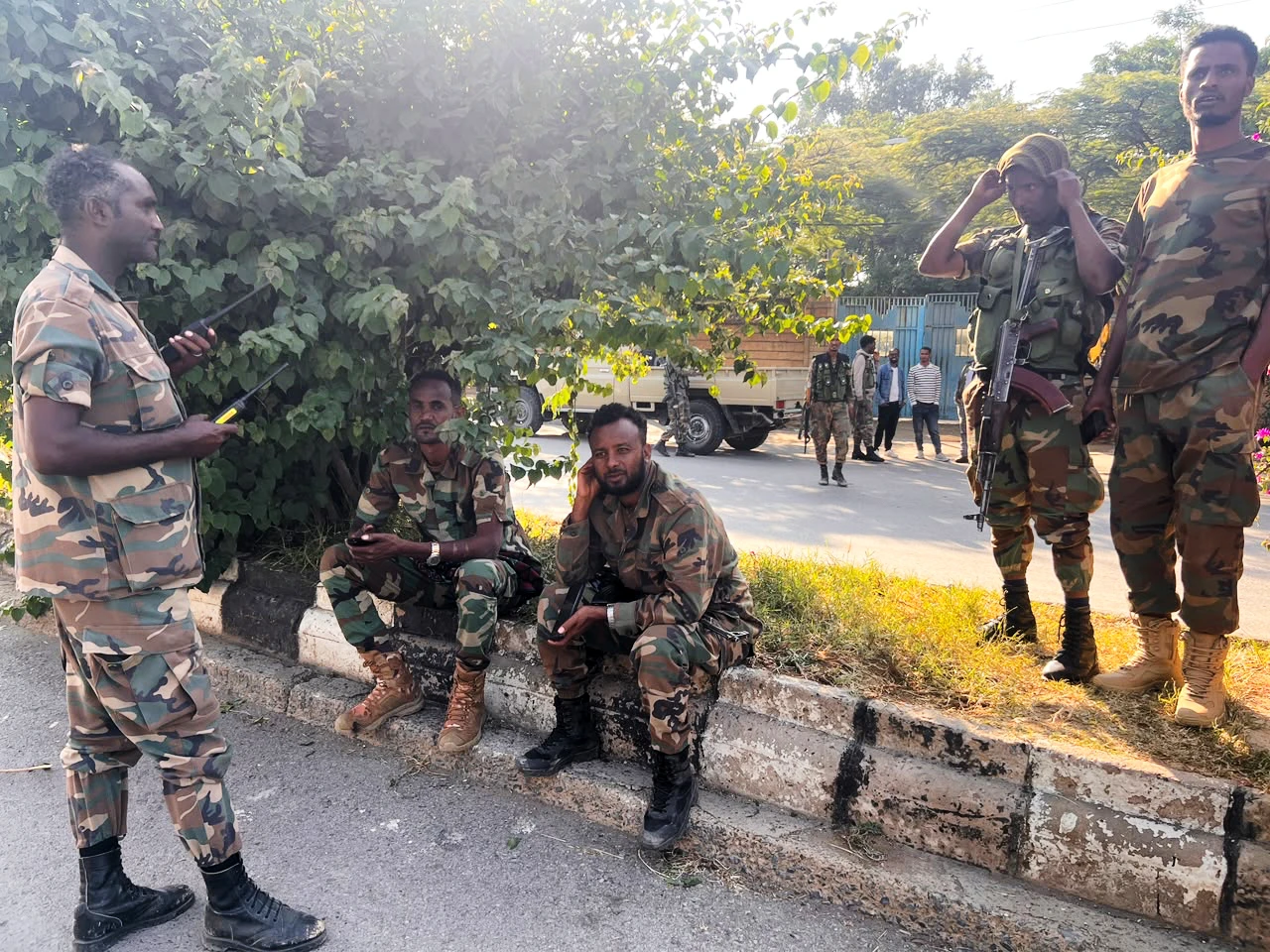
KHARTOUM/CAIRO, 23 November 2003 — Rebels in western Sudan accused the government yesterday of violating a truce with airstrikes and militia raids that killed 30 people, mostly civilians. The government said it knew nothing of the attacks in the arid Darfur area, where the rebels of the Sudan Liberation Movement/Army (SLM/A) emerged as a fighting force in February, saying Khartoum had marginalized the impoverished region.
“It’s been very bad. Attacks by government militias and the air raid have killed 30 people and lots of livestock,” SLM/A Secretary-General Minni Arcua Minnawi told Reuters by phone from western Sudan.
Minnawi said 24 of the dead were civilians and the rest rebel fighters. He said the attacks had started on Thursday and continued into Saturday in the west of Northern Darfur state, about 850 km west of the capital, Khartoum. “They used an Antonov airplane to bomb civilians areas today (Saturday),” he said.
In Khartoum, Internal Affairs Minister Maj. Gen. Abdel Rahim Mohamed Hussein said he had not heard of any attacks in the area. The two sides signed a truce in September and agreed to extend it in November. The rebels have in the past accused the government and what it calls pro-government militias of violating the cease-fire. Khartoum is in separate talks with another, southern-based, rebel group to end a 20-year-old civil war in the south of Africa’s largest country.
Meanwhile, the leader of Sudan’s largest opposition party, former Prime Minister Sadiq Al-Mahdi, said Thursday the government and its rebel opponents will not meet the US target of concluding a peace accord by the end of the year.
The government and the rebel Sudan’s People’s Liberation Army have been negotiating in Kenya to settle the 20-year civil war. Last month, US Secretary of State Colin Powell held talks with the two sides in Kenya and announced afterward that they had agreed to “conclude a comprehensive settlement no later than the end of December.”
Speaking in Cairo, Mahdi said the date was “too soon.” “Instead I believe a peace agreement will be accomplished in the first half of the next year,” Mahdi told members of Egypt’s Foreign Press Association in Cairo. Mahdi leads the Umma party, which traditionally scores highest in free elections in Sudan. He is the country’s last democratically elected prime minister, having been overthrown by Omar Bashir in 1989.
Mahdi paid tribute to Washington’s role in encouraging the government and the rebels toward the interim agreement they signed last year and a further accord signed in September.
Referring to the many years of fruitless talks between the two sides, Mahdi said that before the United States got involved, “all other mediations were academic.” “The United States’ clout helped push the peace negotiations,” Mahdi said.
He said the administration of former President Bill Clinton had failed to advance the peace talks because it dealt with the issues from “ideological bases.” Under President George W. Bush, “America reformed its policies ... listened to Sudanese intellectuals and politicians, and formed pragmatic ideas,” he said.
Sudanese rebel leader John Garang said Friday a peace accord to end the 20-year civil war would probably be reached within weeks. “We hope that we will reach a final, just and comprehensive agreement before the end of the year,” said Sudan People’s Liberation Army chief Garang after a meeting in Washington with Powell.
“There are good chances we can do that. The issues are clear,” he said. State Department deputy spokesman Adam Ereli also noted that Garang had committed to Powell “to reach a final comprehensive agreement by the end of December.”
Talks at Naivasha, Kenya, which have been on hold since late October are set to resume Nov. 30, said Garang, noting that he and Sudan’s Vice President Ali Osman Taha were to meet for talks around Dec. 5.