NAIVASHA, Kenya, 11 April 2004 — Peace talks to end 21 years of civil war in southern Sudan hit a snag on a dispute over the imposition of Islamic Shariah law in the capital Khartoum, officials said yesterday. Mediators in the talks between the government and the rebel Sudan People’s Liberation Army expected a protocol to be signed this weekend to pave the way for the signing of a much-delayed peace deal to end Africa’s longest civil war.
“The issue of the national capital and the laws that govern it are the final obstacle right now,” Sudan’s Foreign Minister Mustafa Osman Ismail told Reuters. “In my estimation the current session is in its final stages and the important issue that remains is that of the national capital.” The six-month-old talks in Kenya between First Vice President Ali Osman Mohamed Taha and rebel leader John Garang stalled in recent weeks over the disputed oil-rich Abyei region, and the issue of power-sharing.
The rebels said the latest obstacle is that the government wants the capital to be under Shariah laws while the SPLA wants non-Muslims to be exempt from the Islamic law. “The main point that has stalled the talks is the laws to govern Khartoum,” SPLA spokesman Samson Kwaje told reporters.
“The government insists that everyone must be subjected to Shariah law. We on the other hand are advocating for ... Shariah law for the Muslims and secular laws for the non-Muslims.” He said the rebels had ideally wanted the capital to be Free-free, but had since agreed that both laws be applied. In an attempt to step up pressure on both sides, acting US Assistant Secretary of State Charles Snyder met Taha and Garang on Wednesday in the Rift Valley town of Naivasha.
Weeks of stagnation in the talks have prompted diplomatic concern that the longer the process dragged out, the greater the possibility for breakdown. Both the foreign minister and Kwaje said the two parties had significantly narrowed their differences on most of the outstanding issues.
“It is my belief that, if an agreement is reached on the issue of a national capital, then it will be only a matter of days before we reach a final agreement and begin a new stage in our country’s history,” Ismail told Reuters in Nyala, during a three-day visit to Darfur in western Sudan, where a separate conflict has raged for more than a year.
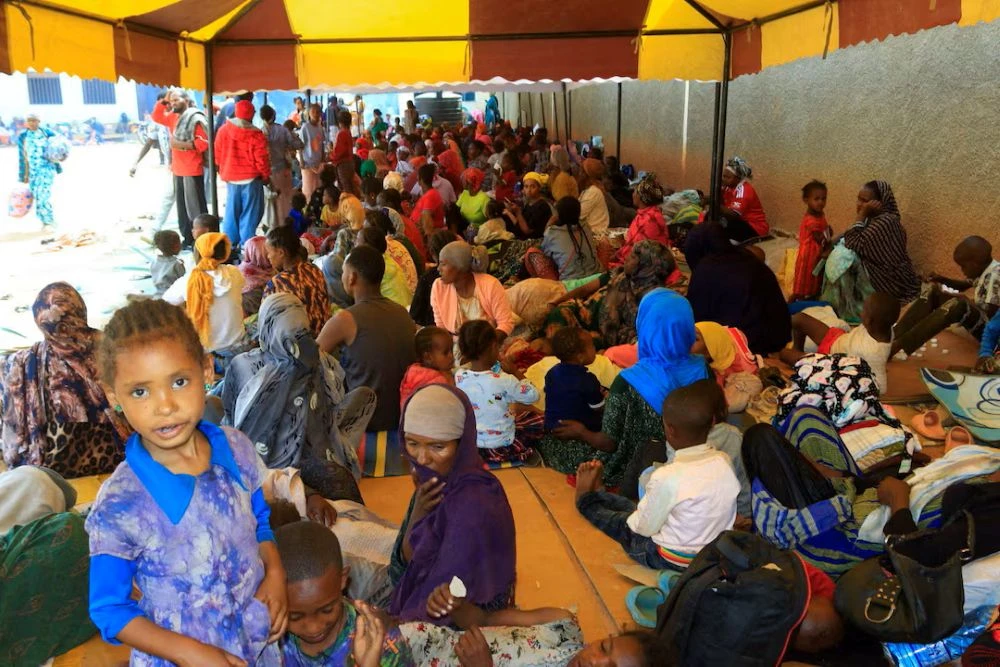
Ismail said that Sudan will begin an immediate investigation to prosecute those responsible for a campaign of violence in Darfur. The decision follows the dispatch this week of a UN fact-finding mission to investigate the conflict and increasing pressure on the Sudanese government over violence in the western area bordering Chad that UN officials have described as ethnic cleansing.
Rebels launched a revolt in remote Darfur in February last year, accusing the government of arming Arab militias who loot and burn African villages.
During a visit to Darfur, Ismail said local state authorities would lead the investigation and urged aid groups to provide them with names of all those who have been attacked.
“We need this investigation. Some of these people lost their houses and we need to replace them. Some lost property. We need to discuss how they can be compensated as part of the road back to peaceful coexistence,” he told reporters.
The United Nations estimates more than one million people have been affected by the conflict, and some 110,000 refugees have fled into neighboring Chad, where peace talks with the rebels yielded a cease-fire on Thursday.