AL-FASHIR, Sudan, 20 April 2004 — Families fleeing fighting in Sudan’s arid west wonder how they will feed their children when they return home as donkeys they rode to safety die of exhaustion and starvation.
Donkeys helped save thousands of lives carrying women and children to safety from marauding Arab militiamen in the Darfur region and are vital to the African farming communities.
“When an attack happens, the first thing they (villagers) were doing is to put the children on the donkeys and send them first,” Anna Riatti of the UN Children’s Fund (UNICEF) in Al-Fashir, the capital of Northern Darfur state told Reuters.
The militiamen, or Janjaweed, have been driving African farmers and their families out of their villages in Darfur in what international organizations have called ethnic cleansing and even attempted genocide.
Two main rebel groups took up arms against the government in Darfur last year complaining the government neglected the region and armed the militiamen. The Khartoum government says the mounted Arab militiamen are outlaws.
The African villagers say the grueling journey to safety through scrubland takes its toll on the donkeys. Some do not survive, others die later.
“Our donkey has died since we came here. I sent my wife and two children on its back when the Janjaweed began attacking so I knew they were safe,” said Muhammad Musa Adam, 35, who escaped the fighting to the Mashtal Camp in Al-Fashir.
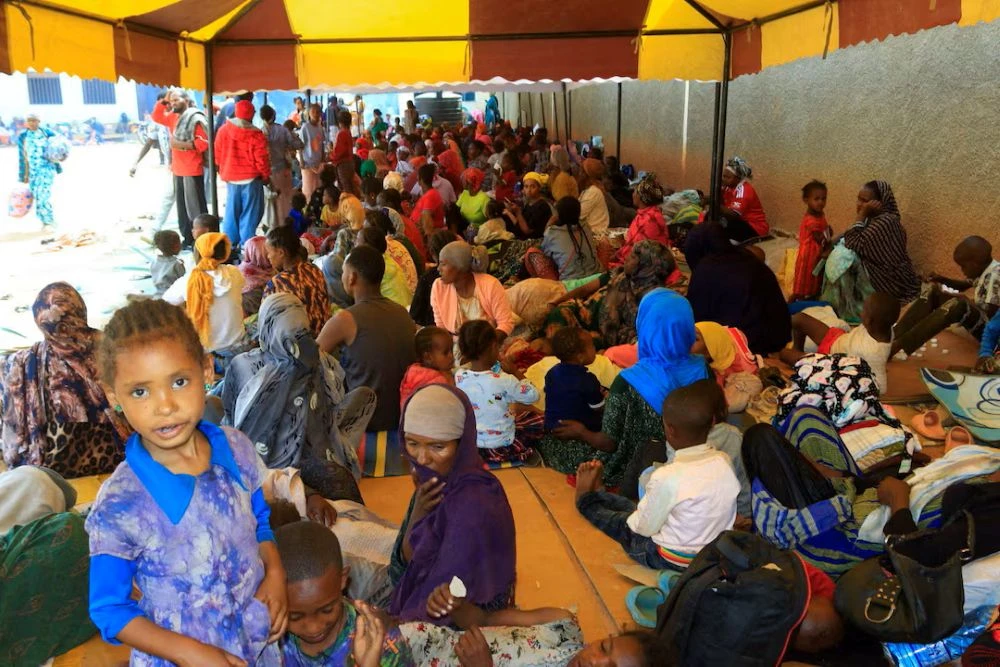
Hundreds of thousands of people have been displaced and more than 100,000 have fled across the border into neighboring Chad. UNICEF’S Riatti says the donkeys are suffering because their owners are too scared to go outside and find grass for them to eat. Emaciated donkeys wander looking for food in rubbish tips among the makeshift shelters where 38,000 people live in cramped conditions around 800 km southwest of Khartoum.
The road out of Al-Fashir is littered with the sun-baked remains of donkeys that fell before completing their journeys. Before the fighting, the donkeys carried water for crops and transported the produce to the market. The African farming communities fear there may not be enough donkeys to allow them to restart their lives.