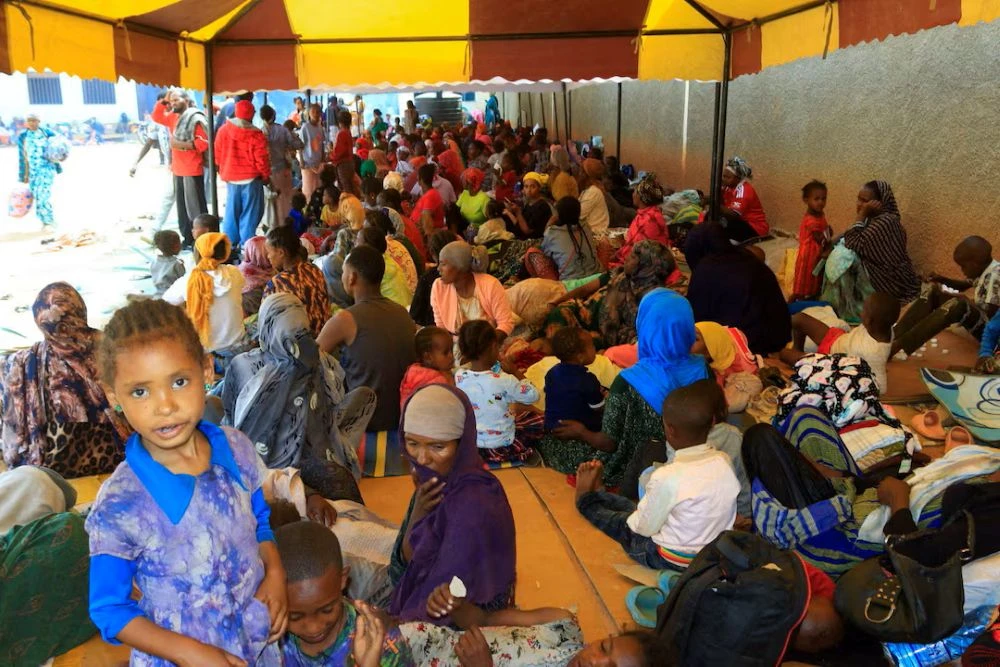
CAIRO/NAIROBI, 2 May 2004 — Rights group Amnesty International yesterday said fighting was persisting in west Sudan despite a cease-fire between the government and rebels, and said time was running out to avert a humanitarian disaster before the rainy season.
The Sudanese government and two main rebel factions in the impoverished Darfur region signed a truce on April 8 to allow urgent aid to reach about one million people affected by the conflict.
Aid officials say rains are expected to start from late May and could hinder the distribution of aid and medical supplies. Rebels took up arms against the government in February 2003 to push for a fairer share of power and Sudan’s resources.
“Two time bombs are ticking in Sudan in a countdown to disaster: the approaching rainy season, which means that by June many areas may be cut off from food and medical supplies from outside; and the danger that a complete collapse of the ceasefire will lead to an escalation of violations,” Amnesty said in a statement late on Friday.
Attacks on villages, indiscriminate and deliberate killings of civilians, rape and lootings were continuing, and most detainees imprisoned because of the conflict have not been released, it said. Monitors from the African Union designated to investigate cease-fire violations were not in place, it added.
An official from the Sudan Liberation Army, one of the two main rebel groups, said on Thursday that Arab militias from the Darfur region had crossed about 10 km into neighboring Chad and attacked refugees and local villages.
Rebels and others accuse the government of arming the Arab militias, known locally as Janjawid, to loot and burn African villages. Khartoum calls the Janjawid outlaws. “Unless the international community put maximum pressure to ensure that the government militia are disarmed and removed from the region the conflict will worsen and spread,” the London-based rights groups said.
Amnesty said most villages in Darfur had been destroyed and that the Janjawid invaded camps for those displaced. UN officials have said the situation in Darfur is one of the world’s worst humanitarian crises, with more than 110,000 refugees encamped in Chad.
The UN High Commissioner for Refugees said in a statement on Friday that its emergency relocation operation in eastern Chad had so far transported some 45,000 Sudanese refugees inland, away from the insecure Chad-Sudan border. It said it hoped to have moved at least 60,000 by the start of the rainy season in late May.
Meanwhile, Sudan’s government and main southern rebels signed a one-month truce extension, days after the top negotiators trying to end a 21-year civil war restarted talks following a two-week break, mediators said yesterday.
Rebel leader John Garang of the Sudan People’s Liberation Army and Sudanese First Vice President Ali Osman Mohamed Taha restarted talks on Thursday to try to end Africa’s longest-running conflict.
“The cessation of hostilities was signed late on Friday to last for one month, and the principals (Garang and Taha) are still meeting,” Chief mediator Lazarus Sumbeiywo said by telephone from the Kenyan town of Naivasha.