JEDDAH, 3 May 2004 — It is rare for an Icelander to visit sweltering Jeddah, rarer still for one to try and attract Saudis to Europe’s coldest and most remote country.
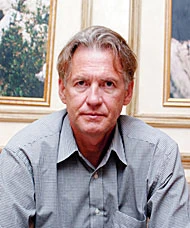
Iceland is cold, “but it has lot to offer to Saudi Arabia and the rest of the Middle East,” says Jon Olafsson, an Icelandic businessman who is chairman of the London-based Urban Venture Partners.
“We’re looking at exporting live sheep and lambs from Iceland,” said Olafsson in an interview with Arab News. “We’re one of the few countries raising organic lambs.”
Fisheries is another sector that is expected to be included in the country’s list of exports. After all, fish and fish products constitute more than 70 percent of Iceland’s export of goods.
The continental shelf around Iceland, where the warm Gulf Stream and the cold nutrient currents from the Arctic meet, offers very favorable conditions for various kinds of marine life, including whales, and are rich fishing grounds.
The fishing territory requires strict protection, and fish catches are tightly controlled.
It is because Iceland wants to protect its fishing rights that it has not joined the European Union. “Once we join the EU, we’ll lose 80 percent of our fishing rights,” Olafsson said.
Iceland is full of mountains and lakes, with 20 percent of land covered by glaciers and 40 percent arable. Bottled water is one other option being seriously considered.
One of the advantages of living in Iceland is the endless flow of geothermal water streaming from the earth. This water forms open-air swimming pools all around the country — the famous geysers. As thermal spas they can provide relief for psoriasis and other skin diseases.
Attracting tourists from this part of the world features prominently on his agenda.
Iceland is happy with its economic record, with one of the highest consistent growth rates in the world and low inflation and unemployment. The country, which did not split from Denmark until 1944, had the world’s first woman president.
“The country has the cheapest electricity. It ranks among the world’s five countries in terms of high living standards,” Olafsson said.
Icelanders spend some of their formative years abroad. “Our youth go out for higher education and come back after completing their studies,” he said.
Olafsson has been holding meetings with the business community here since his arrival over the weekend. He will leave the Kingdom tomorrow.