NAIROBI, 15 May 2004 — UN Secretary-General Kofi Annan has urged Sudan’s President Omar Bashir to disarm the Arab Janjawid militias which have wreaked havoc among the civilian population in Sudan’s western Darfur region.
Annan also asked the Sudanese government to improve the access for humanitarian workers trying to reach those displaced by the conflict, his spokesman said Thursday.
In a letter to Bashir, the UN chief “emphasized the importance of negotiating a political settlement to the Darfur crisis,” spokesman Stephane Dujarric said. “In the letter, the secretary-general asks the Sudanese president to follow up on a number of concerns raised by the senior-most UN human rights and humanitarian officials at a Security Council meeting last week upon their return from the region,” Dujarric said.
“These include improved access for humanitarian workers so that the victims of the crisis can be assisted as quickly as possible, the maintenance of the humanitarian cease-fire and the need to control and disarm the militia in the region; and facilitate the early deployment of African Union observers throughout Darfur.” The text of the letter was not released.
UN human rights chief Bertrand Ramcharan last week accused the Sudanese government of conducting a “reign of terror” and “repeated war crimes and crimes against humanity” by supporting militia and nomads who have been driving black Africans out of the region. Sudan’s government has rejected the charges.
A humanitarian cease-fire between the Sudanese government and the Darfur rebels was signed in neighboring Chad early April, but has reportedly been broken on several occasions.
Annan asked Bashir to maintain the humanitarian cease-fire and facilitate the deployment of African Union (AU) observers in the area, while negotiating a political settlement to the crisis, according to his spokesman.
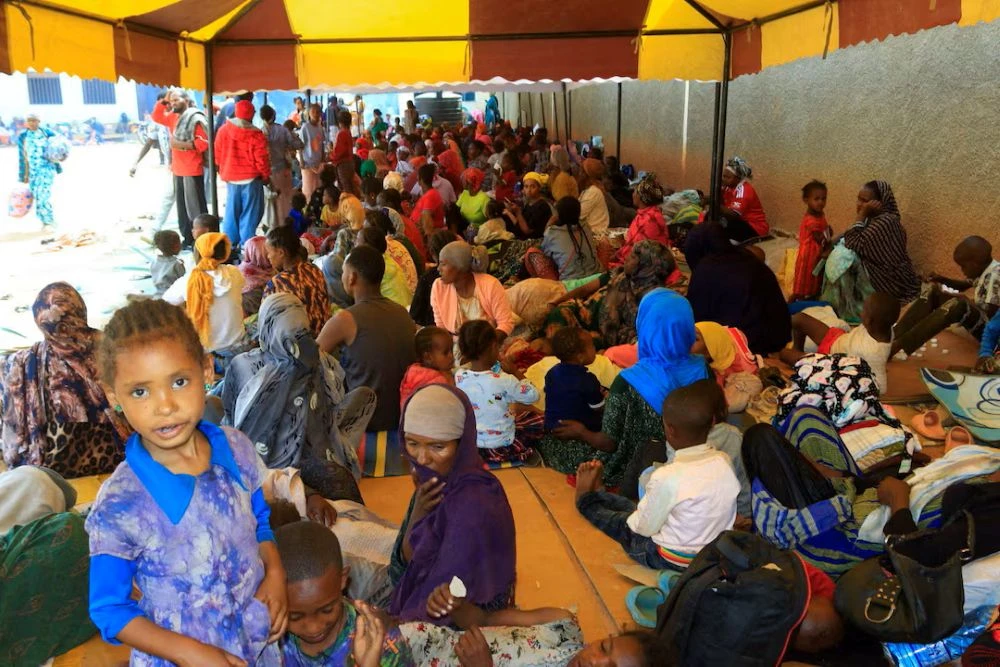
The UN High Commissioner for Refugee said Sudanese refugees in Chad were under constant threat from incursion by Sudanese militias, and said it urgently needed funds to enable them to move the refugees to safer camps further away from the border.
The agency said heavy rains were expected to begin in eastern Chad within a few weeks, which would block roads and cut their access to the refugees. UNHCR said it had to date set up six camps inside Chad, giving shelter to 68,000 refugees.
Darfur has been the site of heavy clashes between nomadic groups of Arab descent and Black African residents. The conflict over the areas limited resources is one of the worst humanitarian disasters worldwide, according to the UN.
Since the conflict began over a year ago, more than 1.2 million people have been affected. At least 750,000 are believed to be displaced within Darfur, while over 100,000 have fled over the border to Chad. At least 10,000 people are believed to have died.
James Morris, the head of the World Food Program, said the crisis was one of the worst in the world and would get worse when the rainy season begins in a few weeks. Other UN officials have accused the militia of driving thousands of black Africans from their villages, pillaging, killing and raping.
The Security Council took no action after the private briefing, with the United States and Britain worried it would interfere with peace talks being conducted in Kenya between the government and rebels in southern Sudan. Sudanese Foreign Minister Mustafa Ismail said yesterday the militias would not be disarmed as long as weapons remained in the hands of rebel forces. In an interview with the Al-Hayat newspaper, Ismail repeated Khartoum’s denials that it was supporting the militias.
“Those who want us to interrupt the actions of the militias now must understand that this is not possible,” he was quoted as saying. “They forget that there is a rebellion going on and (the rebels) carry arms and threaten the tribes and it is possible that acts of revenge might be committed.”
He said the disarmament of all sides in western Darfur region was a global problem and could not be undertaken by the Sudanese government alone.
The government in Sudan, Africa’s largest nation, is dominated by Arabs but the country is also home to large non-Arab minorities, including the Fur, Massalit and Zaghawa in Darfur.
A top US official said yesterday that Sudan’s government and southern rebels are close to signing an accord paving the way for a peace deal to end Africa’s longest civil war, but they need to make tough political decisions.
First Vice President Ali Osman Taha and John Garang, leader of the rebel Sudanese People’s Liberation Army are locked in talks hosted by Kenya over the status of two disputed regions and how to share power once the war ends.
Diplomats are hopeful that once these issues are resolved there can be a comprehensive peace deal to end Sudan’s 21-year civil war which has killed two million people in Africa’s biggest country.
“The truth is they are very close, they just have to make decisions. The gaps between them are not enormous gaps but they have to make hard political choices,” Assistant Secretary of State Charles Snyder told a news conference in Nairobi, without elaborating. He said negotiations were taking too long in light of the escalating conflict in Darfur and fighting in the south’s Upper Nile region.