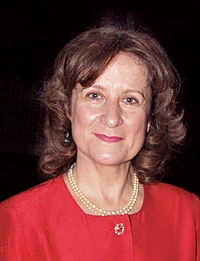
JEDDAH, 15 May 2004 — “There is a tide in the affairs of men, but the British Council is there, business as usual.” That is how Baroness Helena Kennedy, the chairwoman of the British Council, summed up its independence from government and commitment to building understanding and relationships between countries and cultures.
In an exclusive interview with Arab News, Baroness Kennedy detailed the ethos and aims of the organization. “We are sponsored by the government, and they pay for one or two kinds of project, but we generate the vast majority of our funding ourselves. We remain very much at arm’s length,” she said.
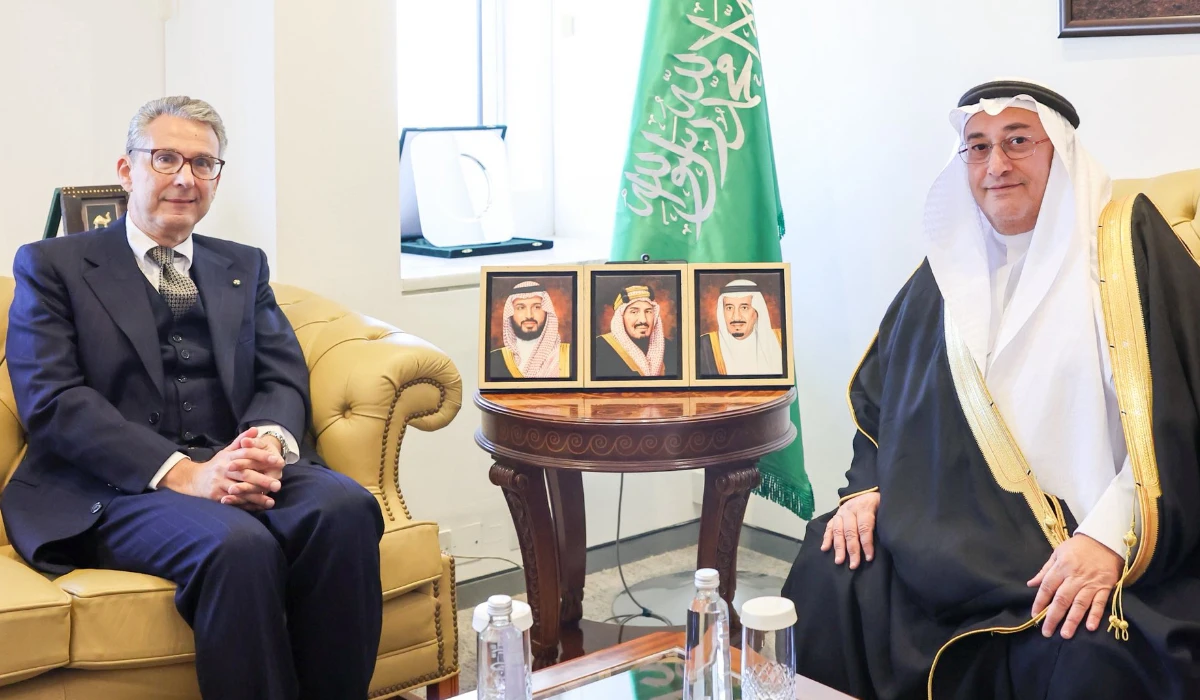
Kennedy, who ends her term in August, was here to return the visit of a few years ago by a delegation of Saudi ministers who went to UK to look at the education system and to strengthen links with Britain.
While here, she met Dr. Mohammad Al-Rasheed, the minister of education. “We discussed strengthening links between the two countries especially in the area of education.”
“It’s on those kinds of link you can make so much headway in strengthening relations in a broader spectrum.”
That, she said, has never been more necessary than now to remind people of the long history between Saudi Arabia and the UK. “These are difficult times,” she said, “but the work of the British Council at keeping alive relationships goes on whatever is happening at government level.”
Most people know the British Council for its English language teaching programs. “That’s a great tool for exchanging culture,” Kennedy said. “Along with direct teaching, we are working with the Ministry of Education on how English is taught in the school system.” It was because of the British Council’s reputation for teaching that it was approached to give that help, she added.
The basis for teaching English in Saudi schools has long been book-driven. “There is a new feeling in the ministry that they want to improve communication skills and want them to be there for the future of the economy.”
Banking, commerce, science and the Internet almost invariably use English for international business. “But they also want it to be in the state system, taught well, and want to know how that can be done effectively.”
English will be taught starting at an earlier age. When the ministers visited Britain, they were very interested in how language teaching is introduced into primary schools. All the evidence, said Baroness Kennedy, is that the earlier children start learning languages, the easier it is for them.
“The real area where we will expand our work is in the teacher training colleges - training the trainers. There is a lot of debate about whether and how education should be reformed.”
In her meeting with Saudi ministers, Kennedy looked at the way the world of work has changed and how education has to accommodate that. Graduates need an emphasis on technology and more use of technology coupled with better communication. “Universities should encourage that rather than just putting knowledge into heads. The whole idea is that you need to have a much greater accent on problem-solving. Employers — both in Saudi Arabia and Britain — all complain that they want graduates with relevant skills.”
Many of the meetings Kennedy held were with women. “There are some fantastic women here in the Kingdom. And they are a resource that should not be wasted. No nation should waste such a fantastically talented community.” She found that many are interested in opening up businesses and they have a great deal to offer leading organizations. “But the glass ceiling is here as elsewhere,” she said diplomatically.
“A lot of them are frustrated by the fact that they feel they could be making a greater contribution to the Kingdom and generating more wealth,” she said
“We have started a new program based on the cultural interface called ‘Connecting Futures’ because in the UK there are still a lot of misconceptions about any Islamic country, partly because we don’t know enough.” Kennedy felt that there is an extraordinarily low level of understanding about what Islamic teachings are.
“The mutuality of it is what I am interested in. We should do much more around exploring exchange,” she added.