
RIYADH, 6 June 2004 — For decades Sweden has been synonymous with cutting-edge wireless research and innovation. As the world’s leading wireless cluster it offers substantial opportunities to capitalize on the next phase — mobile data.
Swedes have always loved phones. Ever since the late 19th century Stockholm has been the most telephone-dense capital in the world. Today, wires are gone and wireless communications are booming around the world. Sweden remains at the forefront of this rapid development.
With a rock-solid track record in wireless innovation Swedish companies and academic institutes continue to push the limits, bringing new wireless technologies to the global market. Sweden has been constantly at the forefront of mobile telephony and has produced an attractive portfolio of attractive patents.
The third generation mobile technology, WCDMA, now Swedish companies developed being deployed in large part, just like preceding technologies.
Apart from well-known names such as Ericsson, TeliaSonera, LGP Allgon Powerwave, and Teleca, the Swedish wireless landscape also embraces a swarm of smaller companies, nurtured by an advanced private equity market. The rich supply of startups geared towards wireless technologies and applications is unmatched.
At its core, Swedish wireless leadership is driven by wireless research and development. Nowhere else do companies dedicate so many resources to R&D.
Their effort is backed by a number of public institutes and universities that are leaders in wireless research and innovation. They provide abundant opportunities to tap into the wireless cluster through joint ventures and research programs.
Gone are the days when wireless just meant telephones. Now it is about cutting all kinds of wires and making the Internet mobile. Nor is communication confined to humans; a growing portion of the wireless traffic travels between machines. No matter what the technology — GSM, CDMA, 3G, WLAN, GPRS, EDGE or Bluetooth — it is all part of the Swedish wireless landscape.
Sweden is also a sophisticated wireless market. It has one of the highest mobile phone penetration rates and is a pioneer in public wireless LAN services. Early and extensive rollout of 3G networks in combination with a demanding customer base make Sweden an ideal market to develop and test new mobile services and applications.
Unique Source of Wireless Expertise
The Swedish wireless CT sector today comprises some 500 companies, ranging from leading wireless systems group Ericsson to a rapidly growing number of mobile application developers. They offer a myriad of business opportunities for anyone searching for excellence in wireless.
Sweden spearheads the development of integrated wireless ICT systems - the strongest wireless competence area in Sweden including some 37 percent of wireless companies. Stockholm with Kista Science City is home to more than half of all Swedish companies in this segment, including Ericsson’s corporate headquarters and main R&D site.
Many international companies’ wireless R&D centers are located there, as well as suppliers and partners of Ericsson and other major wireless equipment records.
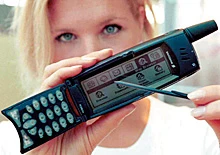
Sweden’s leadership in the design of terminal software platforms and applications, and industrial and telematics systems and devices includes some 40 companies, like Spectronics, Sectra and Neonode.
Ideon Science Park in the south of Sweden is a major center of excellence in wireless terminals that hosts Ericsson Mobile Platforms, Ericsson Licensing Technology, Teleca, Anoto, and Sony Ericsson as the obvious driving forces.
With expertise in the integration services architectures, core networks and terminals, Sweden offers the ideal environment for mobile application development.
There are more than 125 companies in this segment. Business and public sector applications, mobile gaming, messaging, telematics and sales/work order/maintenance management applications are all Swedish strongholds.
GSM operators TeliaSonera, Tele2 and Vodafone dominate the Swedish mobile telecom market. In the 1990s Vodafone acquired the local operator Europolitan, and recently Spring Mobile entered the market with a fourth GSM license.
In total there are some 20 mobile service providers, including foreign MVNOs like Djuice and Chess. Currently, three 3G (WCDMA) networks are being deployed, aiming at 99.98 percent coverage.
In May 2003, operator 3, a joint venture between Hutchison Whampoa and Investor, launched its 3G services, and in the first half of 2004, TeliaSonera, Vodafone, and Tele2 are launching their services, making Sweden a very advanced 3G market.
Sweden’s highly skilled professional services companies have strong system integration and application development competence.
Constituting 30 percent of the market, this wireless ICT segment is the second largest with expertise in wireless system integration, infrastructure component design and terminal software development. Large system integrators like Enea Data, HiQ. Northstream, Teleca, TietoEnator, and WM-Data with customers throughout Scandinavia can be used to successfully enter the Swedish market.