
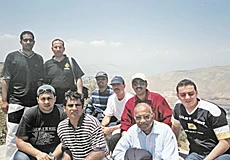
JEDDAH, 26 June 2004 — Rich in history and steeped in tradition, Jordan also has a rapidly developing tourist industry.
Since gaining independence from Britain, the country was ruled with a sense of pragmatism first by King Hussein and now by his son King Abdallah.
A sense of the possible seems to have permeated the culture. “No problem,” is the answer to almost any inquiry.
Where else would an immigration official take a visitor’s passport, pay for a visa with money from his own wallet, direct you to a Bureau de Change and ask you to pop back in a minute? That is one heck of a welcome and disposes the traveler to think well of these people.
King Abdallah assumed the throne following his father’s death in February 1999. Since then, he has undertaken an aggressive economic reform program. Jordan acceded to the World Trade Organization in 2000, and began to participate in the European Free Trade Association in 2001. After a two-year delay, parliamentary and municipal elections took place in the summer of 2003. The prime minister and government appointed in October 2003 declared their commitment to accelerated economic and political reforms, and the new Cabinet includes an unprecedented three women as ministers. Jordan is a small country with big ideas and ambitions and is working hard to realize them.
As a tourist destination, Jordan offers an exciting alternative to the glass and concrete shopping malls of Dubai. Saudi Arabia and most modern capitals and major cities around the world offer the same goods and services. Jordan has shopping centers — but it also has a rich history stretching back three millennia, and ecological tourism — both land and undersea — in a combination unequaled anywhere else.
Aware that tourists in general “take photos and leave money,” Jordan has invested heavily in its young tourist industry. Aimed at both the Western and the Arab market, the country has plenty to offer both cultures that rub shoulders amicably in the modern hotels that dot the capital Amman and the tourist centers of the Dead Sea and Aqaba. Many of the staff in the hotels — particularly in Amman — have worked at some time in Saudi Arabia and are familiar with the privacy requirements and habits of Saudi family visitors and are very happy to accommodate them.
World-class facilities also cram Jordan’s short Red Sea coast at Aqaba. Developed with the international tourist in mind, it is not the first choice for either history or a quiet retreat — though pockets of both are to be found there. Hotels, restaurants and entertainment — both family and solo — abound.
Over the last decade, scuba diving has developed into a major tourist attraction and with its reefs and now carefully contrived and fiercely enforced environmental policy, Aqaba has become a major destination for divers worldwide.
Jordan’s national airline, Royal Jordanian, is now headed in Saudi Arabia’s Western Province by a dynamic area manager, Walid Sleiman Tou. Everywhere in Jordan he is — inevitably — referred to as Walid No. 1. In a new drive to attract the peninsula market to Jordan, Walid Tou and Samiran Bose are making visits to the Hashemite Kingdom easy and attractive.
Only a couple of hours from Jeddah or Riyadh, Amman is the entry point, and roads to destinations around the kingdom are both well kept and relatively light in traffic.
(For more information about Royal Jordanian’s tour packages, please contact the airline’s Jeddah offices on 02-6652195)