
It is an undeniable and well-established fact that the decade of the 1990s was disastrous for Pakistan. While many developing nations made substantial progress, Pakistan lurched from one economic crisis to another, mainly of its own making. Weak macroeconomic management, lack of commitment and courage to undertake difficult structural reforms, a personalized and politicized state of decision-making and alarming levels of corruption were typical of the quality of governance. Appalling economic decisions hyped on populist slogans were symbolic of the freewheeling decision-making that led to the incurring of huge debt through corruption-ridden unproductive public expenditure. Commercial banks and other financial institutions became instruments of political patronage and profit for favored cronies. The gross mismanagement of public sector enterprises like the Water & Power Development Authority, the Karachi Electric Supply Corporation, the railways, Pakistan Steel Mills, Pakistan National Shipping Corporation and Pakistan International Airlines added further to the problems. The freezing of foreign currency accounts shattered the confidence of investors and expatriate Pakistanis in the financial management of the country.
The persistence of large fiscal and current account deficits and the associated build-up of public and external debt emerged as the major source of macroeconomic imbalances in the 1990s. Failures in enhancing revenues consistent with growing expenditure requirements, stagnation in exports and the decline in other foreign exchange inflows exacerbated these imbalances and vitiated a stable macroeconomic environment. On the political side, successive governments during this decade pursued twin agendas of blatant self-aggrandizement and ruthless revenge.
In the process, they undermined certain basic imperatives of the federal polity, deeply politicized the civil services and dragged the hierarchy of the armed forces into playing the role of referee in the struggle for political power. In the comity of nations, Pakistan faced isolation and remained on the defensive on a number of issues, which were vital to its international standing.
Such a state of affairs had a far-reaching impact on the country’s economic well-being. There was despondency among all, as many began to talk of Pakistan as a failed state. Indeed, Pakistan witnessed economic growth slowing, investment rates decelerating and the debt burden reaching alarming proportions. The massive cost of debt servicing rendered fiscal policy instruments ineffective and the country’s physical and human infrastructure showed signs of buckling under the combination of fiscal crunch, rising poverty and poor governance. A weak and fragile economy became the cause as well as the effect of the poor law and order situation in the country. It was in the backdrop of this state of affairs that my government took charge of the affairs of state on October 12, 1999.
It was established that a mere return to civilian government through quickly held elections would not address the malaise that had been virtually institutionalized by the mutually inimical and antagonistic political practices that were rampant throughout the country. Many international forums and governments saw it as yet another takeover by an intrusive military and called for a return to democracy at the very earliest.
However, national responsibility demanded that a comprehensive and sincere effort be launched to rectify this state of affairs and propagate a sustainable democracy for the good of the people and the state of Pakistan. This was indeed a Herculean task but greater was our resolve to accomplish it.
On the economic front it was realized that if left uncorrected, the worsening macroeconomic imbalances would lead to a higher accumulation of debt, a further loss of sovereignty and an uncertain environment for investment, thus jeopardizing the prospects of sustainable higher economic growth and an improvement in the lives of the masses.
Economic Policy Objectives
While accepting this challenge, my government set forward four major policy objectives on the economic front. First, to stabilize the country’s debt situation with a view to restoring macroeconomic stability. Second, to revive economic growth and restore investor confidence. Third, to arrest the rising trends in poverty and, fourth, to improve governance.
These four policy objectives were all interconnected. For example, a rising debt burden, which consumed almost two-thirds of government revenues on account of debt-servicing forced public sector development programs to decline over the years. Being complementary in nature, private sector investment also declined. This decline in overall investment caused economic growth to decelerate with a corresponding rise in unemployment and poverty. Poor governance also contributed to the slowing of Pakistan’s economic growth and the rising levels of unemployment and poverty.
Options Available
Given the nature of the challenges, we had two options. The first was to implement the four objectives simultaneously, that is, stabilize the debt situation, promote investment and growth, reduce poverty and improve governance. The second option was to prioritize these objectives and address the core issues first. After extensive deliberations, my economic team opted for the second option for the following reasons: first, Pakistan did not have the capacity to address all these issues simultaneously. Second, to address all the issues simultaneously we had to use instruments whose outcomes were conflicting in nature. For example, the root cause of the rising debt burden had been the persistence of large fiscal and current account deficits causing rapid accumulation of debt and consequent deterioration of the macroeconomic environment. In such an unstable environment one could not expect the private sector to come forward and increase investment. A stable macroeconomic environment was an absolute pre-requisite for promoting private sector investment and spurring economic growth. Stabilizing the country’s debt situation was, therefore, considered to be the core issue and was addressed first with a lot of vigor and ingenuity.
Policies Pursued
My government launched a comprehensive reform program in early 2000 to restore macroeconomic balance and to improve the overall economic environment through prudent fiscal, monetary and exchange rate policies, financial discipline and consistent and transparent economic policies. A wide range of reforms was introduced in the areas of taxation, trade and tariffs, banking and finance, industry and agriculture, deregulation and privatization, fiscal transparency and governance.
Space and time do not permit me to delve into the details of these reforms; they are well documented in the Poverty Reduction Strategy Paper (PRSP). My government was of the view that Pakistan’s economic problems were structural in nature and the objectives of sustaining high economic growth, low inflation and external payment viability could not be achieved without removing these structural bottlenecks.
Where Are We Now?
The fruits of the policies and reform programs that were introduced by my government in early 2000 and continued by the democratically elected government have started yielding dividends. Despite a series of domestic and external shocks of an unprecedented nature, Pakistan’s economy has made commendable progress over the last four-and-a-half years.
A broad-based economic recovery has already gathered momentum, macroeconomic stability has been achieved and the external balance of payments is much stronger today than ever before.
Pakistan’s economy is now healthier and poised for a strong growth of over 6 percent this year; economic policies are consistent and transparent; the confidence of the private sector is restored, which is reflected in the sharp pick-up in bank credit to the private sector and a high double-digit growth in industrial production; the stock market is buoyant and expatriate Pakistanis are bringing their capital back; the current account balance has been in surplus for three years in a row; foreign exchange reserves are over $12.5 billion; the rupee is stable; the interest rate environment has never been so investment friendly; the budget deficit has been lowered and the country’s debt burden has declined sharply; exports, imports and tax collection are growing at double-digit levels; and Pakistan has paid $1.17 billion high cost external debt to the Asian Development Bank ahead of time and intends to pre-pay another $1.0 billion before end-December 2004. Pakistan has been upgraded from ‘Selective Default’ to ‘B’ by the international rating agencies.
Transferring Macroeconomic Gains to the People
No efforts to revive the economy will be complete unless the macroeconomic gains are transferred to the masses in terms of improved standards of living. The best way to improve the living conditions of the people is to enhance their earning, provide them with gainful employment, scaling up investment in human capital and maximizing the impact of existing public spending on education and health. Central to achieving this objective is the promotion of stronger economic growth.
More than two-thirds of the country’s population lives in rural areas and the overwhelming majority of them are dependent, directly or indirectly, on agriculture for their livelihood. Almost 44 percent of the country’s workforce is employed in agriculture. The major constraint in Pakistan’s agriculture has been the availability of irrigation water. The best way to help improve the living conditions of the people in rural areas is to increase their earnings from their land by improving agriculture through increasing the availability of irrigation water. It is in this connection that my government launched over Rs300 billion worth of water-related projects, most of which are likely to be completed during the next two-to-three years. The water-related projects include construction of various canals and dams, brick lining of watercourses and revamping of irrigation and drainage systems. After the completion of these projects, 2.88 million acres of land will become available for cultivation thereby giving a quantum jump to agricultural growth, increasing the incomes of farmers, providing more jobs to the rural work force and reducing poverty in rural areas.
Addressing the issue of educated unemployed youth in the country in general and the urban areas in particular has always remained central to my thought. Accordingly, information technology & telecommunication was identified as one of the major drivers of growth by my government because of its enormous potential to create jobs for the urban segment of society. This sector has witnessed unprecedented growth during the last four-and-a-half years and has emerged as a major source of foreign investment - thanks to major reforms introduced in this sector. IT & telecommunication is not only bridging the digital divide across the nations but within the country as well. It is playing an important role in the country’s socio-economic development and improving the productivity of our economy. The extraordinary growth in the IT and telecom sector has created enormous employment opportunities, directly and indirectly, for educated unemployed youth in a wide range of areas like call centers, telecom engineering, telecom salespersons, customer services, finance and accounting etc. This is one of the fastest growing sectors of the economy and the pace is likely to accelerate even further in years to come, hence more job creation will be taking place.
While working toward improving the country’s macro indicators and initiating wide-ranging structural reforms, my government was never oblivious to the plight of the deserving segments of society. We continued to pursue targeted intervention to address the problems of poverty, income and employment generation through our public works program (Khushal Pakistan Program), food support program, micro credit, zakah distribution and others. Strong macroeconomic gains allowed us to raise development spending from less than Rs100 billion to Rs160 billion in just 5 years. This is likely to be increased to over Rs200 billion for 2004-05. These resources are being utilized to create jobs, improve education and health services and strengthen the country’s physical infrastructure.
Geo-Economics
The 21st century is an era of geo-economics. By virtue of its pivotal geographical location, Pakistan can act as a bridge of economic progress and the sharing of the vast energy potential between Central and South Asia. Landlocked Central Asia has the shortest access to the Arabian Sea through Pakistan. The under construction Gwadar Port, with road and rail infrastructure extending to Afghanistan, provides connectivity between Central Asia and Pakistan through Afghanistan for mutual gains.
The sustainability of economic growth is linked to the situation on our borders. This entails resolution of all issues with India including the core dispute of Kashmir. In addition, a stable Afghanistan is essential for the economic prosperity of the region. The 12th SAARC summit held in Islamabad in January this year has provided a fresh impetus to the progress and prosperity of the peoples of South Asia.
My Vision
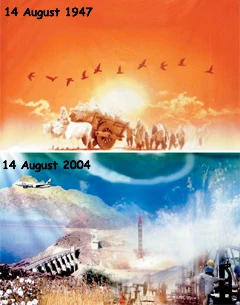
Pakistan has lived through a difficult and testing period. Wide-ranging structural reforms, prudent macroeconomic policies, financial discipline, and consistency and continuity in policies, not seen before, have transformed Pakistan — an economic ‘laggard’ in the 1990s — into a stable and resurgent economy in 2004. This relatively stronger economy has generated sufficient resources enabling the government to undertake balanced development programs in all the provinces of Pakistan, thus cementing provincial harmony. It has also enabled us to regain our lost status in the comity of nations.
Notwithstanding the monumental turnaround in the fortunes of our nation, I believe that the true potential of Pakistan and its people is still far from realization. Though we have traveled through difficult terrains and have experienced many a trial and travail, our journey is far from over. We are witnessing cataclysmic changes in world affairs and these have provided us with a unique opportunity to think and act differently because the set of assumptions that guided the world economy until just a few years ago has been rendered obsolete by events. The challenges before us demand creative new approaches through a revolutionary thought process.
It is against this backdrop that I visualize Pakistan as a strong, high-performing economy, growing at an average rate of 7 to 8 percent over the next decade. I would like to see the continuation of the present stable macroeconomic environment and an educated and healthier Pakistani contributing effectively to achieving higher economic growth. I would like to see the benefits of macroeconomic gains passed on to the common man. Lastly, I would like to see Pakistan living with honor, dignity and respect amongst the nations of the world.(Courtesy: Blue Chip magazine)