
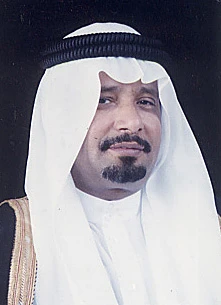
Saudi poet Muhammad ibn Abud Al-Amoudi, known in the poetic world as ibn Abud, started out reciting poetry. Within a few years of his launch in the world of poetry his lyrics became very popular among many talented singers such as Saudi Arabia’s Muhammad Abdu, Abadi Al-Jouhar, Abdullah Rashad, Abu Bakr Salem Balkafqeeh, and Eid Marzooq, Kazem Al-Saher from Iraq, Hani Shaker and Shreen Wagdi from Egypt, Asalah Nasry from Syria, Zikra from Tunisia, Aryam from UAE, Wadee Al-Safi from Lebanon and Rzan from Kuwait.
Ammar Al-Sheraiei, a well-known Egyptian composer, has described ibn Abud in one of his interviews as the poet of the Arab world.
In the past four years, ibn Abud published two books — ‘Nafahat Al-Worood’ (Rush of flowers) and ‘Sakan Al-Leel’ (The quietness of night). The books contain such lyrical sensations that many Arab singers have given their voice to them. According to a poet, ibn Abud’s lyrics have brought back the poetic glory of the fifties, sixties and seventies. He has been described as a poet who holds high his unique Arab identity.
Hussein Al-Mehdar, a poet, described the Nafahat Al-Worood’ as great music to the ears. What marks out ibn Abud here is that he tries to be the Arab singer-poet for all the Arab countries, not just Saudi Arabia or the Gulf. His pan-Arab vision is reflected in all his works.
Another unique aspect of ibn Abud’s poetry is the new, modern style he uses to blend Arab history with Arab culture in creating his colorful tapestry. He is also known for his nationalistic as well as romantic poems.
In an interview with Arab News, he wanted to send a message to the people to hold on to the spirit of honor reflected in his poems.
Poems are the fastest means of communicating with people, he said, adding, “I did not write poetry for its musical dimension but I started out reciting them early. Only lately did I allow singers to sing some of them”. He said that lyrical poems are famous and widely accepted. The more lyrical the poem the more beautiful the song, he said. Like many other poets, he started out writing poetry under fictitious names and he only did that to make sure that his poetry was acceptable to the public. After he won some positive response from the reading public , he began writing under the name ibn Abud. He said that there are many famous people who write under adopted names and each one has his own reason. What is important is to pass on the writer’s feelings and messages to the public.
Ibn Abud says his cherished dream is to see Arab poetry reaching international standards carrying the message of peace and mutual respect.
He said that the success of each song depends on three different elements — words, composition and rendition. As of the new style of Arabic songs these days, he said fast songs with dancing video clips have brought the quality down, whereas in the past Arab songs were such hits as rendered by Um Kalthoom, Abdul Haleem and Fairooz.
He said, “There are poets who do not let young singers recite their poetry. But I have worked with many young talents like Amal Maher and the UAE female singer Aryam. I also gave some of my poems to Eid Marzooq. Many fans around the Arab world loved some of those songs.”
Ibn Abud is pretty upbeat about the future of Arab music. “It is developing and improving. We are not going to stand in the way of developing Arab music but the most important thing is to hold on to the quality of songs ”. He considers live festivals on satellite channels a good means of taking Arab music to non-Arabs. He said that Arab music, with its long history, is unique and independent and it should not copy other schools of music.
He said that there are four schools of music all connected to a certain geographic location. They are the Egyptian music, Gulf music, Lebanese music and the Moroccan music. Despite the differences, many people listen to all of them. He pointed out that the new style of duets, where two singers sing together, has proved to be successful and accepted by the Arab world of music.