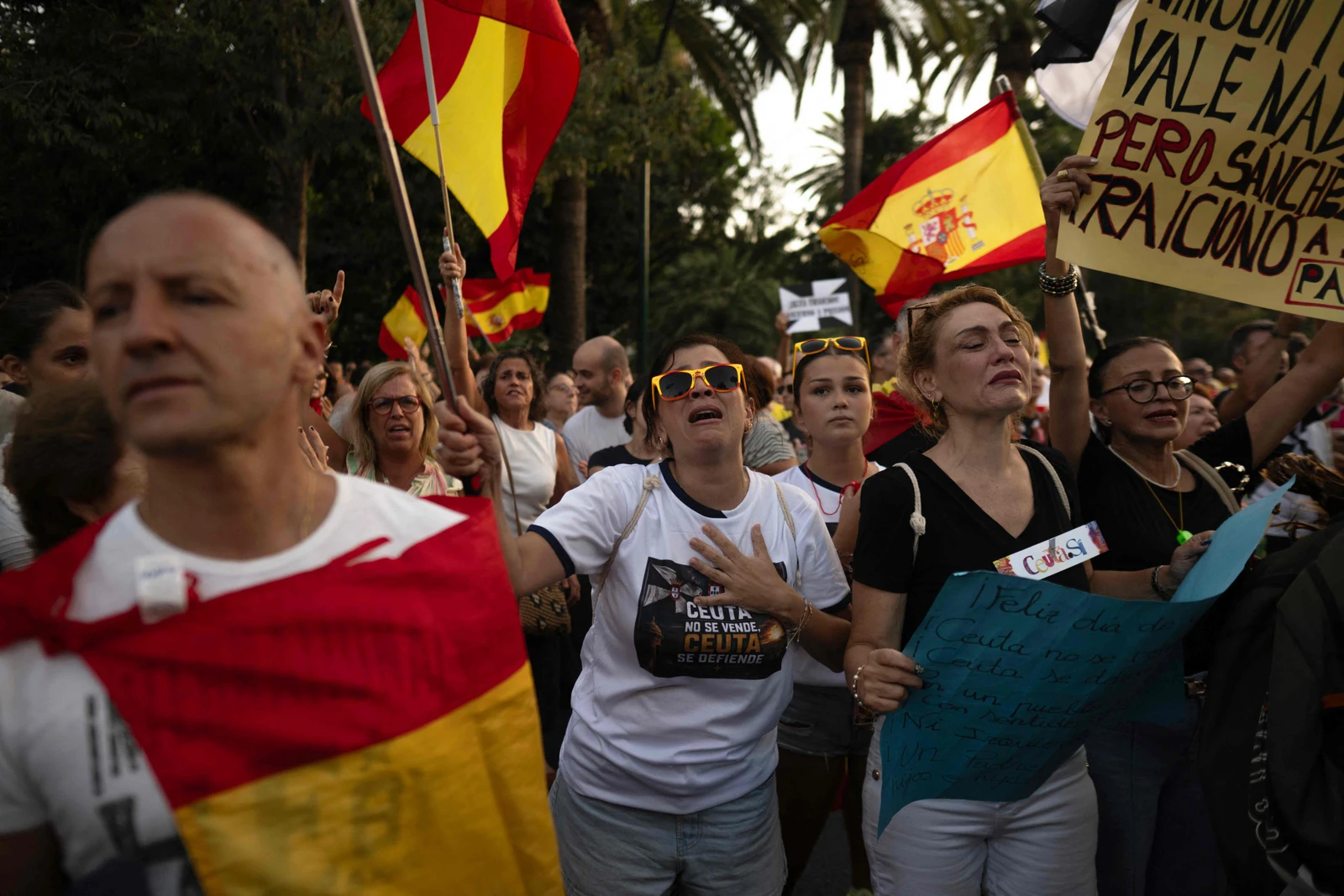
NEW YORK, 13 October 2004 — President Bush’s campaign advisers have found an innovative way to recruit volunteers. Anyone wanting to attend one of Bush’s campaign rallies, anywhere in the country, has to get a ticket first. And anyone who wants a ticket can improve their chances by volunteering at a Republican phone bank, canvassing Republican homes or putting up Republican lawn signs.
Campaign rallies may be as old as politics itself, but in this tight presidential campaign, the Bush operatives have taken this most basic form of communication to a new level — by using audiences to work before, during and immediately after Bush events.
The tactic shows a stark difference between the presidential campaigns: Sen. John Kerry is using his rallies and forums to try to reach undecided voters, Bush is packing his audiences with supporters who must identify themselves as such in questionnaires.
Peter Cianchette, the Bush campaign’s manager in Maine, said a limited number of no-cost tickets would be distributed only to supporters planning to vote for Bush or to undecided voters wanting to hear his message.
“If they are clearly not supporting the president in his re-election bid, then we’re not going to give them a ticket,” Cianchette recently told a reporter. “This is not an official White House travel event. It’s a campaign event. We only have a limited number of tickets, and we don’t want to turn down supporters and undecided voters. That wouldn’t make any sense for us to do that.”
People who want tickets will be asked by a campaign volunteer if they are supporters or undecided, and if they would like to volunteer to work on the campaign. Each person is then asked to fill out a form, providing name, address, Social Security number and date of birth. That information will be given to the Secret Service “for security reasons,” Cianchette said.
“In this post 9/11 era, the need for security is so tight that we need to collect that information,” he said. “That’s pretty standard.”
If any non-supporter gets into the event and stages a protest, that person will be escorted out of the building, Cianchette said.
“We want to make sure that at the event there’s not people there to disrupt the event,” he said. “We’re going to make them leave the venue.”
Jesse Derris, a campaign spokesman for Sen. Kerry, said he believes that people who want to hear President Bush should not be pre-screened about how they will vote Nov. 2 before being given or denied an event ticket.
“It’s unfortunate that people throughout the country cannot see their own president talk about why he should be president again,” Derris told a local Maine paper.
Kerry aides scoff at the invitation-only audiences and what they say is the shanghai-ing of volunteers. “We don’t require oaths of allegiance, and we don’t take people captive,” said Tom Shea, director of the Kerry campaign in Florida.
But Donald P. Green, a professor of political science at Yale and the author of “Get Out the Vote! How to Increase Voter Turnout,” said Bush’s strategy is quite clever.
“There’s a basic principle in experimental psychology, that the hand teaches the heart,” Professor Green said. “You’ve now made phone calls for George Bush; that helps solidify your commitment to the campaign. If you weren’t enthusiastic and committed already, you might be now.”
But the Bush method has had it drawbacks. One journalist, complained that he wore a Kerry t-shirt to a Bush rally and was denied entrance. He then wore a Bush t-shirt to a Kerry rally and was let in without question.
A group of protesters at a recent Wisconsin rally for President Bush has asked for an investigation into police conduct toward protesters. The group has accused police and “Republican Party operatives” of violating their First Amendment rights and other acts.