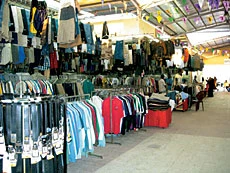
JEDDAH, 30 May 2005 — Anything that can be sold can be found in the southern part of the city at the Haraj Al-Sawarikh, where an active second-hand clothes market thrives. A group of traders involved in the whole process of buying, importing and selling these clothes have built a flourishing practice there.
Today, the business of second-hand clothes amounts to millions of riyals, and it is streamlined in such a way that the whole process of identifying the needs of the market to the place where it is available, is now at the traders’ fingertips. They scour the world for the goods, purchase them in big volumes, house them in warehouses here and then sell them off cheaply and quickly, before going for the next round of buying.
That there is a market for such goods is evident with the number of people who make their way to this souk. And it is not only the poor who buy in bulk but those looking for a bargain. But the real buzz is seen on the weekends, when people of different nationalities make it a point to browse this market. You can find Filipinos, Indians, Pakistanis, Europeans and even Americans in search of a bargain. Some are buying in bulk to present to charities back home, some for their extended families and some for needy groups who use these second-hand clothes.
Mohammad Abdul Malik, a tradesman in second-hand clothes, is a prime example of what the business is all about. He imports clothes from France, Germany, Japan and the US at very cheap prices and stores them before sorting them out according to their quality.
“We buy them by the ton with every type of clothing differing in price. For example, the price of a ton of pants would range between SR600-SR800; blouses have a special price with a ton costing between SR400-SR600. A ton of T-shirts costs between SR200-SR400,” he said.
Abdul Malik adds, “There are more than 40 stores in the ‘Haraj’ (meaning second-hand market) that sell second-hand clothes, with most of the salesmen from Bangladesh — and they control most of the market.”
Abdul Majeed, one of the salesmen, said: “Most of my customers are Filipinos with some Asians, Europeans and Americans — and only a very few Saudis.”
He added, “The prices at which the second-hand clothes are sold start from SR2 to SR30 per piece, and that includes all sizes of clothes, be it men’s, women’s or children’s.”
He said the winter was the peak season for the market, explaining that weather could be a factor.
“Second-hand clothes are mostly in demand in the winter especially jackets. During normal season, Fridays are the best days and bring about maximum sales.”
One of the regulars to the market, Jami, said buying stuff in the market is secondary. “The atmosphere is just great. I like to walk around and buy only if I find a bargain. I come to the ‘Haraj’ every Friday to enjoy the walk and to buy things. If I see in the market something in good condition, then I buy it,” he said, adding that he frequented the market because one could find international brands at a good price.
He said: “I recently bought pants that would cost about SR700 at a shop in the city. But at this market, I bought it for just SR15 and it’s in good condition.”
Jami added: “The salesmen, most of the time, do not know the true price or value of what he’s selling, that’s why they sell at such low prices.”
Ahmad Ali, another regular, said: “It’s a good chance to buy quality clothes at low prices. After buying them I make sure I wash them really well to avoid contracting any diseases.”
The market, despite its popularity, does have its share of hiccups. With the tradesmen buying in bulk, not all the clothes they purchase are of saleable quality. Some have to be discarded right away for their wear and tear, but some do not find any buyers even if priced ridiculously low.
When asked what the traders did with the clothes they could not sell before getting their new “collections”, a businessman said that some just gave it away, if the quantity is small, but most re-exported the goods to other countries and recovered some of the cost.
Saeed Al-Harbi, one of the ‘Haraj’ second-hand clothes salesmen, said: “What doesn’t get sold, we export to Sudan, Somalia and other African countries.”